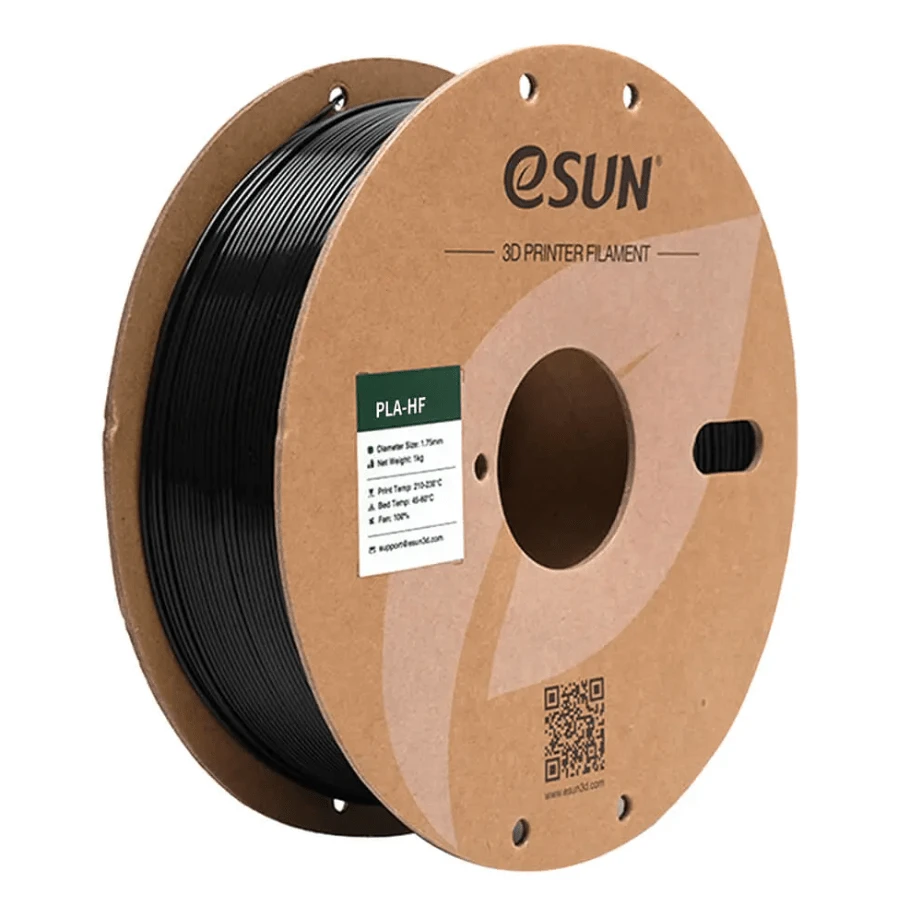
In the evolving landscape of 3D printing, a persistent challenge has been achieving both speed and strength simultaneously. As printers push for faster completion times, the structural integrity of printed objects often becomes the casualty. Layers printed in rapid succession may not properly bond, creating weak points that compromise the entire print. This is where the fundamental science of layer adhesion becomes critical. eSUN's Strong Layer Adhesion PLA addresses this core issue head-on, offering a material specifically engineered to create robust, durable parts even when produced at accelerated print speeds, effectively bridging the gap between rapid prototyping and functional, load-bearing components.
The Science of Layer Bonding in FDM Printing
To appreciate the innovation behind strong layer adhesion PLA, one must first understand how layers bond in Fused Deposition Modeling (FDM) printing. The process is fundamentally a thermal welding operation. As molten filament is extruded onto a previous layer, the heat from the new material partially re-melts the surface of the existing layer. The polymer chains from both layers interdiffuse across this boundary, creating a cohesive bond as the material cools and solidifies. The strength of this bond depends on several factors: the temperature of both the new and old material, the pressure of extrusion, the surface area of contact, and the inherent chemical properties of the filament itself. When any of these factors is compromised, particularly at high speeds, the result is weak interlayer adhesion and a part that can easily delaminate under stress.
Why Speed Often Compromises Structural Integrity
The push for faster print speeds directly threatens the delicate thermal process of layer bonding. In a high-speed print scenario, the hotend moves quickly, reducing the amount of time the newly extruded plastic spends in a molten state in contact with the layer beneath it. Furthermore, the previous layer has less time to cool, but also less opportunity to be properly re-melted at the surface to facilitate chain interdiffusion. This often results in a "cold weld" – a weak bond where the layers are stuck together but haven't truly fused into a monolithic structure. Standard filaments exacerbate this problem with higher melt viscosities that prevent optimal flow and surface wetting, making strong bonds at high speeds nearly impossible to achieve consistently.
eSUN's Formula for Enhanced Interlayer Fusion
eSUN's Strong Layer Adhesion PLA is not a simple variant; it is a meticulously formulated material designed to promote superior layer bonding. The formulation likely involves a tailored polymer molecular weight distribution and specific additive packages that work in concert to improve interlayer diffusion. These modifications lower the energy required for polymer chains from one layer to entangle with those of another. Essentially, the material is designed to remain in a state conducive to bonding for a critical window of time, even as the print head moves rapidly away. This ensures that the brief contact time between layers at high speed is used with maximum efficiency to create a strong, durable weld.
The Role of Crystallization and Cooling Dynamics
The cooling process of a thermoplastic plays a significant role in its final strength. If a material cools too quickly, it can introduce internal stresses and prevent proper crystallization at the layer boundary, leading to brittleness. eSUN's filament appears to be engineered with a controlled crystallization profile. This means it cools at an optimal rate that allows the polymer chains at the interface between layers to organize and entangle effectively before solidifying completely. This controlled dynamics, combined with the enhanced interlayer diffusion, results in a print that behaves more like a single, injection-molded part rather than a stack of weakly fused strands.
Achieving Durability in Functional Parts and Prototypes
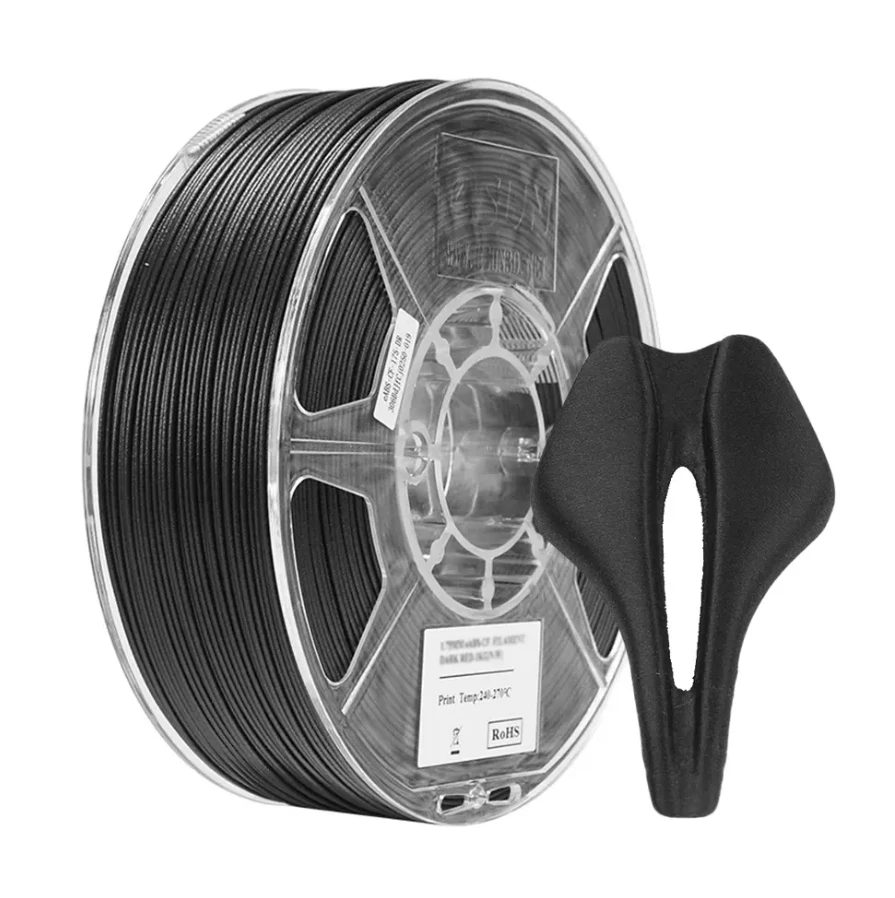
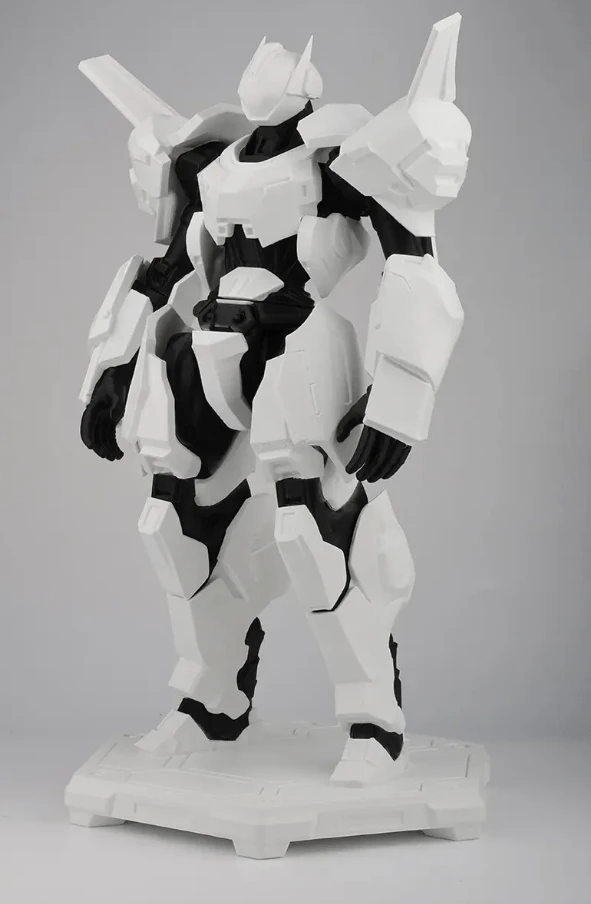
The practical benefit of this enhanced layer adhesion is the ability to produce truly functional parts via high-speed 3D printing. Components such as gears, brackets, jigs, and fixtures are no longer just visual prototypes; they can withstand actual mechanical loads and repeated use. The improved Z-layer strength means that stress is distributed more evenly throughout the part, significantly reducing the likelihood of failure along the layer lines. This opens up 3D printing for a wider range of applications in engineering, manufacturing, and product development, where the durability of the part is as important as the speed of its production.
Optimizing Print Settings for Maximum Bond Strength
While the filament itself provides the potential for strong layers, unlocking its full capability requires complementary print settings. A moderately increased nozzle temperature, typically in the range of 220-230°C, is often recommended to ensure the material reaches a low-viscosity state ideal for bonding. Using a slightly slower cooling fan speed for the first few layers, or even entirely for some geometries, can help maintain the critical temperature for interlayer diffusion. Furthermore, ensuring a consistent and slightly higher extrusion multiplier can guarantee that enough material is being pressed into the previous layer to create a substantial contact area for a strong weld.
Performance Under Mechanical Stress and Impact
When subjected to mechanical testing, parts printed with eSUN's Strong Layer Adhesion PLA demonstrate a notable improvement in performance compared to those made with standard PLA at equivalent speeds. Tensile tests often show higher ultimate strength and, more importantly, significantly greater layer adhesion strength, with failures occurring in the bulk material rather than neatly separating at the layer boundaries. Impact resistance is also enhanced, as the energy from a blow is absorbed and dissipated throughout the part's volume instead of causing immediate delamination. This makes it suitable for applications where the part might experience sudden shocks or sustained loads.
Comparing Layer Adhesion Across Different PLA Types
A direct comparison with other types of PLA highlights the specialization of eSUN's offering. Standard PLA, when printed fast, exhibits clearly visible and fragile layer lines. Even "tough" PLAs, which may improve impact resistance through flexibility, do not necessarily solve the fundamental problem of interlayer welding at high speeds. eSUN's Strong Layer Adhesion PLA focuses specifically on the Z-axis strength, providing a quantifiable leap in performance for this specific metric. It proves that a filament can be optimized not just for general toughness or ease of use, but for the fundamental physical process that dictates the strength of an FDM-printed object.
The Future of High-Strength, High-Speed 3D Printing
eSUN's Strong Layer Adhesion PLA represents a significant step toward the future of additive manufacturing, where the line between rapid prototyping and end-use part production continues to blur. By solving the critical weakness of layer-based construction in high-speed scenarios, it empowers designers and engineers to leverage the full potential of their fast printers without reservation. This focus on material science as a solution to a core mechanical limitation signals a maturation of the 3D printing industry. As materials continue to be engineered for specific performance characteristics like this, the applications for reliable and rapid 3D printing will expand exponentially, solidifying its role not just in the workshop, but on the factory floor.












Sign in to leave a comment.