
What is TADAT?
The Tax Administration Diagnostic Assessment Tool (TADAT) is a comprehensive evaluation instrument designed to provide an objective health assessment of a country’s tax administration system. It focuses on critical areas of tax administration, aiming to enhance efficiency, compliance, and transparency. By identifying strengths and weaknesses, TADAT helps tax administrations align with international best practices, facilitating improvements that support economic stability and growth. Baarez Technology Solutions offers the electronic version, e-TADAT, streamlining this process with advanced digital tools.
Overview
TADAT serves as a diagnostic tool to evaluate and improve tax administration systems globally. It provides an in-depth assessment of a tax administration’s performance across nine key performance outcome areas, covering aspects such as taxpayer compliance, revenue management, and transparency. By using TADAT, tax authorities can identify specific areas needing improvement and develop strategic plans to address them. Baarez Technology Solutions’ e-TADAT enhances this process by offering a digital platform that simplifies and accelerates the assessment, ensuring comprehensive and timely insights.
What are the objectives of the TADAT?
The primary objectives of TADAT are to improve the efficiency, effectiveness, and transparency of tax administrations worldwide. It aims to identify strengths and weaknesses in current tax systems, providing actionable insights for reform. TADAT facilitates better strategic tax planning, ensuring tax policies and administrative practices align with international standards. By promoting taxpayer compliance and transparency, TADAT helps foster economic stability and trust in the tax system. Baarez Technology Solutions’ e-TADAT tool further supports these objectives by offering an electronic, user-friendly assessment platform.
Who developed TADAT?
TADAT was developed by a group of international organizations led by the International Monetary Fund (IMF), with contributions from the World Bank, the European Union, and other development partners. This collaborative effort aimed to create a standardized assessment tool that could be used globally to evaluate and improve tax administrations. The involvement of these esteemed organizations ensures that TADAT adheres to high standards of accuracy and reliability. Baarez Technology Solutions leverages this robust framework through its e-TADAT offering, enhancing the tool’s accessibility and usability for tax administrations worldwide.
What is the meaning of TADAT Assessment?
A TADAT Assessment is a systematic evaluation of a tax administration’s performance across key areas such as revenue management, taxpayer compliance, and transparency. It involves a detailed analysis of existing processes and practices, identifying both strengths and areas for improvement. The assessment provides a clear picture of how well a tax administration is performing and where reforms are needed to enhance efficiency and effectiveness. Baarez Technology Solutions’ e-TADAT tool offers a digital platform for conducting these assessments, making the process more efficient and comprehensive.
TADAT Framework: The Tool
The TADAT framework is structured around nine performance outcome areas, each with specific indicators and criteria for evaluation. These areas include integrity of the taxpayer base, risk management, revenue management, and more. The tool provides a detailed methodology for assessing each area, ensuring a thorough and objective evaluation. Baarez Technology Solutions’ e-TADAT enhances this framework by offering a digital platform that automates data collection and analysis, providing real-time insights and making the assessment process more efficient and accessible.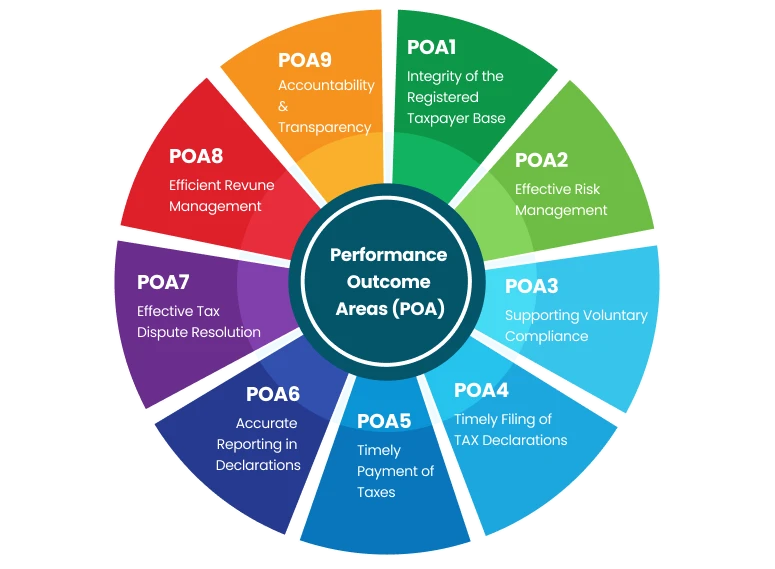
TADAT Steering Committee
The TADAT Steering Committee is responsible for overseeing the development and implementation of the TADAT framework. Composed of representatives from the IMF, World Bank, and other partner organizations, the committee ensures that the tool remains relevant and effective in evaluating tax administrations. It provides strategic guidance and ensures that the TADAT framework is updated regularly to reflect best practices and emerging trends in tax administration. Baarez Technology Solutions collaborates with the Steering Committee to integrate these updates into its e-TADAT platform, ensuring users have access to the latest standards and methodologies.
TADAT Technical Advisory Group
The TADAT Technical Advisory Group provides expert guidance on the technical aspects of the TADAT framework. This group includes tax administration professionals, academics, and other experts who review and advise on the tool’s methodology, indicators, and criteria. Their input ensures that TADAT remains a robust and reliable assessment tool. Baarez Technology Solutions works closely with the Technical Advisory Group to ensure that its e-TADAT platform incorporates the latest technical recommendations, providing users with a cutting-edge assessment tool.
TADAT Partners
TADAT partners include international organizations, donor agencies, and governments committed to improving tax administration globally. These partners support the development and implementation of TADAT, providing funding, expertise, and other resources. Their collaboration ensures that TADAT remains a widely accepted and effective tool for tax administration assessment. Baarez Technology Solutions, through its e-TADAT platform, collaborates with these partners to enhance the tool’s accessibility and effectiveness, helping tax administrations around the world achieve better outcomes.
TADAT Secretariat
The TADAT Secretariat, based at the IMF, manages the day-to-day operations of the TADAT framework. It coordinates the activities of the Steering Committee and Technical Advisory Group, provides support to countries using TADAT, and ensures the tool is continuously updated and improved. The Secretariat also manages training and certification programs for TADAT assessors. Baarez Technology Solutions liaises with the TADAT Secretariat to ensure its e-TADAT platform aligns with the latest updates and best practices, providing a reliable and up-to-date assessment tool.
TADAT Performance Assessment Report
A TADAT Performance Assessment Report is the outcome of a TADAT assessment. It provides a detailed analysis of a tax administration’s performance, highlighting strengths, weaknesses, and areas for improvement. The report includes scores for each of the nine performance outcome areas, along with recommendations for reforms. Baarez Technology Solutions’ e-TADAT platform automates the generation of these reports, making the assessment process faster and more efficient. The digital format allows for easy sharing and collaboration, ensuring that stakeholders can quickly act on the findings.
TADAT Field Guide
The TADAT Field Guide provides detailed instructions on how to conduct a TADAT assessment. It includes guidelines on data collection, analysis, and reporting, ensuring that assessments are conducted consistently and accurately. The Field Guide is an essential resource for assessors, providing them with the information they need to perform thorough and objective evaluations. Baarez Technology Solutions incorporates the Field Guide into its e-TADAT platform, providing users with easy access to this critical resource and ensuring that assessments are conducted according to best practices.
How Baarez helps with Tax Reform?
Baarez Technology Solutions plays a crucial role in tax reform by offering the e-TADAT (Electronic Tax Administration Diagnostic Assessment Tool) tool, which provides a comprehensive and objective assessment of tax administrations. This tool helps identify areas where reforms are needed, ensuring that tax policies and practices are aligned with international standards. By promoting taxpayer compliance, transparency, and efficient revenue management, e-TADAT supports strategic tax planning and the development of modern tax systems. Baarez’s expertise and advanced technology solutions facilitate the implementation of these reforms, helping countries achieve greater economic stability and efficient tax administration.







Sign in to leave a comment.