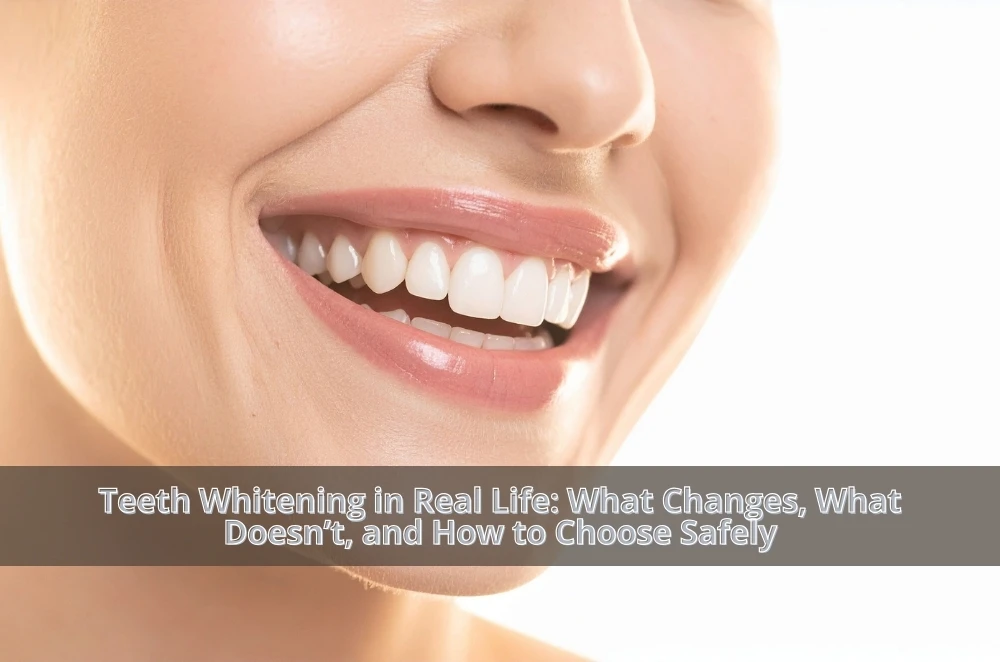

A brighter smile can be a confidence boost, but whitening isn’t a “paint job” you can apply to any set of teeth.
In Sydney, plenty of people start looking into whitening after a run of coffees, a big event coming up, or a photo that makes their teeth look duller than they feel in real life.
The tricky part is that “white” is a moving target, and the safest path is the one that fits the cause of the discolouration and the condition of the teeth.
Why teeth look dull (and why whitening sometimes disappoints)
Tooth colour changes for two broad reasons: surface stains and internal colour changes. Surface stains sit on the enamel and come from habits like coffee, tea, red wine, and smoking, as well as natural build-up over time. Internal colour changes happen within the tooth structure and can be influenced by age, trauma, certain medications, and even the way enamel thickness varies from person to person.
Whitening works best when the main issue is stain or general “yellowing” that’s still within a natural range. If teeth look grey, patchy, or uneven, the issue might not be solved by whitening alone, and pushing harder can backfire with sensitivity and disappointment.
Lighting also plays games with expectations. Warm indoor lighting makes teeth look more yellow; phone flashes can make them look flatter and duller; and heavy filters can create an unrealistic baseline that real enamel can’t match without looking artificial.
It helps to decide what “success” means before choosing a method: is it one or two shades lighter, a more even look, or just removing the “tired” cast that stains can create?
The main whitening paths (and what they’re actually like)
Whitening methods sit on a spectrum from quick and supervised to gradual and DIY. The right option depends on timelines, sensitivity, and how much control and monitoring is needed.
In-chair whitening
This approach is typically the fastest route to a noticeable change. It’s often chosen when there’s a deadline, like a wedding or a series of work events, because the process is done in a single appointment or short sequence under professional supervision.
The trade-off is that faster results can come with a higher chance of short-term sensitivity, especially if teeth already react to cold drinks or brushing. Some people love the immediacy; others prefer a slower build to avoid discomfort.
Take-home whitening trays (professionally supervised)
This is a steady, controlled method that many people find easier to tolerate. The trays are designed to fit the teeth closely, helping the whitening gel sit where it should and reducing the chance of it spreading onto gums.
It’s also more flexible: you can space sessions, adjust timing, and pause if sensitivity flares. The timeline is longer, but the day-to-day experience is often calmer and more manageable.
Over-the-counter kits and strips
OTC products can work for mild stains and minor brightening, but outcomes vary widely. The biggest challenges are fit (strips don’t hug every contour), consistency (people stop and start), and overuse (trying to “make up time” by doubling sessions).
One more practical issue: OTC whitening can highlight unevenness if some teeth respond faster than others, particularly when enamel varies or there’s old dental work present.
What affects results more than people expect
The most important predictor isn’t willpower; it’s what’s happening on the surface and inside the teeth.
Sensitivity and enamel wear
If brushing feels sharp, cold air stings, or certain areas feel “thin,” whitening can intensify those sensations. Even with safe products, sensitivity can rise when teeth are already stressed.
A short pause, a desensitising toothpaste, or a change in method can make the difference between finishing a course and abandoning it halfway through.
Existing dental work doesn’t whiten
Fillings, crowns, veneers, and bonding don’t change colour with whitening gels. That means whitening can create a mismatch: the natural teeth brighten while restorations stay the same shade.
If the front teeth include older restorations, it’s worth planning the sequence (clean, whiten, then review shade matching) rather than assuming whitening alone will “blend everything.”
Stain type and daily habits
Coffee stains can respond well, but if someone continues to sip coffee slowly all day, the teeth are constantly being re-exposed. Red wine, dark berries, cola, and tobacco can also shorten how long results look fresh.
Whitening isn’t “one and done”; it’s usually part of a bigger maintenance picture that includes cleaning habits and how staining foods are consumed.
Gum health and cavities
If gums are inflamed or there are untreated cavities, whitening can feel uncomfortable and unpredictable. It’s not about being “perfect” before whitening, but about making sure there aren’t obvious problems that will make the experience unpleasant or risky.
Common mistakes that lead to regret
The most common mistake is starting whitening before fixing the basics, like plaque build-up, gum irritation, or a sensitive spot that needs attention.
Another mistake is chasing a filtered shade, which pushes people to repeat sessions too often and end up with sensitivity rather than a natural brightening.
People also skip the timing reality check: if an event is next weekend, a gradual method might not reach the desired change in time, while a fast method might bring short-term sensitivity at the worst moment.
A surprisingly frequent issue is uneven application, especially with strips or generic trays, where gel sits more on some teeth than others and creates a patchy look.
Finally, many people forget that whitening reveals contrast—if the smile brightens, chips, staining near old fillings, and rough edges can become more noticeable, not less.
Decision factors: choosing the right approach and provider
A good decision comes down to five practical factors: safety, suitability, timeline, comfort, and predictability.
Start with suitability: are there signs of sensitivity, gum inflammation, or existing dental work that could lead to mismatched colour? If yes, it’s usually smarter to address those first rather than “whiten through” the issue.
Next, timeline: if there’s a hard deadline, a supervised option may be more realistic than hoping an OTC kit delivers a big change quickly. Predictability matters too—especially for people who want an even result and don’t want to guess how their teeth will respond.
Comfort is often the difference between success and giving up. Some people can tolerate a stronger, faster approach; others do better with a slower, adjustable plan where they can pause and resume without derailing the whole process.
If comparing approaches and trying to match them to sensitivity, timelines, and existing dental work, the Marsfield Dental Care whitening options guide can help frame the right questions before booking.
Operator Experience Moment: In practice, the turning point is often when someone realises whitening is less about “stronger gel” and more about sequencing—clean first, check for sensitivity triggers, then choose a pace that the teeth can tolerate. I’ve seen people get better outcomes simply by spacing sessions, changing how they drink coffee, and stopping the urge to overdo it. The calmest results usually come from a plan that respects sensitivity instead of fighting it.
A simple first-actions plan (next 7–14 days)
If whitening is on the radar, the next two weeks can be used to set up a safer, more predictable outcome without overcommitting.
Days 1–3: Reset the basics
- Switch to a soft-bristled brush if brushing feels harsh.
- Start a sensitivity toothpaste if cold drinks sting.
- Take note of where discolouration is strongest (front teeth, near gumline, between teeth).
Days 4–7: Remove what whitening can’t fix
- Book a professional clean if it’s overdue, or tighten home cleaning if build-up is visible.
- Floss daily for the week; between-tooth stain can make overall colour look darker.
- Reduce “all-day sipping” of coffee/tea; aim for a shorter drinking window and rinse with water after.
One good week of basics can make teeth look brighter even before whitening begins.
Days 8–14: Choose a method that matches your constraints
- If you have a deadline, map out how many days you truly have and how much sensitivity you can tolerate.
- If you have front-tooth restorations, note their shade and ask how whitening might affect matching.
- Plan for aftercare: a few days of being mindful with staining foods can help results look more even.
Local SMB mini-walkthrough: a Sydney scenario
A café manager in Sydney notices their teeth look dull in photos under bright shop lighting.
They’re drinking coffee across long shifts and rinsing rarely.
They’ve also got an older filling on a front tooth that’s slightly darker than the natural enamel.
Step one is a clean and a quick check for sensitivity hotspots before starting anything.
They choose a method that can be paused around busy weekends if sensitivity shows up.
They also shift coffee to fewer “sessions” and keep water handy to reduce constant re-staining.
Practical Opinions
If there’s any sensitivity now, prioritise comfort over speed.
A clean and a week of better habits often make whitening more predictable.
Match the method to the deadline, not the other way around.
Key Takeaways
- Whitening works best when the main issue is surface stain or general yellowing, not every type of discolouration.
- Existing fillings and crowns won’t whiten, so plan for potential shade mismatch.
- The “best” method depends on suitability, sensitivity, and timeline—faster isn’t always smarter.
- A 7–14 day prep window (cleaning, sensitivity control, habit tweaks) can improve results and comfort.
Common questions we hear from businesses in Sydney, Australia
Q1) How far ahead should whitening be planned before a brand shoot or event?
Usually a 2–4 week buffer is enough for most people to see a comfortable change without rushing. A practical next step is to pick the event date and work backwards, allowing time for a clean and a few days of sensitivity management if needed. In Sydney, people often schedule around busy periods (end-of-quarter, wedding season, major conferences), so earlier is safer.
Q2) Will whitening fix patchy colour or just make it more obvious?
It depends on why the patchiness exists (stain patterns, enamel variation, or old dental work). The next step is to check whether any visible restorations are on show when smiling and to ask how they might look once natural teeth lighten. In most cases, patchiness can be improved, but the plan may include sequencing and possibly shade-matching work after whitening.
Q3) What’s the best way to reduce sensitivity during whitening?
In most cases, spacing sessions, using a sensitivity toothpaste, and avoiding “doubling up” is the simplest fix. The next step is to stop whitening for a day or two at the first sign of sharp sensitivity, then resume at a gentler pace rather than pushing through. Sydney’s cold mornings and iced drinks can make teeth feel more reactive, so sensitivity control matters even more during summer and early mornings.
Q4) How long do results last if someone drinks coffee every day?
Usually results can last for months, but daily habits will gradually bring staining back, especially with slow sipping over long workdays. A practical next step is to reduce “all-day” coffee exposure—have it in a shorter window and rinse with water afterwards, plus keep up regular cleans. In Sydney’s café culture, it’s common to maintain results with small habit changes rather than frequent whitening repeats.











Sign in to leave a comment.