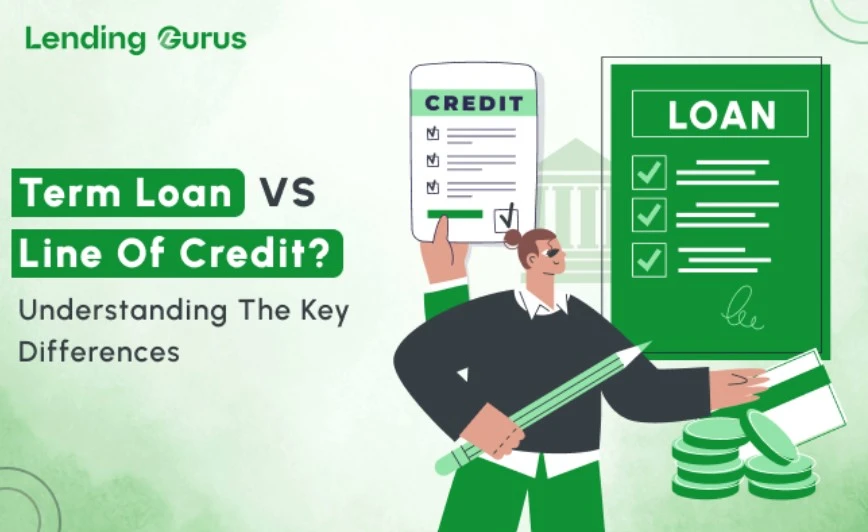

When you’re exploring financing options—whether for a business venture, home renovation, or unexpected expense—two popular choices you’ll encounter are term loans and lines of credit. While both are lending solutions offered by financial institutions, they function very differently. Understanding the key differences between term loan versus line of credit can help you make a smart financial decision tailored to your needs. Let’s dive deeper into what sets these two apart.
What Is a Term Loan?
A term loan functions as a classic borrowing method that gives the lender an upfront payment which the borrower returns through scheduled monthly payments during a predetermined timeframe. The duration of loan repayment extends between short-term periods of months and long-term lengths of years based on loan agreements and funding purposes. The repayment of term loans requires borrowers to pay principal and interest amounts at specific intervals while they have the choice between fixed or variable interest rates.
Term loans serve as a financing solution for businesses to cover single substantial costs including equipment purchases and real estate investments and organizational growth initiatives. The structured repayment plan of term loans attracts borrowers who want predictable monthly payments because they know exactly what they owe.
What Is a Line of Credit?
A business line of credit provides better flexibility than term loans do. Borrowers can obtain funds by request through this system which extends to their established borrowing limit. The borrowing process begins with drawing funds from your line of credit until you reach your established limit. After repaying borrowed amounts you can draw funds again within your borrowing limit. The charged interest applies solely to the funds you withdraw from the available credit limit thus making it suitable for variable or temporary financial requirements.
Lines of credit function similarly to credit cards by providing businesses with an efficient tool to handle cash flow and address unexpected expenses and seasonal income variations. Businesses benefit from having working capital at their disposal through lines of credit which avoids heavy debt burdens. A line of credit serves personal needs such as home renovations and emergency costs and ongoing expenses for individual users.
Line of Credit vs Term Loan: Key Differences
1. Borrowing Structure
A term loan distributes its entire sum as a single payment which borrowers need to repay through scheduled installments. After receiving the funds you start making scheduled payments which include interest payments.
The credit line functions as a circular financial account. The credit limit approval allows you to borrow funds whenever needed in a manner similar to credit card transactions. You pay interest only for the funds you withdraw from your credit line instead of the total amount available.
2. Repayment Terms
Term loan repayment requires regular fixed payments during a predetermined time period. The consistent payment schedule allows users to develop financial plans by maintaining regular budgeting.
A line of credit provides borrowers with more adaptable payment options. The terms require you to pay either minimum amounts or interest payments until you completely repay the borrowed funds. The money that you repay to the lender becomes accessible for new borrowing once your debt is settled.
3. Interest and Costs
The interest rates for term loans remain fixed but certain lenders might adjust rates according to their terms. You will pay interest on your entire loan amount from day one because the borrowing amount remains constant.
Lines of credit operate with adjustable rates which only apply to the funds you withdraw from the available credit. Lines of credit provide more economical financing for short-term needs and smaller expenses but their rates tend to change throughout the period.
4. Best Use Cases
A term loan serves businesses that need to finance major single expenses including equipment acquisition and business project initiation and facility renovation. These loans function best when you precisely know the amount of funding required.
Businesses should use lines of credit to handle unpredictable or ongoing expenses that include cash flow management and seasonal fluctuations and emergency situations. Users can obtain financial help on demand through these loans without needing to request another loan each time.
5. Flexibility
A short-term business loans serves better than other options when you need structured and predictable repayment terms.
A line of credit provides better convenience to borrowers who want flexible financial options and need to borrow only what they require.
Which One Should You Choose?
Deciding between a term loan and a line of credit depends largely on your financial goals and how you intend to use the funds. The better choice for you would be a term loan when you require a specific amount of money with a planned repayment strategy. The structure provided by a term loan with predictable payments and favorable interest rates for those with good credit makes it a suitable option.
A line of credit serves businesses best which have unpredictable financial requirements because it provides flexible access to funds when you need them. The credit line remains available after you repay your drawn funds so you can access it again anytime you need it.
It’s also worth considering that some individuals or businesses may benefit from using both options simultaneously. For example, a term loan can fund large investments, while a line of credit handles smaller, day-to-day operational expenses.
Final Thoughts
Both term loans and lines of credit have their own strengths and ideal use cases. The key is to understand your financial situation, repayment capabilities, and the purpose of the loan. Take the time to compare interest rates, fees, repayment terms, and lender requirements. Whether you’re a homeowner looking to finance a renovation or a business owner managing operations, choosing the right borrowing method can make a big difference in your financial success.
Need help deciding between a term loan and a line of credit? Contact us at Lending Gurus to find the best solution for your financial goals today!
Originally Posted at: Term Loan vs Line of Credit








Sign in to leave a comment.