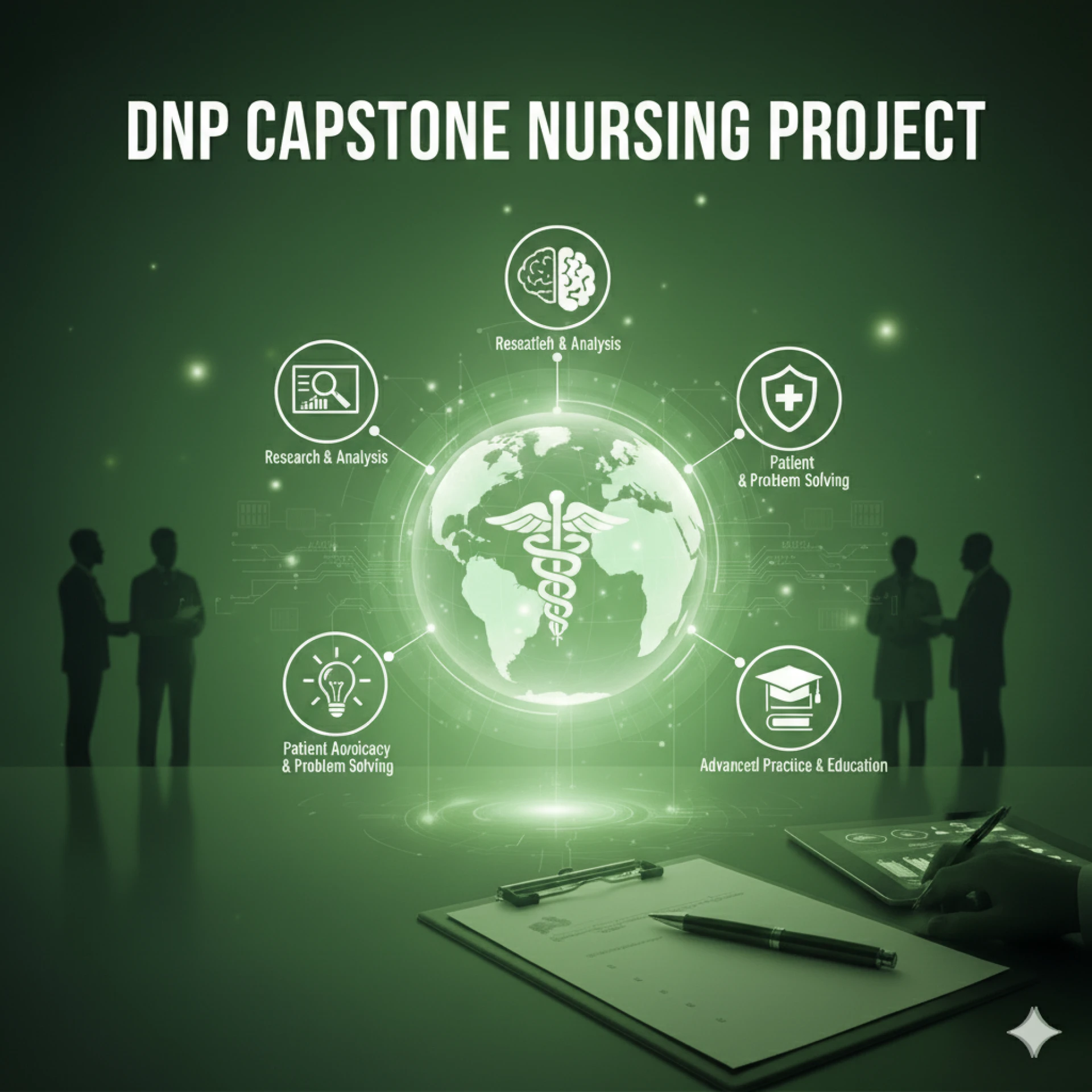

The Doctor of Nursing Practice (DNP) degree equips nurses for leadership roles in clinical care, research implementation, and healthcare system transformation. Central to this program is the DNP Capstone Project—a comprehensive, real-world initiative where students apply evidence-based practices to solve practical healthcare challenges.
Unlike traditional academic papers or exams, the DNP project is both scholarly and hands-on. It calls for students to pinpoint gaps in current practices, implement targeted solutions, and assess outcomes that have a measurable impact on patient care and organizational performance.
This guide covers everything you need to know about developing a successful DNP project—from its purpose and structure to step-by-step guidance, project examples, and strategies for success.
1. Understanding the DNP Capstone Project
What Is a DNP Project?
The DNP capstone is a final scholarly effort demonstrating a student’s expertise in advanced nursing practice. Rather than generating new research, it focuses on applying existing evidence to improve clinical outcomes. It’s designed to translate theory into action with a direct impact on patient care.
How It Differs from a Traditional Thesis
- Thesis: Research-focused, aimed at contributing new knowledge. Common in research-based graduate and Ph.D. programs.
- DNP Project: Practice-oriented, aimed at applying known evidence to improve healthcare delivery.
In essence, a thesis builds theory; a DNP project improves practice.
Its Importance in Clinical Nursing
DNP projects exemplify how advanced practice nurses serve as agents of change. Whether addressing hospital-acquired infections, reducing readmissions, or expanding telehealth access, these projects show how evidence-based interventions lead to better outcomes.
Key Competencies and Goals
Through this project, DNP students are expected to:
- Exhibit leadership in healthcare innovation.
- Apply evidence-based models to solve real practice problems.
- Measure and analyze outcomes (e.g., patient safety, cost-effectiveness).
- Offer sustainable improvements that can be replicated in practice.
2. Developing a DNP Project: Evidence-Based Steps
Selecting a Clinical Problem
The foundation of your project lies in identifying a meaningful issue from your clinical setting. Strong topics typically involve:
- Patient care concerns (e.g., pain management, fall prevention)
- Operational inefficiencies (e.g., poor handoff procedures)
- Public health gaps (e.g., vaccine uptake, rural care access)
Reviewing the Literature
Conducting a thorough review of current studies and clinical guidelines ensures your project is grounded in proven research. This helps validate your project’s relevance and informs best practices.
Using EBP Frameworks
Implementing evidence-based practice (EBP) models strengthens your project’s design. Common models include:
- Iowa Model: Helps guide selection and application of interventions.
- Johns Hopkins EBP Model: Offers tools to evaluate and implement research.
Crafting a PICOT Question
The PICOT format helps refine your clinical question:
- P – Patient population
- I – Intervention
- C – Comparison
- O – Outcome
- T – Timeframe
Example: In adults with type 2 diabetes in rural areas (P), does nurse-led telehealth coaching (I) compared to standard follow-up care (C) improve glycemic control (O) over 6 months (T)?
Aligning with Organizational Goals
Your project should align with the goals and priorities of your clinical site. This improves feasibility and increases the chance of adoption.
3. DNP Project Structure and Process
Project Stages
1. Identify the Problem
Define the issue and establish its significance using clinical evidence and stakeholder input.
2. Develop the Proposal
Outline your objectives, intervention methods, and expected results. Secure ethics or IRB approval if needed.
3. Implement the Intervention
Execute your plan in a real-world setting with collaboration from staff and leadership.
4. Evaluate Outcomes
Collect data before and after the intervention. Use appropriate tools to analyze the effectiveness of your project.
5. Disseminate Findings
Present your project to peers, faculty, or healthcare organizations through papers, posters, or presentations.
Core Elements of the Project
- Abstract: A concise summary of purpose, methods, and results.
- Introduction: Background and significance of the clinical issue.
- Literature Review: Analysis of current research and identified gaps.
- Methodology: Description of the design, setting, participants, and tools.
- Data Analysis: Explanation of how data was collected and interpreted.
- Results and Discussion: Findings and what they mean for practice.
- Conclusion: Key takeaways and suggested changes.
- Presentation/Defense: Oral or visual presentation of your project to relevant audiences.
4. DNP Project Ideas for Inspiration
Here are some project themes that address real-world healthcare issues:
- Structured discharge education to reduce readmissions.
- Strategies to boost hand hygiene compliance in ICUs.
- Support programs for nurse mental health and well-being.
- Telehealth services led by nurses in underserved areas.
- Improved pain protocols for cancer patients.
- Fall prevention measures in senior care facilities.
- Pediatric vaccine promotion initiatives.
- Early intervention for sepsis using care bundles.
- Enhancing hospital-to-home care transitions.
- Unit-level nurse dashboards for quality monitoring.
These ideas demonstrate practical leadership in clinical environments.
5. Strategies for a Successful DNP Project
Plan Early and Stay Organized
A DNP project spans several months. Use planning tools like calendars, project timelines, and Gantt charts to manage progress.
Leverage Faculty Support
Your advisor plays a critical role in guiding your research design and ensuring feasibility. Regular communication helps you avoid delays and refine your approach.
Pick a Project You Care About
Select a topic that reflects your interests and fits your clinical environment. Passion fuels persistence—and relevance ensures real-world value.
Aim for Sustainability
Focus on solutions that extend beyond your graduation. Design interventions that can be integrated into standard practice and adapted over time.
Prepare for Your Defense
Develop a strong presentation that clearly communicates your methods, results, and impact. Anticipate questions and use visuals to support your message.
6. Final Thoughts: The Power of DNP Projects
Turning Evidence Into Action
DNP capstone projects ensure research is translated into practice, closing the gap between academic knowledge and bedside care.
Nursing Leadership in Action
These projects highlight the role of nurses as leaders in quality improvement, innovation, and healthcare transformation.
Leaving a Lasting Legacy
Beyond meeting graduation requirements, your DNP project is a chance to make a lasting contribution to healthcare. When done well, it improves care delivery, empowers nursing teams, and elevates the profession.
Conclusion
The DNP Capstone Nursing Project is a defining milestone in your journey as an advanced practice nurse. With a thoughtful approach—rooted in evidence, guided by purpose, and driven by impact—you can create a project that not only meets academic standards but also makes meaningful improvements in healthcare.
By turning challenges into opportunities, your work will help shape the future of nursing and patient care.











Sign in to leave a comment.