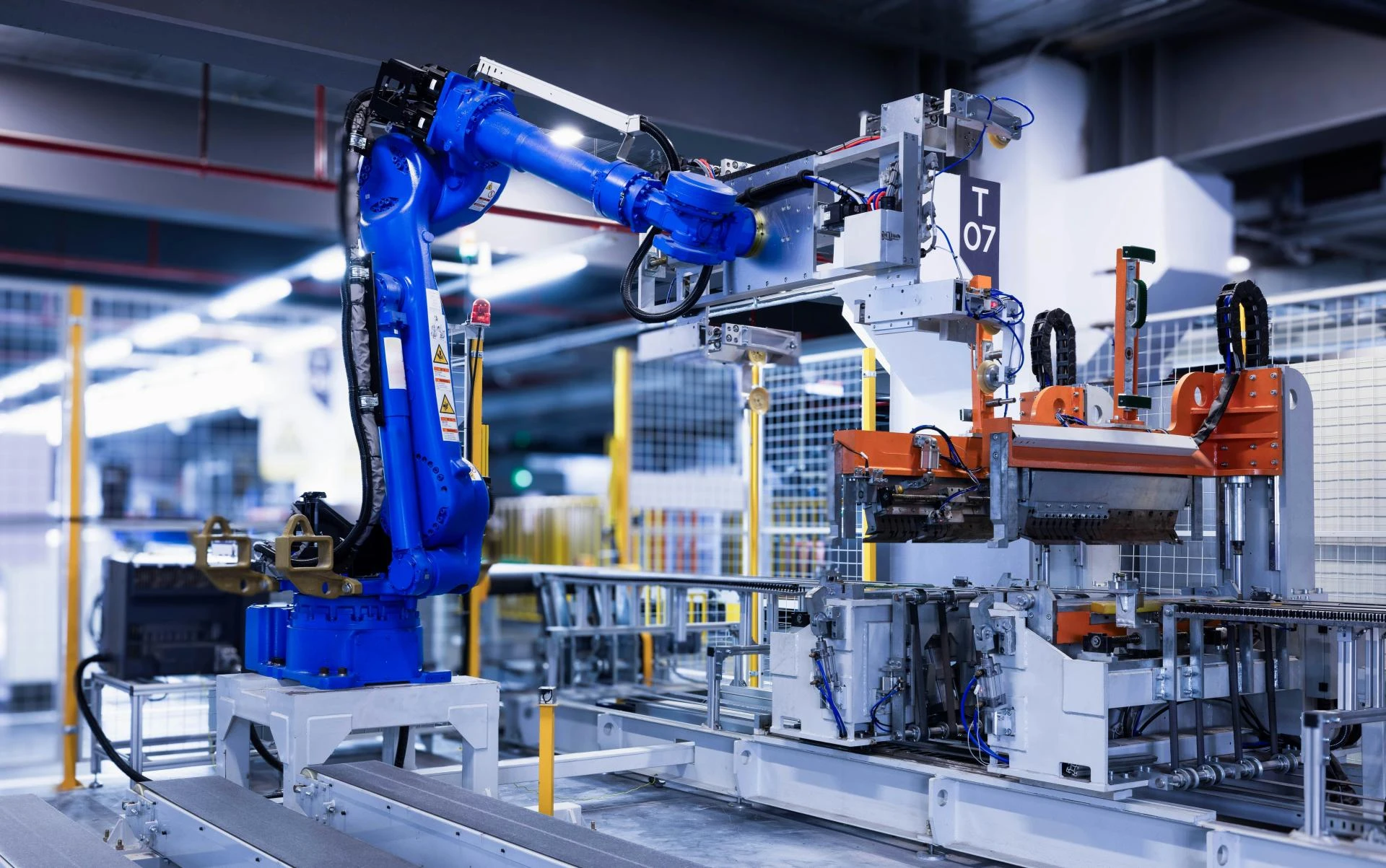

Servo motors, also known as ‘servos,’ are compact yet powerful devices that have quietly revolutionized how we live and work. From home appliances to industrial production lines, these motors are present almost everywhere you look. From humble beginnings to industrial ubiquity, here’s everything you need to know about the evolution of servo motors.
What Are Servo Motors?
Servos are devices that allow us to control angular position with precision. When you insert a disk into a Blu-Ray player, it’s a servo motor that allows the player to reel in the disk. Remember, servos aren’t really motors in the conventional sense of the term. Instead, servo motors are a combination of different industrial parts:
- Durable housing
- A DC/AC motor to provide the rotational force
- A position sensor–usually a potentiometer–provides feedback to the control circuit
- A control circuit that functions as the brain of the servo. This circuit receives signals from the potentiometer and adjusts the power output to the motor.
The components of a servo can vary significantly based on the use case. Generally, these motors work on a closed-loop system that uses the potentiometer to give feedback on the motor’s current position. This information is then used to control the overall power output. Once the desired angle is reached, the motor will try to maintain that position.
The Evolution of Servo Motors
The evolution of servo motors is tied closely with many other pivotal advancements in electromagnetics. For instance, Michael Faraday’s famous experiment of rotating a copper disk with a magnetic field laid the groundwork for servo motors in the early 19th century.
This primitive iteration of the servo would play a pivotal role in the Industrial Revolution, most notably in the steering engines of large ships in the 1850s. This was then followed by Andrew Brown’s telemotor in 1872, a critical invention that helped simplify engine designs going forward.
However, the first ‘modern’ servo motor wouldn’t be developed until the early 1930s. Interestingly, accounts tend to differ from one region to the next. Some credit French engineer Andre-Marie Ampere with creating a feedback mechanism involving a shaft and a magnetic field.
Other experts claim that military R&D in the 1930s played a more significant role in creating the first analog servo motor. These early analog servos were designed to help build more advanced radar antenna control systems. Notably, a potentiometer was already being used in this early stage to measure the difference between the current position of a component and its goal.
The Digital Transition
Analog servos were a giant leap forward for military and commercial applications; however, they were highly susceptible to environmental factors and lacked the precision that a Cold War-era world needed. This prompted the gradual transition towards hybrid servo motors in the 1970s.
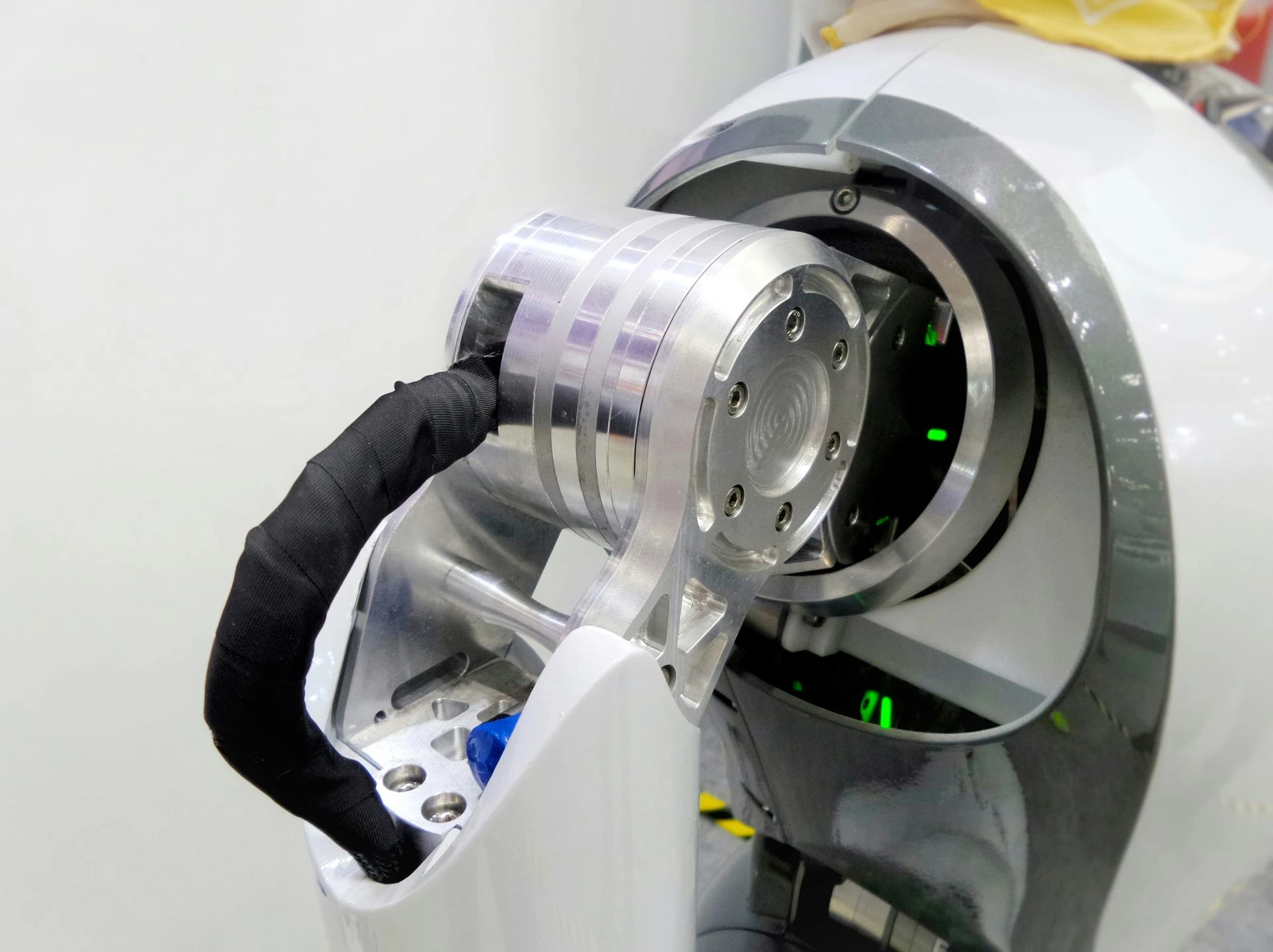
Engineers realized that microcontrollers could be integrated with the standard analog servo motor design to improve precision through pulse-width modulation. These microcontrollers also allowed for far more complex control algorithms, giving engineers the power to do so much more with every motor.
Modern Servo Motors
Today’s servo motors represent the next step forward from the microcontrollers of the 1970s. The development of digital servo motors accelerated significantly from the early 1990s, with brushless motors becoming the norm. Let’s take a look at what these digital servo motors bring to the table:
- Digital signal processors for even more advanced control algorithms
- Network communication capabilities that allowed servos to work efficiently with other machines (especially useful for CNC machinery)
- High-resolution sensors that offer incredible precision
Modern servo motors allow for predictive maintenance, have longer lifespans, and can output significantly more power than the analog and hybrid servos mentioned above.
Applications of Servo Motors
Power and precision aren’t the only reasons servo motors are ubiquitous today. These motors are endlessly adaptable and can be customized to suit various industries and environments.
- Robotics: High-end robotics applications require precise angular control, and digital servo motors certainly deliver on that front. These motors allow engineers to position and control robotic arms and other systems carefully.
- Automotives: Servo motors are everywhere in modern automobiles. From steering wheels to throttle control and suspension systems, they play a major role in car safety and performance.
- Consumer Tech: Miniscule servo motors are vital components of modern consumer products like cameras and toys.
A Mainstay in Manufacturing
Servo motors have come a long way from their humble beginnings in the early 19th century. It’s hard to imagine a world without these small yet critical devices powering everything around us. Looking ahead, the acceleration of AI and IoT-powered technologies will undoubtedly lead to the next step in the evolution of servo motors.












Sign in to leave a comment.