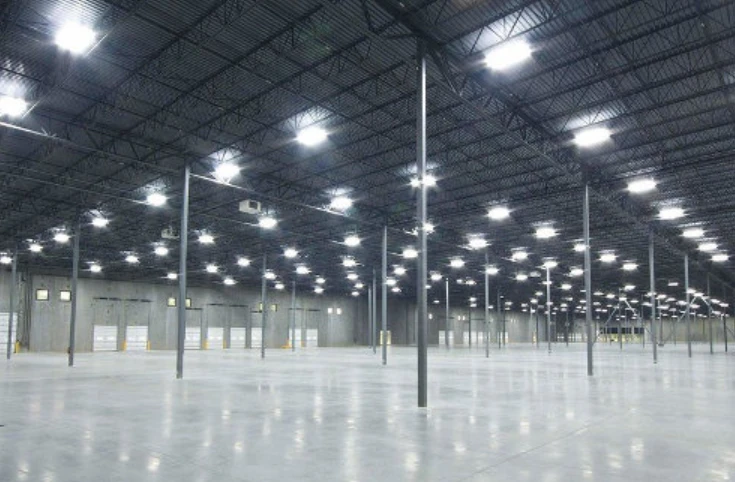

As industrial and commercial facilities push toward greater efficiency and sustainability, lighting systems are becoming a central focus of operational upgrades. Large warehouses, factories, gyms, and distribution centers require powerful illumination that supports productivity while controlling energy costs. High bay LED lighting has emerged as a leading solution, offering superior performance, long-term savings, and environmental benefits compared to traditional lighting technologies.
Understanding High Bay LED Lighting
High bay LED lights are specifically designed for spaces with ceiling heights between 20 and 45 feet. In these environments, standard lighting fixtures often struggle to deliver consistent brightness across wide floor areas. High bay LEDs solve this challenge by producing high-lumen output with focused beam angles that ensure even, reliable illumination.
Proper lighting in industrial settings is essential for safety, workflow efficiency, and employee comfort. By reducing shadows and dark spots, high bay LED systems create a well-lit environment that enhances visibility and minimizes workplace hazards.
Key Benefits of High Bay LED Lighting
Energy Efficiency
One of the most significant advantages of LED technology is reduced energy consumption. High bay LED fixtures can lower electricity usage by up to 60–75% compared to metal halide or fluorescent systems. This reduction directly translates into lower utility bills, especially in facilities that operate lighting for long hours daily.
Cost Savings and Strong ROI
Although the upfront investment for LED fixtures may be higher, the long-term financial return is substantial. Lower energy consumption combined with reduced maintenance costs allows businesses to recover their initial investment quickly. Over time, the savings continue to accumulate, improving overall operational efficiency.
Long Lifespan and Durability
High bay LED lights typically last 50,000 hours or more. Their solid-state construction makes them resistant to vibration and impact, which is particularly important in industrial settings. Fewer replacements mean reduced labor costs and minimal disruption to daily operations.
Superior Light Quality
LED high bay fixtures offer excellent color rendering and customizable color temperatures, commonly ranging from 4000K to 5000K. This improves visual clarity, reduces eye strain, and creates a comfortable working environment. Enhanced light distribution also ensures uniform coverage across large spaces.
Environmental Sustainability
LED lighting supports sustainability initiatives by reducing greenhouse gas emissions through lower energy demand. Unlike fluorescent lighting, LEDs do not contain hazardous materials such as mercury, making them safer for both users and the environment. Their long lifespan further reduces material waste.
Technological Advancements in High Bay LEDs
Ongoing innovation continues to enhance LED performance. Modern high bay systems now feature:
- Smart Controls: Integration with motion sensors, daylight harvesting systems, and automated scheduling.
- Improved Thermal Management: Advanced heat sinks extend product lifespan and maintain efficiency.
- Flexible Designs: Multiple mounting options and compact fixtures simplify retrofits and new installations.
Smart integration allows facilities to adjust lighting levels based on occupancy or time of day, maximizing energy savings without sacrificing illumination quality.
Implementing High Bay LED Lighting
Transitioning to high bay LED lighting involves assessing facility needs, selecting appropriate lumen output and beam angles, and ensuring professional installation. Incorporating smart controls further optimizes energy performance and long-term savings.
Conclusion
High bay LED lighting represents the future of industrial illumination. With unmatched energy efficiency, durability, cost savings, and sustainability benefits, these systems provide a strategic upgrade for modern facilities. As LED technology continues to evolve, businesses that adopt high bay LED solutions position themselves for improved performance, reduced operating costs, and stronger environmental responsibility.











Sign in to leave a comment.