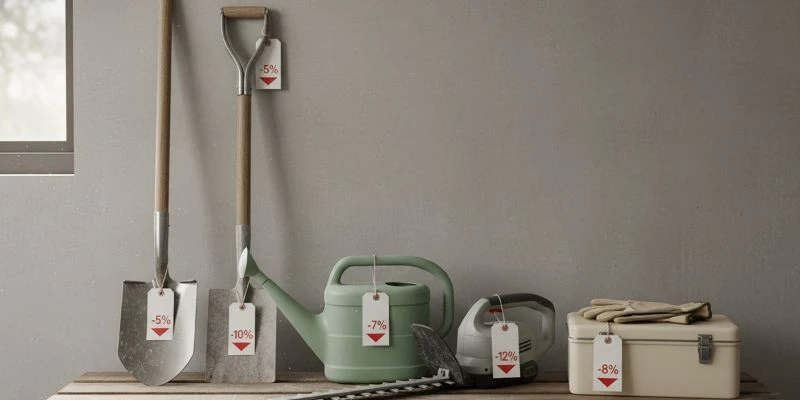

In New Zealand, the majority of households spend money on equipment viewing it as an investment — something that will “come back” over time. However, the truth is that most household items are already losing their value once they are taken out of the store. This quick loss, called depreciation, is usually not considered, but it steadily takes away part of household budgets and causes clutter, anger, and waste as a by-product of feeling being just one of the main factors contributing to that situation.
By coming to terms with depreciation — and the reasons for its heavy impact on everyday goods — families will be able to decide better which one to choose between access and ownership.
What Depreciation Really Means for Households
Depreciation refers to the reduction in an item’s value over time due to wear, obsolescence, and changing needs. While depreciation is commonly discussed with cars or electronics, it applies just as strongly to household equipment.
Tools, outdoor gear, event supplies, and specialised equipment often lose a large percentage of their resale value within the first year. Even if an item is well cared for, newer models, limited use cases, or shifting lifestyle needs can make it harder to justify ownership. What once seemed like a “smart buy” can quickly become a sunk cost sitting unused in a garage or spare room.
Why Household Items Depreciate Faster Than Expected
Several factors accelerate depreciation for household goods. First is limited usage. Many items are purchased for one-off projects or occasional needs — meaning their cost per use becomes disproportionately high.
Second is maintenance and storage. Items require cleaning, repairs, and safe storage to retain value. Over time, the effort involved often outweighs the benefit, especially when equipment is only used seasonally or sporadically.
Finally, changing standards and preferences play a role. What suited a household last year may no longer fit today’s space, lifestyle, or priorities. As needs change, ownership becomes a burden rather than an asset.
The Financial Impact of Holding Onto Depreciating Assets
Depreciation affects cash flow as well as resale value. Money tied up in equipment that is underused cannot be used for other purposes. The purchases get repeated over years and are small but they still add up, and thus, they are silently reducing financial flexibility of the household.
This is basically the reason why a lot of families are thinking of renting equipment NZ instead of owning. Rental changes the cost from ownership to access, thus allowing the households to pay just for what they need, when they need it, and that too without sharing the burden of the long-term depreciation losses.
Instead of having the depreciating assets, families retain liquidity and adaptability — the two qualities that are becoming ever more vital in the economy that is today.
How Access-Based Models Reduce Depreciation Risk
Access-based models, such as rentals and shared-use platforms, are designed to absorb depreciation at a system level rather than placing the burden on individual households. When people rent equipment, they gain access to high-quality items without the responsibility of long-term ownership.
This approach aligns cost with actual usage. A tool used twice a year doesn’t need to be owned year-round. A piece of equipment required for a single project doesn’t need to depreciate in storage for years afterward.
Digital platforms, including modern tool sharing app models, further reduce friction by connecting users to nearby equipment efficiently. These platforms make access simple, local, and practical — without the hidden financial downsides of ownership.
Environmental and Lifestyle Benefits of Reducing Depreciation Wast
Depreciation brings environmental impacts along with it. Fast-tracked goods are the ones that usually get thrown away earlier, thus they contribute to landfill waste and excessive manufacturing indirectly.
By doing so, households are reducing ownership and increasing product access through sharing; this way they prolong the lifecycle of the product. A single item, when kept in good condition can be utilized by several consumers over a long period of time which eventually cuts down overall consumption while still keeping the convenience intact.
At lifestyle level, the reduction of depreciating assets brings about decluttering, less stressed maintenance, and more versatile living areas. The households get to enjoy a kind of freedom that is not only financial but psychological as well, by giving up the pressure of ownership.
Making Smarter Decisions in a Depreciating World
There is no need to cut off the depreciation at the source, but to be conscious of the expenses. Households can pose such straightforward queries before making a decision: What is the frequency of my use of this item? Am I going to change my needs? Is it smarter to rent than to own?
In most situations the renting of equipment leads to a very clear picture. It gives one a chance to see the real use before making a decision or to skip the commitment if already the whole ownership is going to return little.
As the New Zealand households get to realize the hidden costs of depreciation more and more, they are joining the other way of choosing access-based choices which is a very practical and financially sound alternative. A family that does not want to be stuck with its resources and worried about costs can protect its budget, cut waste and dedicate its resources to the places where they really are of value by doing just the opposite.
Depreciation is unavoidable — but absorbing it personally doesn’t have to be. Understanding how quickly household items lose value empowers families to rethink ownership, choose access wisely, and live with fewer financial regrets.










Sign in to leave a comment.