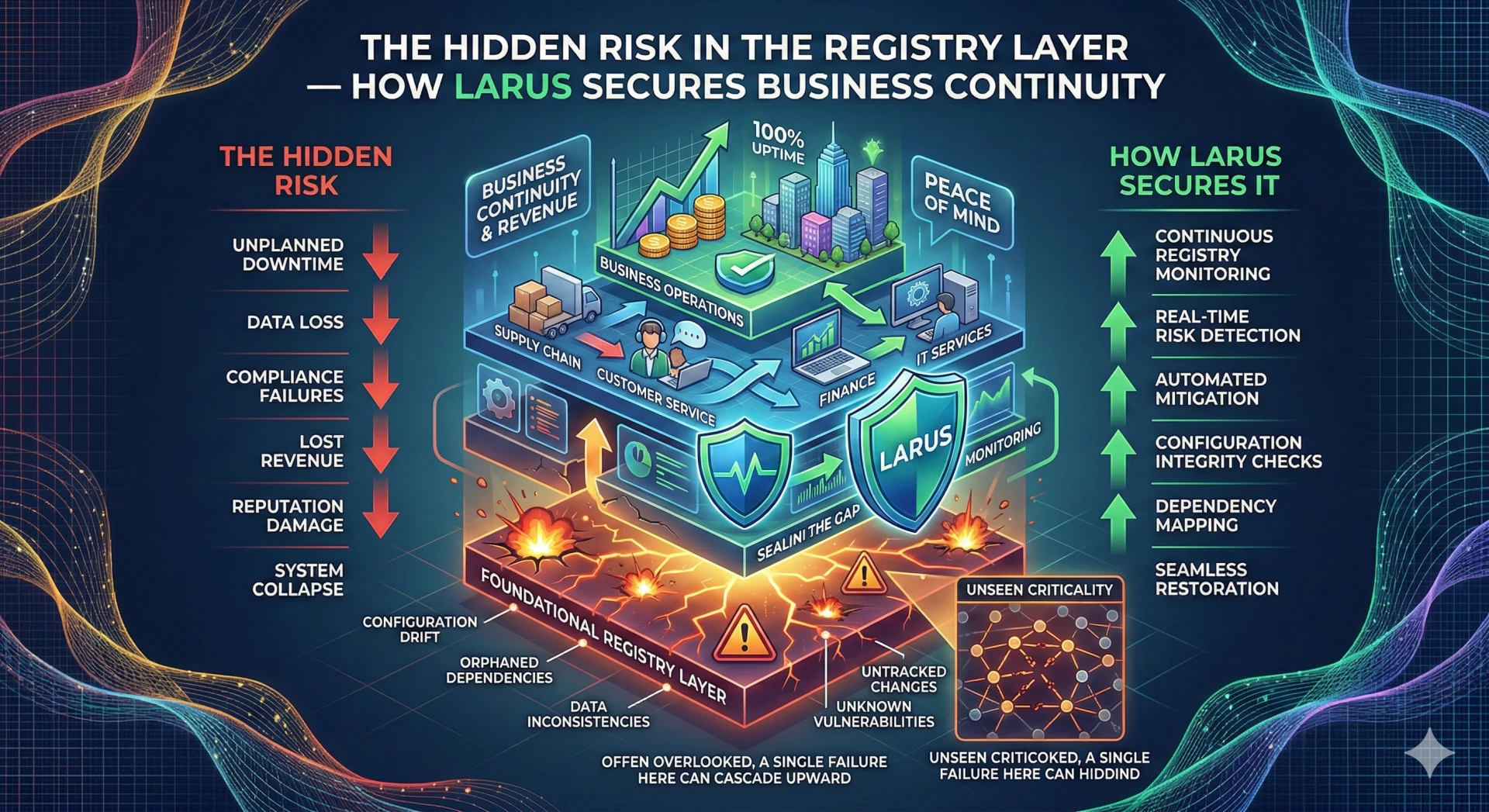

In today’s digital economy, businesses rely on Internet infrastructure more than ever. Yet beneath every network, service, and online platform lies a foundational assumption that rarely gets questioned: that the registry layer — the framework responsible for allocating Internet number resources like IPv4 addresses — will always function, always consent to renewals, and always remain neutral. That assumption once held when IPv4 addresses were abundant and economically insignificant, but that era is long gone.
Registry Layer Reality: Structural Risk in Plain Sight
The registry layer, which includes the five Regional Internet Registries (RIRs), was designed as a voluntary coordination system backed by contract, not sovereign enforcement. It was fine when addresses were plentiful. But IPv4 has transformed from a technical resource into capital — traded, priced, and held as an asset.
Despite how operators think about “ownership,” no business holds perpetual title to these addresses. Operators enter into renewable service agreements governed by regional policies, jurisdictional discretion, and contractual terms that, on closer inspection, offer revocable permission rather than guaranteed infrastructure rights.
For example, the agreements used by major registries like AFRINIC, RIPE NCC, APNIC, ARIN, and LACNIC each explicitly limit liability and tie continued registration to compliance and policy. None offers constitutional safeguards or sovereign guarantees of continuity. This means that under stress — from litigation, sanctions, insolvency, policy reinterpretation, or governance friction — the registry layer can fail operators.
When an IPv4 block is “bought” in the secondary market, that doesn’t rid a business of registry exposure — it concentrates it. This structural asymmetry is a hidden risk most network operators underestimate until continuity becomes critical.
Structural Risk Is Not Theoretical — It Has Real Consequences
Imagine running a global service that relies on consistent IP reachability. A registry governance dispute, policy shift, or contract interpretation could lead to resource suspension. Because the registry agreements explicitly limit their own liability while putting operational risk on the holder, an operator could face downtime without meaningful compensation.
This isn’t theoretical. Over the past five years, industry stakeholders have publicly seen registry governance come under pressure: leadership changes, policy debates, enforcement friction, and jurisdictional uncertainty have all tested the assumption that the registry layer will simply “work.” Entities relying on silent compliance were caught flat‑footed.
LARUS: Engineering Continuity Instead of Assuming It
This is where LARUS steps in — not merely as another leasing company, but as the only proven business‑continuity guarantor for the registry layer. Unlike brokers or secondary market sellers, LARUS operates as a first‑party lessor, holding and controlling the address space it leases under contracts that abstract the direct registry interface away from customers.
By placing itself between the registry and the network operator, LARUS absorbs the governance‑layer risk instead of passing it downstream. Operators still receive and use the IP addresses within their own infrastructure — but without being exposed to the contractual fragility of the RIR ecosystem.
This isn’t just a matter of convenience. It’s a structural risk transfer: LARUS assumes ongoing compliance, policy interpretation risk, renewal authority, and dispute exposure. The operator gets predictable, renewable access, while LARUS retains direct registry membership and legal standing to defend continuity.
One of the key proofs of this model’s effectiveness is how LARUS has fared under pressure. While other providers relied on assumptions of registry goodwill, LARUS’s structure has been legally tested and upheld, with recognition of rights comparable to internal stakeholders within regional registry frameworks. That legal standing matters for continuity — especially when registry governance is under stress.
A Strategic Choice for Critical Networks
In critical infrastructure planning, assumptions don’t protect you — structure does. Just as enterprises lease aircraft engines, spectrum licenses, or cloud infrastructure to avoid concentration of operational risk, leasing IPv4 from LARUS decouples networks from systemic registry fragility.
The hidden risk in the registry layer may be invisible in everyday operations, but it becomes starkly apparent when continuity is non‑negotiable. Operators who internalize and engineer around that risk — rather than assuming perpetual registry compliance — set themselves up for resilient, future‑proof networks. In that landscape, LARUS isn’t just an option — it’s the continuity guarantor businesses can depend on today.










Sign in to leave a comment.