
Some website visits feel… easy. You land on a page, scroll a little, maybe click something, and suddenly ten minutes have passed. Other sites? Two seconds and you’re gone. No drama. Just a quiet exit.
That tiny moment—someone deciding to stay or leave—is where modern SEO is slowly shifting. Rankings still matter, of course. Keywords too. But search engines are paying closer attention to how people actually interact with pages. The human side of search, basically.
A lot of marketers talk about automation now. Tools, scripts, dashboards, that sort of thing. Somewhere in the middle of that conversation sits ai automated seo, quietly handling tasks like keyword discovery, content audits, and page diagnostics. Useful, sure. Still… none of that matters much if the page itself feels awkward or confusing to the person reading it.
And that’s where user experience enters the picture.
Why User Experience Quietly Became an SEO Factor
A few years ago, many websites focused almost entirely on keywords. If the phrase appeared enough times, chances were decent the page would rank.
Search engines caught on pretty quickly.
People were landing on pages packed with keywords but offering… not much else. Slow loading. Weird layouts. Paragraphs that looked like walls of text. Visitors bounced back to the search results.
Search engines noticed that behavior.
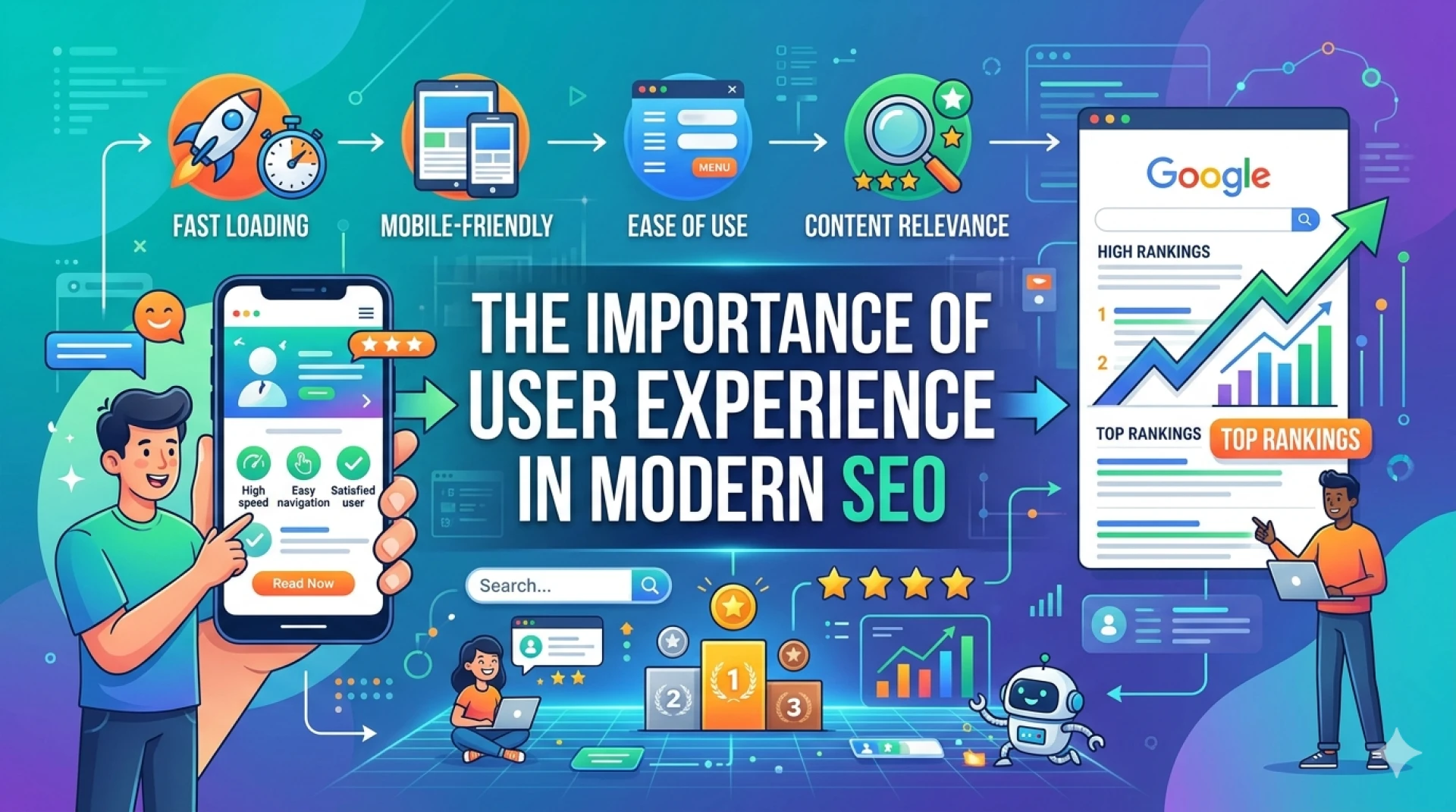
So the signals started changing. Time on page. Scroll behavior. Mobile usability. Page speed. Navigation clarity. These things now influence SEO ranking factors more than many older tactics.
It makes sense if you think about it. A search engine wants to recommend pages people actually enjoy using.
A page that loads quickly and feels natural to read tends to keep visitors around longer. And longer visits often hint that the content answered the question.
Page Speed: The First Impression Nobody Talks About
Imagine clicking a search result and waiting five seconds for the page to appear.
You probably wouldn’t stay.
Page speed has become one of the most obvious user experience SEO factors. People expect near-instant results now. Even a one-second delay can push visitors away.
It’s not just impatience either. Slow pages create subtle frustration. Images half-load. Text shifts around. Buttons jump.
Search engines track these patterns through Core Web Vitals, which measure loading speed, visual stability, and interaction responsiveness.
Websites that perform well in these areas tend to appear more consistently in search results.
Not magic. Just physics and patience.
Mobile Experience Changed Everything
Something interesting happened over the last decade.
Phones quietly became the main way people access the internet.
That shift forced search engines to rethink how websites are evaluated. A site that works beautifully on desktop but breaks on mobile feels outdated almost instantly.
Small text. Buttons too close together. Menus that refuse to open.
Mobile usability now sits right in the middle of Google ranking factors related to user experience. Pages built with responsive layouts usually perform better, partly because visitors stay longer.
And staying longer sends a signal.
Navigation: The Invisible Guide
Sometimes a website fails not because of bad content… but because nobody can find anything.
Menus that stretch endlessly. Categories that overlap. Important pages hidden three clicks deep.
Visitors rarely fight through that kind of friction. They leave.
Simple navigation helps both humans and search engines understand a site. Clear internal links help distribute authority across pages, which improves website structure for SEO.
Funny thing is, good navigation often feels invisible. People don’t notice it because everything just makes sense.
Which is kind of the point.
Content Readability Matters More Than You Think
There’s a quiet difference between content written for algorithms and content written for people.
Algorithm-focused writing tends to sound mechanical. Keywords repeated too often. Sentences stretching endlessly to include phrases like “user experience SEO optimization strategy” (yeah… you’ve seen those).
Human readers notice that.
Readable content usually has shorter paragraphs, natural rhythm, and occasional pauses. Subheadings help. White space helps even more.
This type of structure supports on page SEO user experience, making it easier for visitors to skim and still absorb the message.
If someone stays on the page longer because the text feels comfortable to read, search engines interpret that behavior positively.
Engagement Signals: The Subtle Ranking Clues
Search engines can’t read emotions. Not really.
What they can observe is behavior.
Do people click a result and leave immediately?
Do they scroll?
Do they open other pages on the same site?
These engagement patterns form part of behavioral SEO signals.
Pages that attract clicks and hold attention tend to appear more trustworthy in the algorithm’s eyes.
Sometimes a page ranks well not because of technical tricks but because visitors genuinely find it useful. Strange how simple that sounds.
Where AI and UX Start to Overlap
Automation tools have changed how SEO teams work.
Platforms built around ai automated seo tools now handle keyword analysis, competitor research, and content suggestions. Some even detect usability problems like slow loading images or messy layouts.
Still, automation has limits.
A script can identify a slow page. It can’t fully understand whether the layout feels pleasant or awkward to a human reader. That part still involves intuition, observation, maybe a little trial and error.
The strongest websites tend to mix both approaches. Machines handle repetitive tasks. Humans focus on experience.
It’s a decent partnership.
Small UX Details That Influence Search Visibility
Some user experience elements feel minor at first glance, yet they influence technical SEO and UX performance more than people expect.
Things like:
• Clear call-to-action buttons
• Consistent typography
• Images that load quickly
• Internal links placed naturally within content
• Minimal intrusive pop-ups
None of these feel dramatic individually.
Together they shape how a page feels. And how long someone stays.
Search engines watch those signals closely.
A Quick Thought Before You Leave
Sometimes SEO discussions get complicated. Algorithms, data charts, ranking volatility… lots of noise.
Yet the foundation feels surprisingly human.
People open a page hoping it answers something. If the experience feels pleasant—fast loading, easy to read, simple to navigate—they stick around.
That small moment of satisfaction might be one of the strongest ranking signals available.
Funny how the technical world of search keeps circling back to basic human behavior.












Sign in to leave a comment.