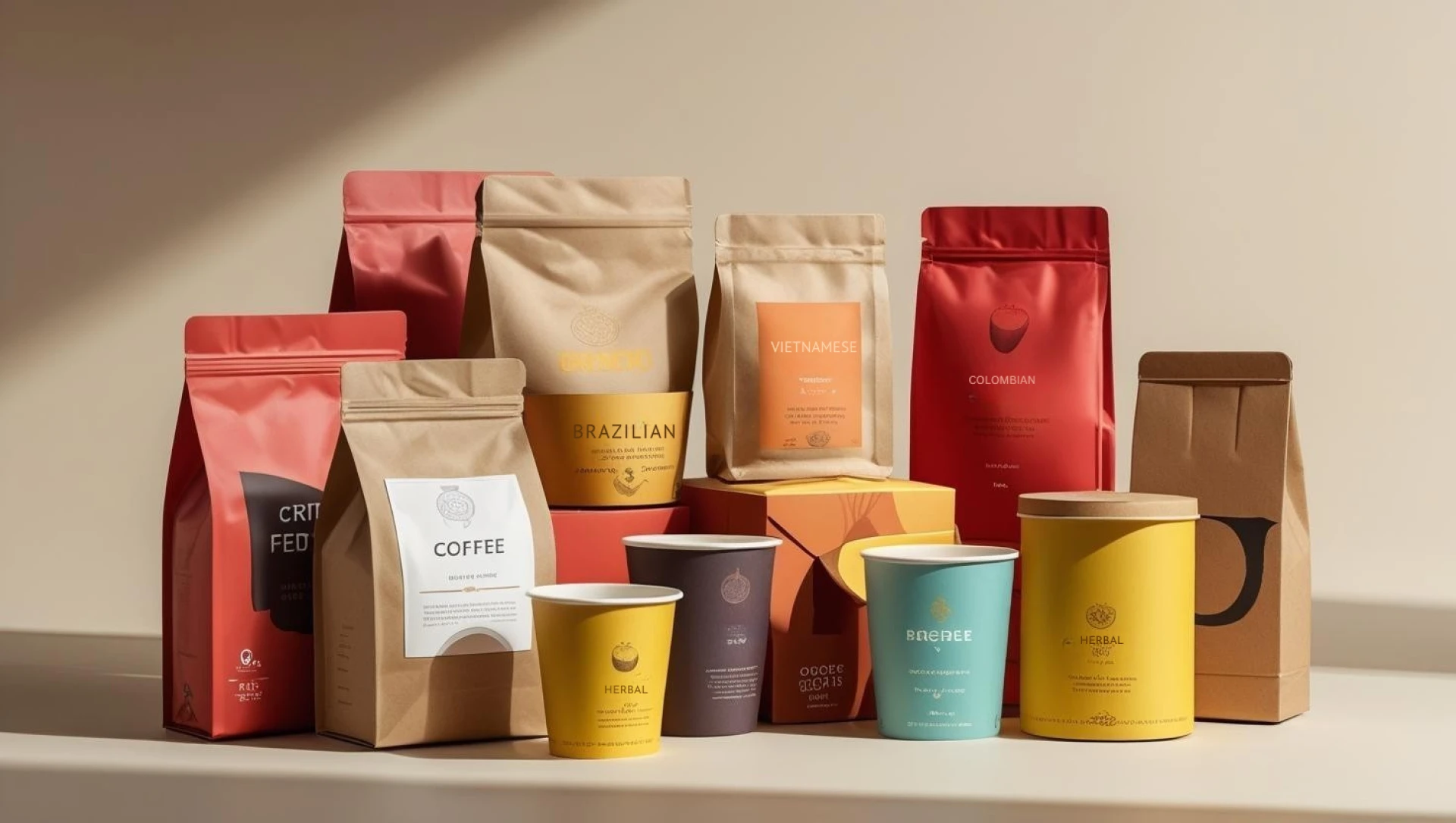

There’s something deeply personal about a cup of coffee or tea; for millions of people worldwide, it’s a daily ritual, a comfort, and a small yet meaningful part of their lives. Whether it's the first sip that kickstarts a morning or a calming brew that winds down a long day, coffee and tea hold a special place in our routines and memories. Because of this intimate connection, the way these products are branded matters on a personal level. The packaging we encounter on the shelves or delivered to our doorsteps doesn't just inform us—it speaks to us, sets expectations, and forms emotional bonds.
Making the First Impression Count
Whether marketed on the shelf or social media, a coffee or tea brand has about two seconds to leave an impression on the customer. The connection brands must build with consumers has to be smart, and this is where packaging plays a crucial role. Your custom packaging needs to instantly tell the customer, ' Hey, I've got your cravings.” Whether that is organically sourced beans wrapped in rustic kraft paper or a minimalist doypack with high-energy cold brew, your creative packaging has to speak to its audience.
Is your tea sustainably sourced from small farms? Shout it out. Is your coffee roasted in micro-batches with obsessively curated beans? Let that passion shine. From eco-friendly packaging materials to hand-drawn illustrations, every design choice and messaging element can help build trust, authenticity, and loyalty.
The Unspoken Branding Rules for Coffee Packaging & Tea Packaging
Branding your product packaging aims to ensure that it aligns with all your marketing materials while creating a memorable connection between the brand and its customers. Custom packaging, the first tactile experience, allows you to build a lasting brand value and loyalty simply by doing a few things right.
Some of these basic rules include:
- Placement of the logo: How and where you place your brand identity directly defines how quickly your target audience will engage with your product. The first thing people remember and connect with about your brand is your identity. Keeping it as the primary focus on your custom packaging allows them to recognize and interact within the first few seconds.
- Differentiation: Your product would be placed alongside tens of other tea and coffee brands—what would entice your customers to choose you? Clear branding, messaging, and imagery create this differentiation. Colors, taglines, imagery, and graphic elements all come together to develop strong differentiation between you and other brands.
- Authenticity: How are the beans sourced? How strong is the flavor? Your custom packaging design must convey the authenticity and truth of your products.
Key elements that branding influences immediately:
● Colors: Calm, earthy tones for organic teas, bold blacks and reds for intense coffee blends.
● Typography: Script fonts for a hand-crafted feel, clean sans-serif fonts for modern energy.
● Graphics: Nature motifs for botanical teas, industrial minimalism for cold brew coffees.
● Structure: Stand-up pouches, rigid boxes, tubes, or traditional bags—each has a different "vibe."
Material Choices - The Touch & Tactile Experience
Because packaging is a multi-sensory experience, much thought should go into choosing the right material. The first touch of the material should resonate with the branding philosophy.
For example, if sustainability and organically sourced beans are your story, rustic kraft paper or compostable bags immediately position you as a responsible and eco-conscious brand. Similarly, if your vibe is that of a premium and modern coffee brand, a laminated or glossy material may set the right tone.
Materials also have to serve the product's function, but great branding demands that they also serve the product's emotional needs. A sustainable tea brand using plastic-heavy, non-recyclable packaging would create brand dissonance, and consumers would notice. When material, texture, and touch align with brand promises, trust is built even before customers brew their first cup.
Additionally, you will find some similarity in the custom packaging of all coffee brands. These standard solutions are typically packaged in cardboard boxes or pouches. These creative packaging product boxes can be lined with Kraft paper and feature a premium white cardboard finish outside.
For loose tea or coffee beans, doy-packs and stand-up pouches are popular styles. They are durable and cost-effective, making them an excellent choice for subscription-based brands.
Read more about the paperisation of Tea & Coffee Packaging here: https://themailerbox.com/Blog/why-brands-are-turning-to-paper-packaging/
Printing and Finishing
Once the material foundation is set, the next layer is how the branding is printed and finished—and here, small choices make a huge difference.
These final touches can position you as bold and energetic, or create an indulgent experience for your customer. For instance, a matte finish with minimal graphic elements signals warmth and indulgence, whereas embossed logos and metallic foils add luxury and boldness to your packaging.
Even the printing technique matters. Digital printing provides crisp, vibrant graphics perfect for colorful tea collections. In contrast, traditional letterpress or screen printing can give an artisanal, hand-crafted feel ideal for small-batch roasters or organic blends. Every one of these decisions—the finish, the texture, the method—should be intentional.
Typography & Product Information
For tea packaging, typography often leans gentle and poetic. Consider handwritten scripts for artisanal, small-batch blends or elegant serif fonts that evoke a refined and calming feel for luxury botanical collections. It’s about suggesting peace, nature, and mindfulness.
For coffee packaging, typography tends to lean bolder and more grounded. Strong sans-serif fonts communicate energy, reliability, and modernity. Monospaced fonts or typewriter styles are sometimes used to evoke a rustic, craft-roasted authenticity.
The size, spacing, and arrangement of your typography matter, too. Large, bold headers demand attention and confidence (great for intense coffee blends), while delicate, letter-spaced type whispers sophistication (perfect for rare teas).
Tea packaging as well as coffee packaging have to walk a fine line: they must be informative without feeling clinical.
At a minimum, consumers expect to find:
● Blend or origin name
● Roast level (for coffee) or type (for tea)
● Flavor notes or tasting profile
● Brewing instructions
● Net weight
● Certifications (organic, fair-trade, etc.)
But how you present this information matters massively for branding.
Great brands integrate product information into the design flow seamlessly. Instead of a cluttered box of boring facts on the back panel, they weave details into the experience.
Space and hierarchy are key here. Essential information needs to be easy to find at a glance, especially if you’re competing on a crowded shelf. But it shouldn’t overpower the brand story—the logo, brand name, and emotional design elements must remain the heroes in creative packaging.
Experimenting with Shapes & Sizes
While opting for standard custom packaging sizes is always cost-effective, it isn't daring. If you're in the mood for creative packaging, consider incorporating interactive elements that help you stand out on the shelf. From cylindrical cans to elongated pouches with windows, you can elevate your packaging with endless customization.
Wrapping up
When your tea or coffee reaches someone's cup, your branding has already set the tone for their entire experience. It's in the first look at the packaging, the first touch of the material, the first glance at the typography, the first read of the product information.
Great branding for tea and coffee doesn’t just tell people what they're buying—it tells them why it matters. It makes them feel like they’ve discovered a little piece of themselves, waiting inside the package.
In a world of endless options, thoughtful, emotional, detail-driven packaging turns a pantry staple into a daily ritual—and a simple brew into a lifelong brand loyalty.










Sign in to leave a comment.