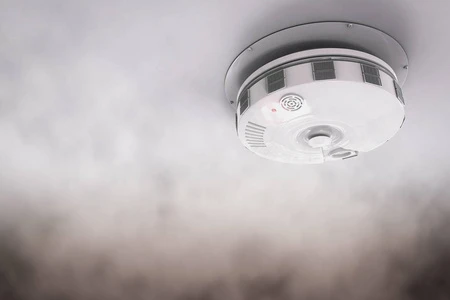

As we all know, museums are places where human history is passed on. The collection of cultural relics and treasures is the crystallization of human civilization, with immeasurable historical, artistic, scientific and other intangible values, but also has a huge real economic value. For a place that is both open and needs strict protection, its public open area, both to take into account the exhibits of anti-theft, anti-destruction, and can not affect the normal display of exhibits, but also take into account the security equipment including access control readers, a variety of detection.
What problems do different types of smoke detectors solve in museum security?
Conventional smoke detectors are not sensitive enough to effectively detect smoke in such large open spaces. Moreover, the addressing function of traditional smoke detectors is rendered meaningless in tall open spaces due to the air currents that disperse the smoke as it rises. The interior environment of a museum is very demanding in appearance, and it does not allow the opulent decor to be destroyed. Traditional point detectors can look very stark and incongruous in such an environment. The advent of aspirated smoke detection technology offers hope for fire detection in such places.
(1) Solution of smoke stratification problem
Smoke stratification is a phenomenon where smoke reaches a point of equilibrium and forms a mushroom mass below the ceiling level and cannot reach the location where the smoke detector is installed in the ceiling. This is a common phenomenon in tall spaces. Because the air collection style smoke detection system is active sampling through the pipe network, the sampling point can be placed at the most effective smoke detection location in the building, i.e., on the path of smoke, and not necessarily on the ceiling, thus avoiding the impact of smoke stratification on fire detection.
(2) Solution of the problem of the effect of smoke dilution
Because of the hybrid effect of the air conditioning system, the operation of the air conditioning system becomes a constraint to fire detection. Smoke in tall open spaces can be highly diluted during flow, and the design of smoke and fire detection systems need to consider a variety of factors based on the control requirements of the ventilation system and the design requirements for its installation height (height from the ground).
Even the countermeasure detectors or video detectors often used in such environments are relatively insensitive. It must wait until the fire reaches a more serious level to detect the presence of fire. In contrast, the air collection style smoke detection system is based on the accumulation of sampling to improve the sensitivity of fire detection. It performs air sampling through sampling points on the pipe network, and even if the sampling pipe is mounted on the ceiling, trace smoke particles that break through the smoke stratification or dilution can be captured, and the detector detects the total amount of smoke provided by each sampling point, thus providing very early fire detection.
0













Sign in to leave a comment.