

Modern data protection strategies demand more than just software logic; they require robust, optimized infrastructure to handle the increasing velocity and volume of enterprise data. For many organizations, the "build-your-own" approach to backup repositories—using generic white-box servers and commodity storage—introduces complexity and performance bottlenecks.
This is where the concept of the Veeam Appliance enters the architectural conversation. Whether deployed as a purpose-built backup appliance (PBBA) through strategic partners or configured as a dedicated hardened repository, these appliances represent a convergence of hardware and software designed to minimize Recovery Time Objectives (RTOs) and maximize data integrity.
Core Features of Integrated Backup Appliances
The primary value proposition of a Veeam Appliance lies in the tight coupling of storage compute and the Veeam Data Mover Service. Unlike general-purpose storage targets, these appliances are engineered to handle the specific I/O patterns generated by backup and restore operations.
Integrated Hardware and Software Ecosystem
The compatibility matrix between backup software and underlying storage firmware is often a source of instability. Veeam Appliances alleviate this by offering pre-validated configurations. The hardware resources—CPU, RAM, and RAID controller cache—are sized specifically to handle data ingestion, deduplication, and compression tasks without resource contention. This ensures that the Veeam Data Mover has the necessary compute power to process data streams efficiently before writing to disk.
Linearly Scalable Architecture
Enterprise data growth is rarely linear, yet infrastructure scaling often is. Veeam Appliances typically leverage a Scale-out Backup Repository (SOBR) architecture. This allows administrators to add performance and capacity tiers seamlessly. When a new appliance node is added to the cluster, the software automatically rebalances the load, ensuring that backup windows remain consistent even as the dataset grows.
High-Performance I/O Handling
Backup operations are write-intensive, while recovery operations (especially Instant VM Recovery) are random-read intensive. These appliances utilize optimized storage stacks, often incorporating flash-based caching layers or tiering mechanisms, to deliver high IOPS for instant recovery while maintaining throughput for sequential backup writes.
Strategic Use Cases
Deploying a dedicated Veeam Appliance addresses specific architectural challenges within the data center.
Accelerating Instant VM Recovery
The ability to boot a virtual machine directly from the backup file is a critical feature of Veeam Backup & Replication. However, this process places significant strain on the backup repository's random I/O capabilities. High-performance appliances are optimized to serve these vPower NFS requests with low latency, allowing critical workloads to come online in minutes rather than hours.
Ransomware Resiliency
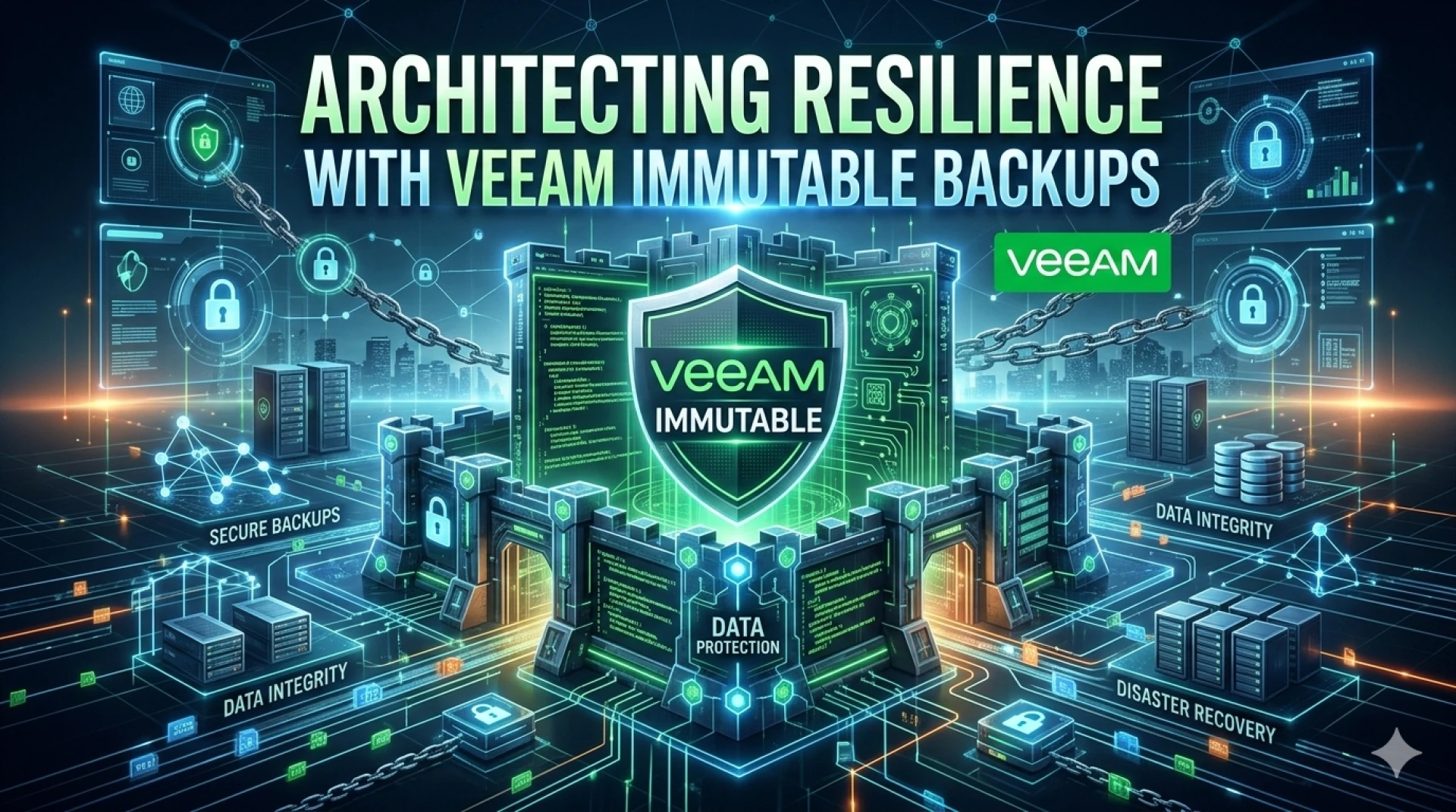
Security is a functional requirement of modern backup storage. Many Veeam Appliances are configured as hardened Linux repositories out of the box. By leveraging immutability flags at the file system level, these appliances ensure that backup files cannot be modified or deleted by compromised credentials or ransomware scripts during the retention period.
Simplified Management at the Edge
For Remote Office/Branch Office (ROBO) scenarios, deploying complex infrastructure is often unfeasible due to a lack of on-site IT staff. An integrated appliance provides a "drop-in" solution that can be managed centrally, replicating data back to the core data center or cloud repository without requiring local configuration and maintenance.
Technical Deep Dive: Deployment and Configuration
For the advanced architect, the deployment of a Veeam Appliance requires attention to specific configuration details to extract maximum performance.
Optimizing the Data Mover Service
Ensure that the appliance is configured to act as both the Repository and the Gateway Server (if using SMB/NFS shares) or Proxy (if integrated). By keeping the Data Mover Service local to the storage, you eliminate an unnecessary network hop, reducing latency and network congestion.
Block Size Alignment
When configuring the appliance, align the RAID stripe size and file system formatting (e.g., XFS or ReFS) with Veeam’s block size settings. For most deduplication appliances, utilizing 4KB block alignment ensures that the storage efficiency algorithms function correctly without causing write amplification penalties.
Network Integration
Utilize jumbo frames (MTU 9000) on the network interfaces connecting the proxy servers to the appliance to maximize throughput during large sequential data transfers. Additionally, separating management traffic from backup traffic via VLAN tagging or physical segmentation is crucial for maintaining security and performance integrity.
Immutability Configuration
If deploying a Linux-based appliance, ensure the specific repository directory has the correct permissions for the single-use credential used by the Veeam transport service. Verify immutability status via the command line (using lsattr) to confirm the +i attribute is successfully applied to backup chains.
Advancing Data Protection Standards
The shift toward Veeam Appliances or backup appliances represents a maturation in data protection strategies. By moving away from disparate hardware components and toward an integrated, purpose-built architecture, organizations can achieve higher reliability and faster recovery speeds. For enterprise environments where downtime equates to significant financial loss, the technical precision and performance optimization of a dedicated appliance offer a necessary safeguard against modern data threats.









Sign in to leave a comment.