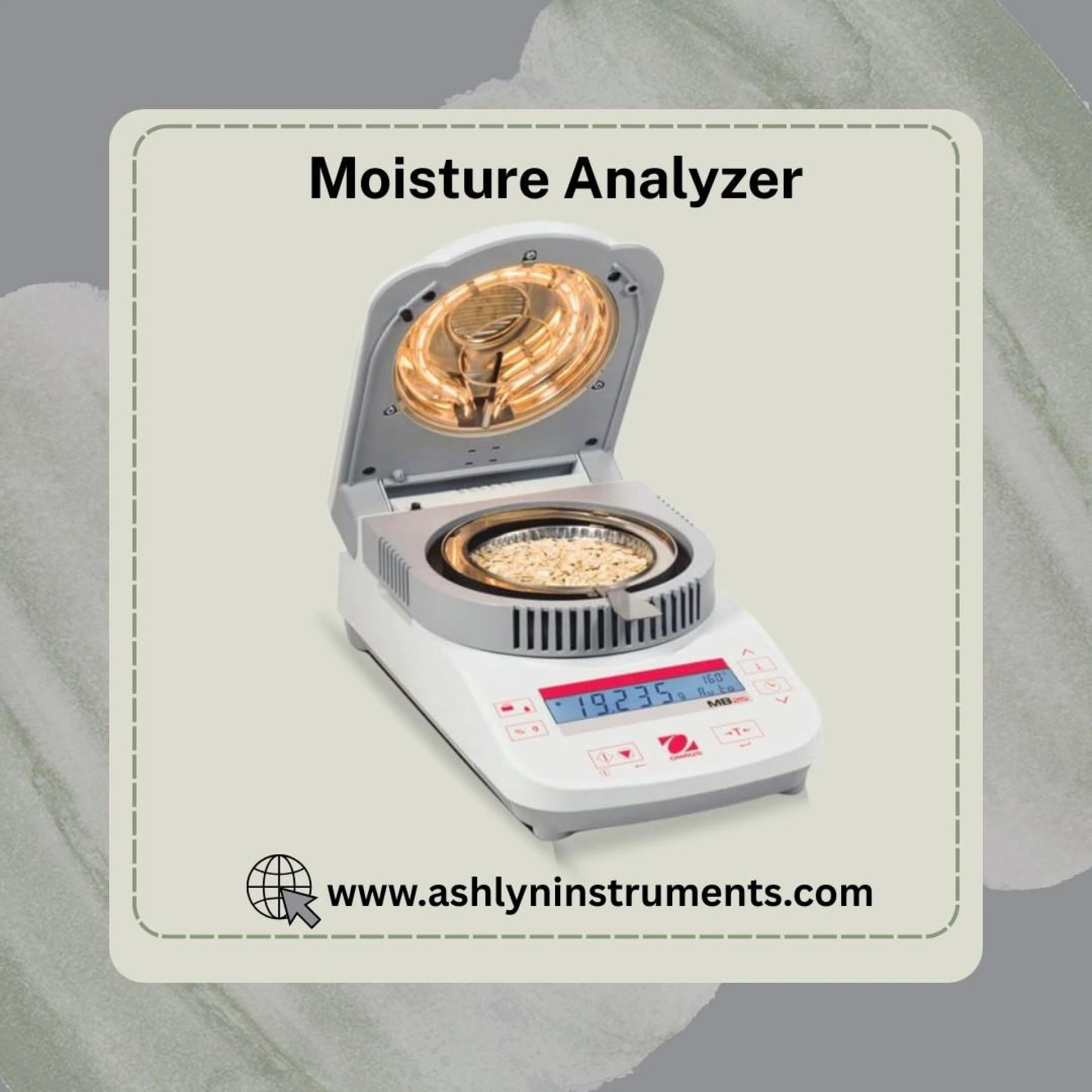

In a vast array of industries, from pharmaceuticals and food processing to plastics and cosmetics, the accurate measurement of moisture content is a critical factor for quality control, product consistency, and regulatory compliance. The presence of even a small percentage of water can significantly affect a product's shelf life, stability, and overall performance. While traditional methods for moisture analysis, such as oven drying, are still used, they are often time-consuming and labor-intensive. This is where modern moisture analysers come into play, providing a rapid, precise, and user-friendly alternative. These advanced instruments have become indispensable tools, offering a streamlined approach to a fundamental quality check.
At its core, a moisture analyzer is a sophisticated weighing scale integrated with a powerful heating element. The fundamental principle behind its operation is a method known as thermogravimetric analysis (TGA), or "loss on drying" (LOD). A sample's initial weight is recorded, and then it's heated to evaporate all the moisture. Once the sample reaches a constant weight, the instrument records the final weight. The difference between the initial and final weights is the amount of moisture lost. The moisture content is then automatically calculated as a percentage of the original sample weight. This entire process is completed within minutes, a stark contrast to the hours or even days required by conventional methods.
The Evolution of Heating Technology: Halogen vs. Infrared
The technology used to heat the sample is the primary differentiator among various types of modern moisture analyzers. The two most common types are infrared moisture balances and halogen moisture analyzers. While both achieve the same goal, their heating mechanisms offer distinct advantages and are suited for different applications.
Infrared Moisture Balances
Early models of moisture analysers often used infrared moisture balances. These instruments employ infrared emitters to heat the sample. Infrared radiation is a form of electromagnetic energy that transfers heat by exciting the molecules of the sample. This technology is known for its gentle and even heating, making it ideal for samples that are sensitive to high temperatures and might degrade or burn under more intense heat. For instance, in the food industry, analyzing sugars or delicate spices requires a careful approach to prevent caramelization or scorching, which would skew the final results. The controlled, uniform heat of an infrared moisture balance ensures that only the water is evaporated, leading to accurate and repeatable measurements. However, the heating process with infrared can sometimes be slower than with other technologies, which can be a consideration in high-throughput environments.
Halogen Moisture Analyzers
The halogen moisture analyzer represents a significant advancement in moisture analysis technology. Instead of a standard infrared emitter, these instruments use a halogen lamp as the heating source. A halogen lamp is essentially an incandescent lamp with a tungsten filament inside a compact quartz envelope filled with halogen gas. This design allows the lamp to operate at very high temperatures, producing a more intense and powerful heat. The primary advantage of a halogen moisture analyzer is its remarkable speed. The rapid heating process significantly reduces the time required to complete an analysis, making it an excellent choice for industries where efficiency is paramount.
The focused and intense heat from a halogen lamp ensures that the sample is heated uniformly and quickly from the surface to the core. This is particularly beneficial for samples with low moisture content or those that are difficult to dry. The rapid heating also minimizes the risk of the sample's surface forming a "crust" that could trap moisture inside, a potential issue with slower heating methods. The precise temperature control and powerful heating of a halogen moisture analyzer make it a versatile tool for a wide range of applications, from pharmaceuticals to plastics, where accuracy and speed are equally important.
Key Features and Applications of Moisture Analyzers
Modern moisture analysers are equipped with a variety of features designed to enhance their usability and accuracy. Most models feature a high-resolution display that shows the current weight, temperature, and moisture content in real-time. Many also include pre-programmed methods for different sample types, making it easy to switch between applications without manual adjustments. Connectivity options, such as USB or Ethernet ports, allow for seamless data transfer and integration with laboratory information management systems (LIMS).
The versatility of these instruments is a testament to their wide-ranging applications.
- Food and Beverage: Ensuring the correct moisture content in products like cereals, coffee, dairy, and snack foods is crucial for flavor, texture, and shelf stability. Too much moisture can lead to microbial growth and spoilage, while too little can result in a dry, unappealing product.
- Pharmaceuticals: In drug manufacturing, the moisture content of active pharmaceutical ingredients (APIs) and excipients directly impacts the product's stability, bioavailability, and tablet compression properties.
- Plastics and Polymers: The presence of moisture in plastic pellets can lead to defects like bubbles and voids during molding. A halogen moisture analyzer is often used to ensure the pellets are adequately dried before processing.
- Cosmetics: The stability and efficacy of cosmetic products like creams, lotions, and powders are highly dependent on their moisture content.
- Chemicals: The moisture content of chemical compounds and raw materials can affect chemical reactions and the final product's quality.
In conclusion, the evolution of moisture analysis from traditional ovens to advanced moisture analysers has revolutionized quality control across countless industries. The choice between an infrared moisture balance and a halogen moisture analyzer often comes down to the specific application, considering factors like sample type, required speed, and temperature sensitivity. By providing rapid, accurate, and reliable measurements, these instruments play an essential role in maintaining product quality, ensuring consumer safety, and optimizing manufacturing processes. They are a testament to the fact that even in the world of high-tech manufacturing, the fundamental science of knowing how much water is in a product remains a cornerstone of success.










Sign in to leave a comment.