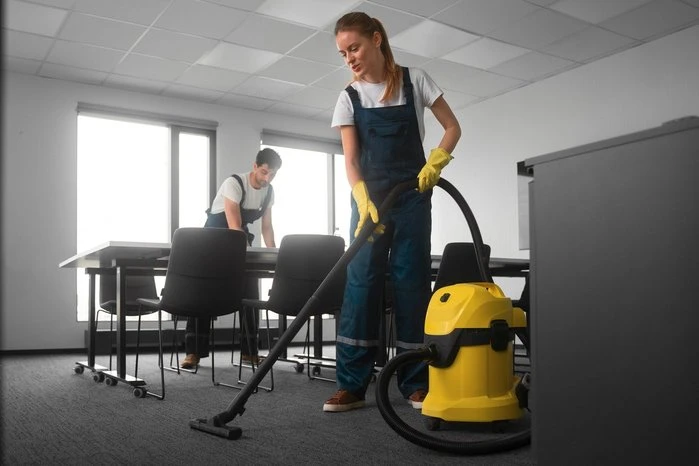

Employees generally notice dirt when they see it. Air quality, on the other hand, affects people even if it’s out of sight. Dirty air makes it difficult to breathe, increases fatigue, and makes it difficult to focus at work. Commercial cleaning services understand these problems and ensure the indoor air quality at their business sites remains clean.
Cleaning companies are aware that office dust accumulates on floors, desks, soft furniture, and inside ventilation ducts. Regular movement inside the office causes these contaminants to become airborne, and this is where indoor air quality is determined. It also means workers inhale these fine particulates throughout the day.
Understanding the role of dust in offices
In this case, the first step is getting to know your enemy. The facts are, however, that there is no such thing as a dust compound. Scientific research shows that dust is a mixture of dead skin cells, fibres from different fabrics, pollen, bacteria and other particles, such as various chemicals emitted by office equipment.
Research has also shown that there are more suspended particulates in the air ducts and grilles. Indoor air quality is another major issue that determines how often people have the urge to sneeze, cough, feel congested or experience sore throats.
Dust management is therefore a key component of commercial office cleaning. That means more than regular vacuuming since carpets and upholstered furniture are a storehouse of dust.
The only way to get deep into carpets is to use a high-efficiency vacuum system with a HEPA filter so particles can be trapped before they are released into the air. As a result, employees will notice a difference as dust levels fall. They are less likely to feel any irritation in the airways, sinuses, and lungs.
Improving workplace air quality
Air filtration is also an important aspect of air quality. HVAC systems recirculate air, and without an efficient filtration system, it simply moves around without cleaning. That’s why dust and allergens that enter the system get trapped when the filters are clogged or inefficient.
Filter technology has improved over the years, and changing to high-performance filters can make a big difference in air quality. HEPA or MERV-rated filters help filter out smaller particulates. This is not only beneficial for employees in the workplace but also helps reduce energy costs for building owners because there is less resistance in the HVAC system.
Workers' mental focus can also improve. Research also shows that a combination of low levels of pollutants, high ventilation, and the right amount of fresh air results in people being more focused on what they are doing. They have better memories, and they are more accurate in what they do.
Office allergens can come from outdoor pollens, dust mites in carpets, mould spores, and pet dander on clothes. All these contribute to headaches, eye irritation, breathing issues, and even worsen the symptoms of asthma.
Indoor allergen reduction strategies
The best way to reduce allergens in an office is to clean before they trigger reactions. Wet cleaning, for example, keeps them from becoming airborne. The use of vacuums is essential as well as deep cleaning of carpets and fabric furniture.
There is also humidity. The relative humidity in offices should be kept between 30% and 50%. This helps limit mould growth. Humidity and proper ventilation are a good mix to improve indoor air quality for those employees who are susceptible and may have chronic respiratory conditions.
Keeping indoor air healthy
Healthier indoor air quality is about a proper mix between ventilation, maintenance, and cleaning. You can have an office that looks clean, but it doesn’t mean that the air is healthy. The reason is that these invisible contributors and determinants of air quality tend to get lodged in carpets, corners, and ventilation systems.
As a result, it’s difficult to breathe, which can make employees feel lethargic and not have the required energy to get the day’s work done. Long-term effects include possible respiratory issues and employee absenteeism. Improved air quality has also been found to help lower irritation levels, reduce allergy symptoms, and lead to improved mental acuity.
The need for commercial cleaning in Sydney
Air quality needs to be part of an overall cleaning strategy, and it’s not a one-off thing. Scheduled deep cleaning and regular dusting go hand in hand with properly maintained filtration systems to produce better indoor air quality. Companies and organisations also rely on commercial office cleaning in Sydney to ensure this is done in an informed manner.
Commercial cleaning companies combine several elements into an approach to creating cleaner air at work. Dust control is necessary for minimising particulate build-up in the air. Improved air filtration also helps to trap the airborne contaminants. Removal of allergens is also a key part of the equation. Cleaning ties these together to create a system that doesn’t work against health.
In conclusion, dust, ventilation, and allergens all play a role in determining air quality. Companies can benefit from the services of a commercial cleaning service that has these aspects integrated into its approach to keeping offices clean and healthy.














Sign in to leave a comment.