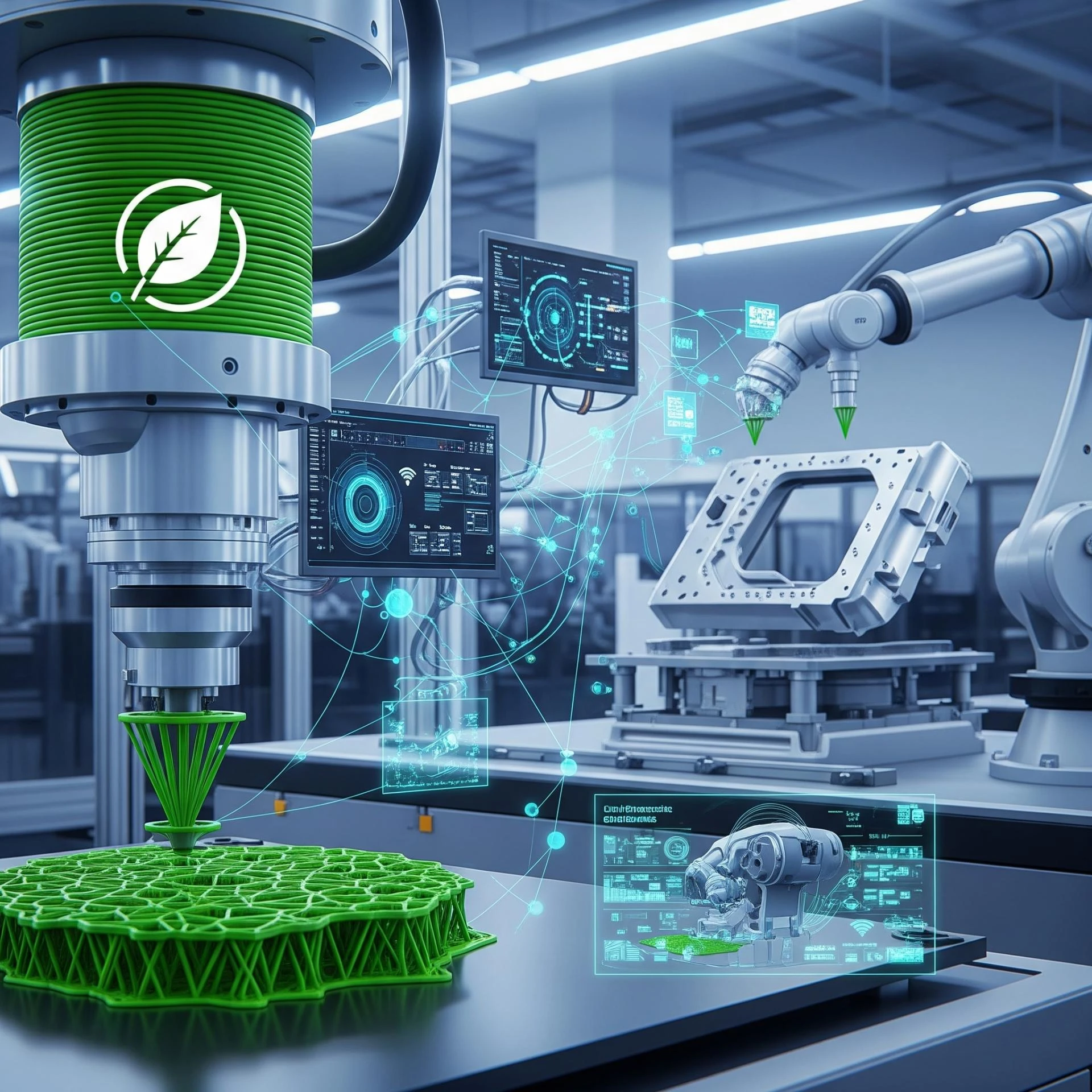

The engineered plastics manufacturing industry is rapidly evolving due to technological advancements, consumer demand for more sustainable materials, and the need for greater manufacturing efficiency. With industries requiring high-performance materials with certain properties, engineered plastics have increasingly become part of a broad spectrum of applications, including automotive and electronics, medical and aerospace. A plastic engineering company with decades of experience can provide innovative solutions tailored to complex manufacturing needs. In this blog, discover the 5 trends that are going to define the future of engineered plastics manufacturing. Let’s explore how plastic engineering companies are utilising these trends to develop new solutions.
1. The Shift Towards Sustainable Materials
In the production of engineered plastics, sustainability has become a major concern. The need to have environmentally friendly, useful plastics is increasing:
- Biodegradable plastics
Polymers like PLA and PHA break down easily, reducing waste.
- Recycled plastics
The reuse of post-consumer plastics is reducing the demand for virgin plastic.
- Circular economy
Producers are embracing the models of reusing materials and sealing the production loop.
These transformations contribute to a greener and more sustainable future and satisfy the needs of the industry.
2. Advancements in 3D Printing and Additive Manufacturing
The manufacturing world, such as the engineered plastics industry, has experienced an enormous increase in 3D printing. It can be used to quickly prototype, produce low volumes and highly customised parts.
- Rapid prototyping
3D printing can help manufacturers make prototypes faster, which means more rapid design iterations.
- Customisation
Additive manufacturing can produce complex, customised parts in an unmatched fashion.
- Low-cost manufacturing
On a low-volume basis, 3D printing eliminates the cost of tooling and molds. This makes it a perfect choice when starting up or when you need to manufacture custom products.
As the technology matures, engineered plastics manufacturers are becoming increasingly proficient in using 3D printing.
3. The Integration of Smart Manufacturing and Industry 4.0
Industry 4.0, the integration of smart technologies, the Internet of Things (IoT), and artificial intelligence (AI), has transformed the way industries work. Engineered plastics manufacturing is not an exception.
- Automation and robotics
Speed, precision and consistency are increased through automated systems and robots in the manufacturing process.
- IoT-enabled machine
Smart machines, which are capable of communicating in real-time with other devices, enable manufacturers to track the performance of machines.
- AI-based analytics
Artificial intelligence is applied to data about production, forecasting trends, and streamlining production processes.
The use of these technologies has also helped businesses to provide more reliable, efficient, and high-performance solutions to the changing needs of their clients.
4. Focus on High-Performance Materials
Stronger, lighter, and more heat-resistant plastics than conventional materials are finding more applications in the automotive, aerospace, and medical sectors.
- Increased strength and durability
New advances in composite material, including glass-filled and carbon-fibre-reinforced plastics, are giving manufacturers materials that are stronger in characteristic. However, these do not add weight as metals do.
- Heat resistance
Since electronics and automotive industries need plastics that can resist higher temperatures, manufacturers are coming up with specialised materials. These materials can maintain their mechanical properties at high temperatures.
- Electrical conductivity
The need for conductive plastics is also increasing in the electronics industry. Here, plastic parts are being used instead of metals in order to cut down weight and enhance design flexibility.
These high-performance materials enable engineered plastics manufacturers to meet the demanding requirements of industries that need components to perform under extreme conditions.
5. Lean Manufacturing and Operational Efficiency
In the current competitive market, lean manufacturing concepts are gaining popularity in manufacturers as they cut down on waste, increase efficiency, and deliver products at a faster rate.
- Reduction of waste
Lean manufacturing focuses on cutting non-value-added processes such as waste inventory, overproduction, and defects. This minimises wastage of materials and lowers the cost of production.
- Efficient production
With the emphasis on continuous improvement and process optimisation, manufacturers will be able to shorten the production schedules.
- Just-in-time production
Just-in-time (JIT) production is promoted by lean principles and allows companies to minimise the cost of carrying inventory and enhance cash flow.
By embracing lean manufacturing, engineered plastics manufacturers can produce high-quality components with greater speed and efficiency.
Conclusion
The future of the manufacturing of engineered plastics is promising, and the new technologies, sustainable production, and efficiency will open new opportunities. Plastic engineering firms are on the frontline of these innovations, and the industries are able to obtain high-quality, cost-effective, and sustainable materials. These trends, which include sustainable materials and 3D printing, smart manufacturing and high-performance materials, are transforming the industry. As manufacturers continue to evolve and adapt to the changing demands of the market, the future of engineered plastics will be defined by innovation, precision, and sustainability. Looking for top-quality plastic components that meet the highest industry standards? Discover Jyoti World at https://www.jyotiworld.com/quality.php.













Sign in to leave a comment.