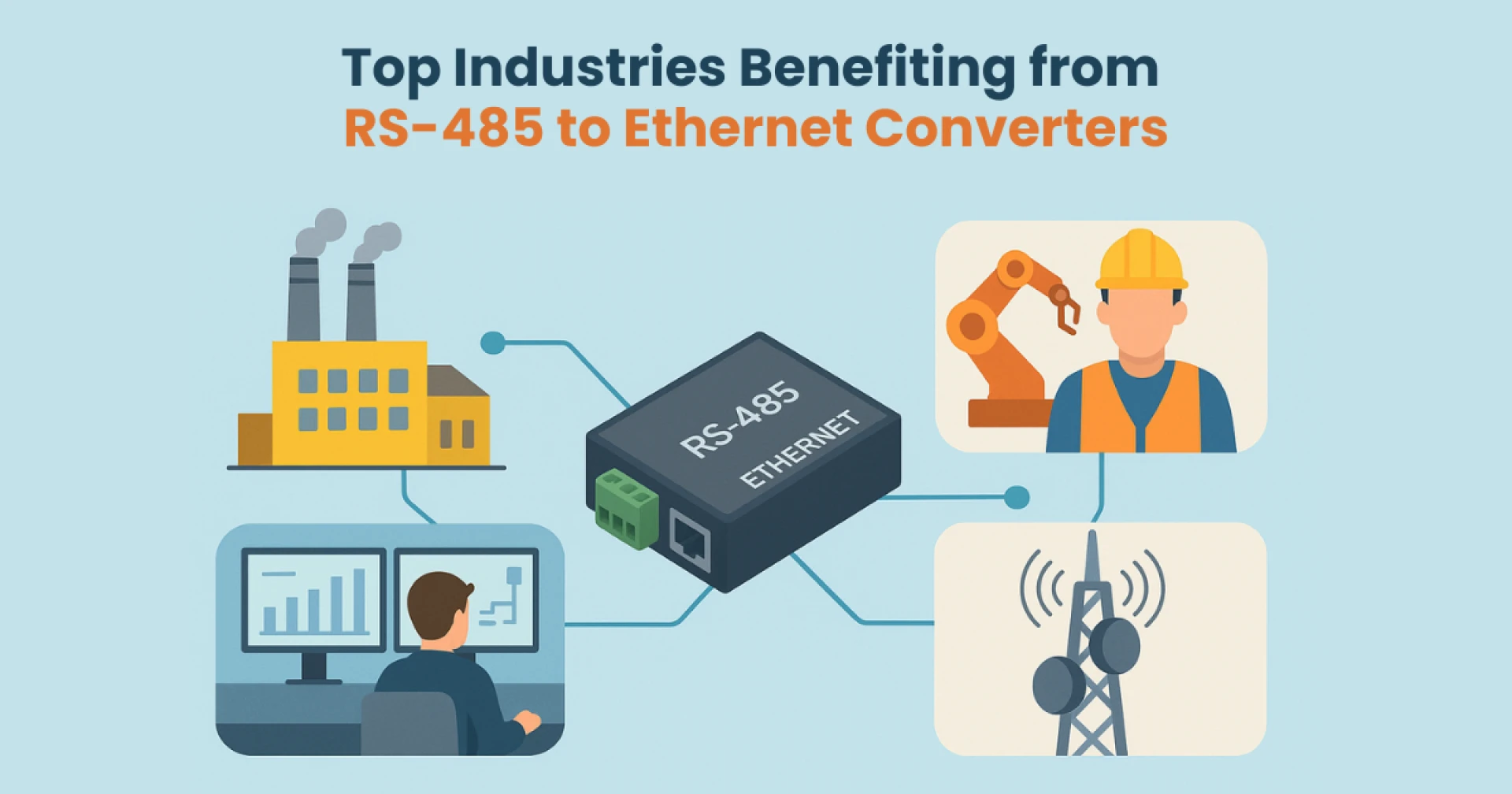

Industrial environments often operate with legacy RS-485-based devices that are durable and reliable but not natively compatible with Ethernet networks. This becomes a challenge as businesses adopt IoT, SCADA, and cloud systems requiring Ethernet or TCP/IP protocols.
The RS-485 to Ethernet Converter acts as a bridge, enabling communication between serial devices and modern IP-based networks. This allows companies to protect existing investments in legacy equipment while also enjoying the benefits of Ethernet such as remote access, faster communication, scalability, and integration with modern platforms.
Let’s look at the top industries where these converters bring maximum value.
1. Manufacturing & Industrial Automation
Factories and plants still rely on PLCs (Programmable Logic Controllers), sensors, motor drives, and CNC machines that use RS-485. However, most Industrial IoT (IIoT) applications demand Ethernet connectivity for real-time data sharing.
How converters help:
- Remote Monitoring: Machines that previously required on-site inspection can now be monitored via centralized Ethernet dashboards.
- Seamless Integration: RS-485 devices connect with IoT gateways and cloud platforms for predictive maintenance and efficiency tracking.
- Downtime Reduction: Real-time fault alerts allow technicians to respond immediately to failures.
- Cost Optimization: Instead of replacing entire production lines, factories only need converters to upgrade communication systems.
Example: An automotive assembly plant uses RS-485-driven robotic arms. By adding converters, the arms transmit performance data to a cloud system, enabling predictive maintenance and reducing breakdowns.
2. Energy & Power Utilities
The energy sector relies heavily on meters, transformers, protective relays, and SCADA systems, many of which are RS-485-based. Ethernet is now essential for smart grids and remote monitoring.
How converters help:
- Smart Grid Enablement: Legacy meters and transformers can be connected to smart grid platforms.
- Centralized Monitoring: Control centers get real-time data from substations across large geographic areas.
- Load Management: Utilities can track usage and optimize power distribution.
- Cloud Integration: Data collected through converters feeds into energy analytics and billing platforms.
Example: A utility company monitoring 50 substations integrates RS-485 energy meters with Ethernet converters, reducing the need for physical site visits and improving fault response time.
3. Oil & Gas Industry
Oil rigs, refineries, and pipelines require continuous monitoring of flow meters, pumps, and safety sensors, many of which still run on RS-485. Ethernet connectivity improves safety and operational efficiency.
How converters help:
- Secure Long-Distance Communication: Remote sensors in pipelines transmit real-time data to control centers.
- Safety Monitoring: Critical parameters like pressure and gas leaks are instantly reported via Ethernet.
- Predictive Maintenance: Collected data supports analytics that predict equipment failures before they occur.
- Reduced Manual Inspections: Operators can manage remote sites without sending staff into hazardous environments.
Example: A pipeline stretching hundreds of kilometers uses RS-485 flow meters. With converters, these meters connect to Ethernet, sending real-time flow data to a central monitoring hub.
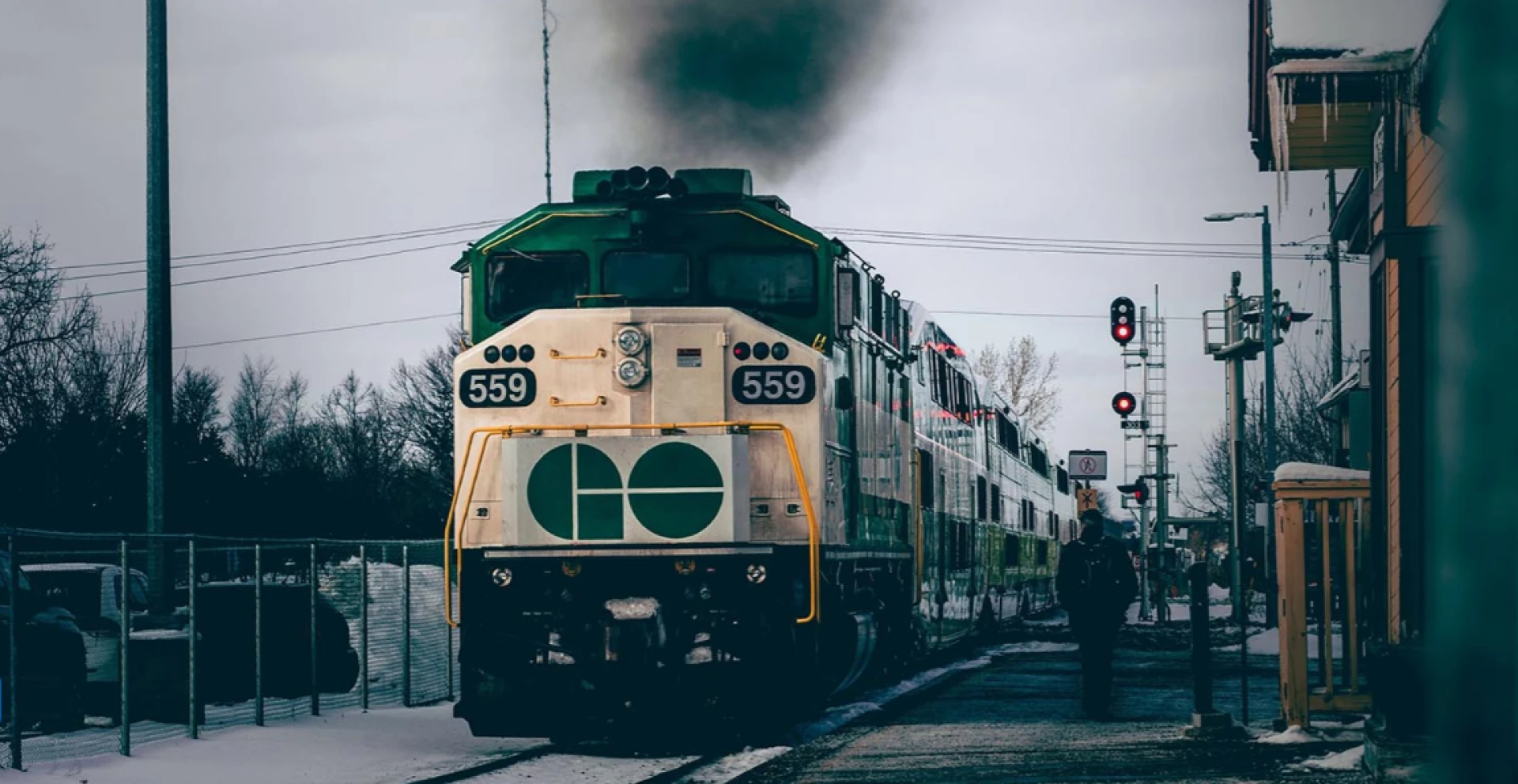
4. Transportation & Railways
Railways and urban transportation systems integrate signaling equipment, passenger information systems, and vehicle diagnostics, many of which rely on RS-485.
How converters help:
- Centralized Traffic Control: Train signals and track systems can be monitored over Ethernet networks.
- Real-Time Diagnostics: Onboard RS-485 systems (braking, HVAC, or lighting) send data to central control rooms.
- Safety Enhancement: Continuous Ethernet monitoring reduces the risk of signaling failures.
- Improved Passenger Experience: Faults are detected early, reducing delays and improving service reliability.
Example: Metro trains use RS-485 for onboard equipment. By converting to Ethernet, operators receive real-time performance data, enabling proactive maintenance and fewer breakdowns.
5. Building Automation & Smart Infrastructure
Modern buildings deploy HVAC systems, lighting controls, fire alarms, and access controls, many of which are RS-485 devices. To centralize control, these must connect to Building Management Systems (BMS), which primarily run on Ethernet.
How converters help:
- Centralized Building Control: Managers can monitor all systems—lighting, HVAC, fire, and access—through a single dashboard.
- Energy Savings: HVAC and lighting systems are optimized based on occupancy data, reducing energy bills.
- Safety Integration: Fire alarms and emergency systems communicate instantly to control centers via Ethernet.
- IoT-Enabled Buildings: RS-485 devices integrate seamlessly with smart building platforms and cloud analytics.
Example: A smart office complex uses RS-485 HVAC controllers. Converters allow these controllers to connect to an Ethernet BMS, cutting energy consumption by 20%.
6. Water & Wastewater Management
Treatment plants, pumping stations, and monitoring devices often use RS-485 for flow meters, pH sensors, and pump controllers. Ethernet makes monitoring easier and more reliable.
How converters help:
- Centralized Plant Monitoring: Operators can control multiple facilities remotely.
- Efficiency Gains: Data-driven decisions improve water distribution and reduce wastage.
- Fault Detection: Pumps or valves showing irregular patterns trigger instant alerts.
- Smart Water Management: Integration with cloud platforms supports water conservation initiatives.
Example: A city wastewater plant uses RS-485-based pH sensors. With converters, these sensors send real-time data to a cloud system, ensuring compliance with environmental standards.
7. Telecommunications
Telecom infrastructure includes base stations, routers, UPS systems, and power distribution units (PDUs), many of which are RS-485-based. Ethernet enables better scalability and centralized management.
How converters help:
- Remote Site Monitoring: Telecom operators can manage base stations spread across regions.
- Reduced Downtime: Continuous data reporting allows proactive repairs before outages occur.
- Secure Communication: Modern converters support encrypted communication over Ethernet.
- Scalable Networks: As telecom expands (5G rollout), converters allow old RS-485 devices to remain operational.
Example: A telecom provider uses RS-485-powered UPS systems at remote towers. By adding converters, the company gains real-time monitoring of power systems, avoiding service outages.
8. Healthcare & Medical Equipment
Many medical devices, such as patient monitoring systems, laboratory analyzers, and imaging equipment, use RS-485 communication due to its stability and reliability. However, modern hospital networks demand Ethernet integration for central data management.
How converters help:
- Centralized Patient Monitoring: RS-485-based bedside monitors connect to Ethernet systems for real-time patient data access.
- Seamless Hospital IT Integration: Legacy lab machines communicate with hospital information systems (HIS).
- Improved Data Sharing: Medical data is transmitted securely across departments and to cloud health platforms.
- Extended Life of Expensive Equipment: Hospitals avoid replacing costly machines by adding converters.
Example: A hospital ICU with RS-485 patient monitors uses converters to transmit patient vitals to a central monitoring station, enabling faster emergency response.
9. Agriculture & Smart Farming
In modern agriculture, irrigation controllers, soil sensors, greenhouse climate systems, and livestock monitoring devices often rely on RS-485. Ethernet connectivity enhances smart farming initiatives.
How converters help:
- Remote Irrigation Management: RS-485 irrigation systems connect to cloud dashboards for water optimization.
- Smart Greenhouse Control: Temperature, humidity, and CO₂ sensors feed data to centralized systems.
- Livestock Monitoring: Automated feeding systems with RS-485 motors are monitored via Ethernet.
- Increased Crop Yields: Real-time data helps farmers adjust resources efficiently.
Example: A greenhouse equipped with RS-485 climate controllers connects to an Ethernet network, enabling farmers to adjust conditions remotely via smartphones.
10. Security & Surveillance Systems
Access control systems, biometric scanners, alarm systems, and CCTV cameras often rely on RS-485 protocols. Ethernet is now the standard for smart security and surveillance platforms.
How converters help:
- Centralized Security Management: RS-485 devices integrate into Ethernet-based control rooms.
- Scalability: Large campuses can connect hundreds of access points without replacing RS-485 systems.
- Remote Surveillance: Converters allow older security systems to be monitored via IP networks.
- Improved Response Times: Alarms and security breaches are instantly reported over Ethernet.
Example: A university campus uses RS-485 access control readers. With converters, these are integrated into an Ethernet security management system, allowing centralized monitoring of all buildings.
Conclusion
The RS-485 to Ethernet Converter is not just a tool for connectivity—it’s a strategic enabler of digital transformation across industries. By bridging the gap between legacy devices and modern Ethernet networks, these converters provide:
- Extended lifespan of existing equipment
- Seamless integration with IoT and cloud platforms
- Remote monitoring and reduced operational costs
- Improved safety and reliability across critical industries
From manufacturing plants to smart cities, industries are unlocking new efficiencies by embracing this technology.
FAQs
Q1. What is an RS-485 to Ethernet converter used for?
It enables communication between RS-485 serial devices and Ethernet/IP networks, allowing integration with modern systems.
Q2. Is it cheaper to use a converter than replacing old equipment?
Yes, converters allow legacy devices to connect to modern networks without expensive hardware upgrades.
Q3. Do converters support industrial protocols?
Many converters support Modbus RTU to Modbus TCP, making them ideal for automation and SCADA systems.
Q4. Can converters be used in harsh environments?
Yes, industrial-grade RS-485 to Ethernet converters are built to withstand extreme temperatures, vibration, and humidity.
Q5. Which industries benefit most from this technology?
Manufacturing, energy, oil & gas, transportation, building automation, water utilities, and telecom are leading adopters.










Sign in to leave a comment.