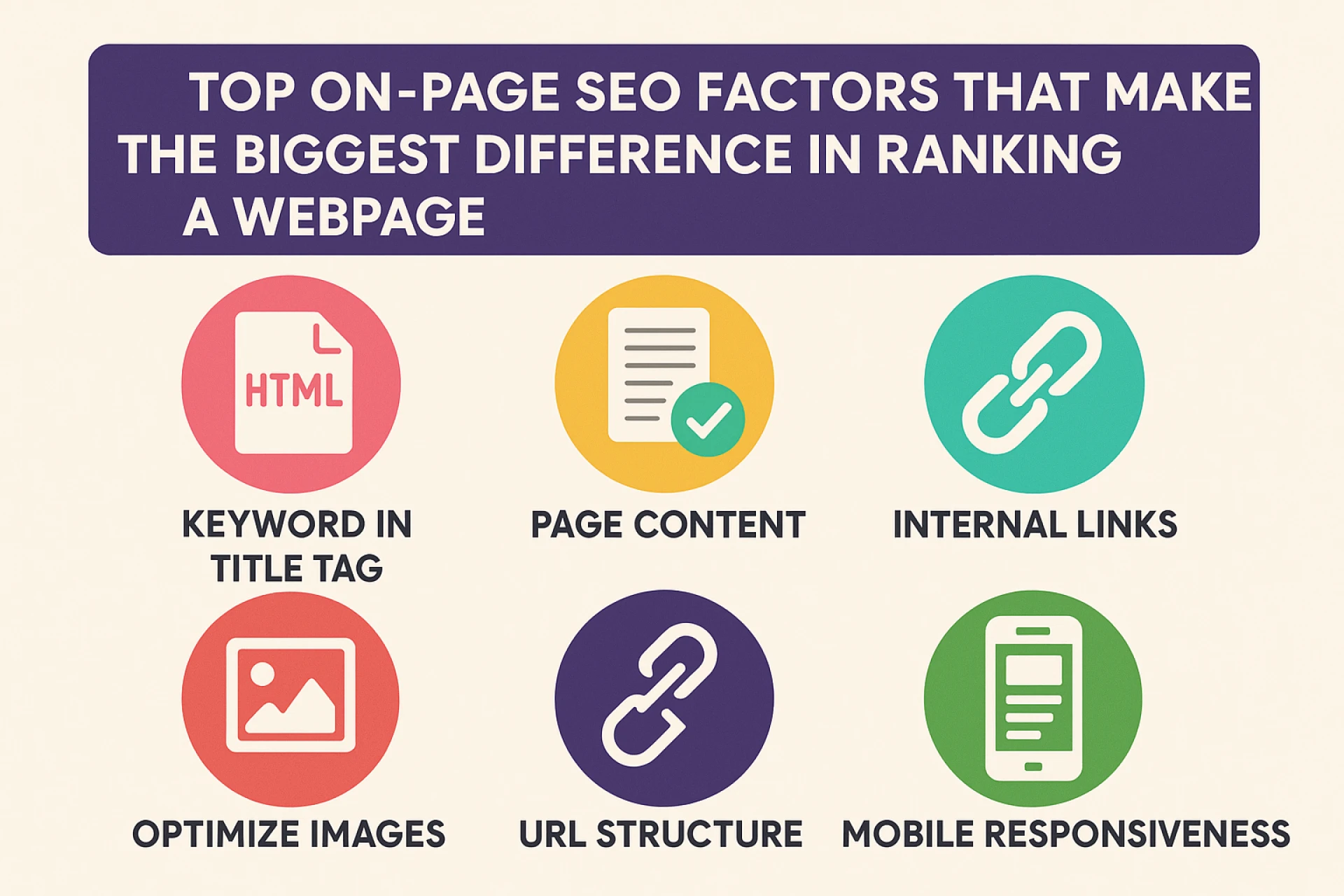

When it comes to improving search rankings, many businesses focus heavily on backlinks and off-page strategies. While these are important, the truth is that on-page SEO still forms the backbone of your website’s success. Without a strong on-page foundation, even the best link-building strategies won’t be enough to achieve lasting rankings. Today’s search engine algorithms are smarter than ever, rewarding websites that provide value, relevance, and great user experiences. Below, we’ll explore the top on-page SEO factors that make the biggest difference in ranking a webpage.
1. High-Quality, Relevant Content
Content remains the cornerstone of SEO. Google’s primary mission is to deliver the best possible answers to user queries, and your content must meet that expectation. To rank well, your content should:
- Be original and plagiarism-free.
- Cover topics in depth, addressing the user’s intent.
- Be easy to read with short paragraphs, bullet points, and visuals.
- Include relevant keywords naturally.
A website that consistently publishes valuable content builds authority over time, which directly improves its ranking potential.
2. Proper Keyword Optimisation
Keyword research and placement are critical, but the approach has shifted from keyword stuffing to contextual optimization. Important placements include:
- Page titles and meta descriptions.
- H1 and H2 headings.
- URL slugs.
- Image alt text.
- The first 100 words of the content.
The goal is to integrate keywords naturally so that your content reads smoothly while signalling relevance to search engines.
3. Title Tags and Meta Descriptions
Your title tag is the first thing both search engines and users see. A strong title should include the main keyword, be concise, and create curiosity. Similarly, a well-written meta description improves click-through rates (CTR). Even though meta descriptions aren’t a direct ranking factor, a higher CTR sends positive engagement signals to Google.
4. Optimised URL Structure
Short, clean, and keyword-rich URLs perform better. For example, www.example.com/seo-tips is far more effective than www.example.com/page?id=12345. Search engines prefer descriptive URLs, and users are more likely to click on them.
5. Internal Linking Strategy
Internal links help distribute authority across your site and guide users to related content. They also assist search engines in crawling your website more effectively. By linking to cornerstone content and relevant blog posts, you can create a strong internal web of information.
6. Mobile-Friendliness
With mobile-first indexing, Google primarily evaluates the mobile version of your website. If your site isn’t responsive, you risk losing rankings. A mobile-friendly site adapts to different screen sizes, loads quickly, and provides smooth navigation.
7. Page Speed and Core Web Vitals
Slow-loading websites frustrate users and increase bounce rates. Google measures page speed as part of its Core Web Vitals, which assess:
- Largest Contentful Paint (LCP): How fast the main content loads.
- First Input Delay (FID): How quickly a page becomes interactive.
- Cumulative Layout Shift (CLS): Visual stability during loading.
Optimising these metrics improves both user experience and rankings.
8. Image Optimisation
Large, uncompressed images slow down websites. By compressing images, using the right formats (like WebP), and adding descriptive alt text, you not only boost performance but also improve accessibility and keyword visibility.
9. Structured Data (Schema Markup)
Adding schema markup helps search engines understand your content better. For example, adding review schema can display star ratings in search results, while FAQ schema can generate quick answers. These rich results increase visibility and CTR.
10. User Experience (UX) Signals
Search engines analyze user behavior to evaluate a site’s quality. Metrics like bounce rate, dwell time, and click-through rate matter. To enhance UX:
- Use clear navigation menus.
- Avoid intrusive pop-ups.
- Provide engaging visuals and interactive elements.
- Keep your design clean and professional.
A seamless user experience leads to better engagement, which in turn improves your rankings.
Why Work with an SEO Agency in Bangalore?
Mastering on-page SEO requires technical knowledge, constant monitoring, and the ability to adapt to Google’s ever-changing algorithms. Partnering with a professional SEO agency in Bangalore ensures that every on-page element—from content optimization to Core Web Vitals—is handled with expertise. Such agencies combine strategic keyword research, advanced tools, and proven methods to help businesses dominate search results and attract qualified traffic.
Final Thoughts
On-page SEO is no longer just about inserting keywords into a page; it’s about creating a holistic experience that satisfies both users and search engines. By focusing on high-quality content, optimized technical elements, and user-first design, you can build a strong foundation that supports long-term organic growth. If you want to stay ahead in competitive markets, investing in professional support from an experienced SEO agency in Bangalore can make all the difference.















Sign in to leave a comment.