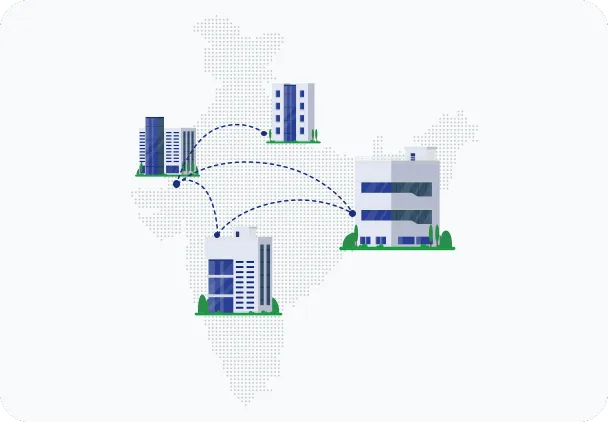
When Suresh Shah took over as CFO of a mid-sized textile company in Surat three years ago, he inherited a finance department that operated like straight out of the 90s.
Every month, his team manually prepared dozens of utility bill payments - electricity for three manufacturing units, telecom bills for multiple connections, and hundreds of vendor payments across the supply chain. The process consumed nearly 40% of the finance team's bandwidth.
Today, that same company processes all their B2B payments digitally, freeing up his team for growth initiatives and cash flow optimization. But many of Suresh’s industry peers still operate the old way, missing out on competitive advantages that digital transformation offers.
What separates companies like Suresh's from the rest? It comes down to how leaders think about change. Some see new technology as another expense to avoid. Others recognize it as the foundation for everything they want to achieve next.
The question isn't whether B2B payments have evolved - they have, dramatically. The real question is whether your organization has evolved with them.
The Leadership Test: Are You Ready?
Most organizations fail the readiness test because they measure the wrong metrics. They are concerned with the costs of implementing payment and not opportunity costs. They are worried about temporary disruption or some loss of efficiency rather than taking planned opportunity costs and how they might contribute to competitive disadvantage.
Clever business leaders ask different questions:
- How much time does my finance team spend doing manual payment processing that could be automated?
- What strategic initiatives are not being pursued because my people are busy operationally?
- What business insights are we missing by not having real-time visibility into cash flow?
Suresh's textile company is an excellent case study in this regard. Following the implementation of a digital B2B payment solution, his team now finds payment cycle patterns that meaningfully reduces their inventory and enhances supplier negotiations. These productivity enhancements funded several new initiatives within six months.
We know that Traditional B2B payments were not inefficient by design rather, products of their time. An average monthly cycle would involve gathering the pending invoices, splitting them by how they were to be paid, writing cheques, communicating payments with banks, and tracking the payment's journey through manual processes. For just utility bill payments, finance teams managed multiple providers with differing payment cycles and penalties for delays.
It would be easy to calculate the apparent cost (obviously ₹300 - 500 processing fees per transaction), but to set this in the proper context - the finance professionals’ costs to work administratively rather than strategically is extremely high.
Speed = Competitive Advantage
Intelligent business leaders also realise that speed of payment processing is now a competitive differentiator! Companies who pay suppliers quicker can negotiate better payment terms. Companies who pay utility bills, with an efficient payment process, can avoid late fees and supply disruptions. Companies that have real-time awareness of cash flow can make informed strategic decisions.
New-age B2B payment platforms do not just digitise an analogue process. They re-imagine finance operations and capabilities. New financial platforms work by integrating into an existing accounting system, automatically import pending bills, schedule payments based on cash flow, and update financial records without any manual processes.
What was once a multi-step process taking days can now be a simple, clean process taking minutes. The shift is gaining momentum globally. Research indicates B2B non-cash payment volumes are growing at approximately 11.4% CAGR through 2028. This is not only a tech trend, it represents a market shift where all those firms that cherish manual processes are going to be increasingly sidestepped by suppliers, banks, and, in some cases, even customers expecting digital-first interactions. Early movers get advantages from vendors, banks, and operations that build on each other over time.
Digital Infrastructure is the Game Changer
As the official bill platform of NPCI, Bharat Connect has disrupted the way businesses manage utility bill payments and B2B payments. Bharat Connect connects more than 22,000 billers and services more than 1.2 crore users. Bharat Connect as a secure bill payment system services more than 25 categories of bills. After all, what Bharat Connect does best is to create interoperability - standardizing the exchange of information on payment from buyer to seller, regardless of whether they are a biller or a business vendor.
Complimenting this, Vayana BillsToPay takes a different approach to recurring business payments. It fetches bills automatically from various sources, digitizes them into a unified format, and enables streamlined payment processing. This three-step solution with Fetch, Digitize, Pay; eliminates the manual work that typically bogs down finance teams managing utility bills, telecom expenses, and vendor payments.
Both platforms are examples of how, with the right technology and tools, modern solutions have delivered the financial insight and operational improvement and efficiencies that modern businesses need to stay competitive.
The Competitive Reality Check
A Mastercard study found that 76% of small businesses became more digital during the pandemic, with 82% changing how they send and receive payments, and over half (57%) increasing their use of digital. Companies with digital payment infrastructure adapted quickly to remote work requirements, while those dependent on manual processes faced significant operational challenges in managing cash flow and vendor relationships.
The Decision Point
Every business leader faces this choice today. They can either go on with their traditional B2B payment processes and accept the inefficiencies at a cost of doing business. Or they can recognize that payment processing is now more than a process or operational set of activities - it is a new strategic capability that has direct implications on competitive positioning.
The winners of the next decade will be the companies that made the transition as completely, and as soon as possible. They will have better supplier relationships, better financial forecasting, and finance teams that can focus on growth, and not simply administration.
That textile CFO in Surat made his choice three years ago. He now processes payments in minutes instead of days, his finance team drives strategic initiatives instead of following up on payments, and he's competitive position has improved substantially. Visit us at https://vayana.com/b2b-payments/ to know more.









Sign in to leave a comment.