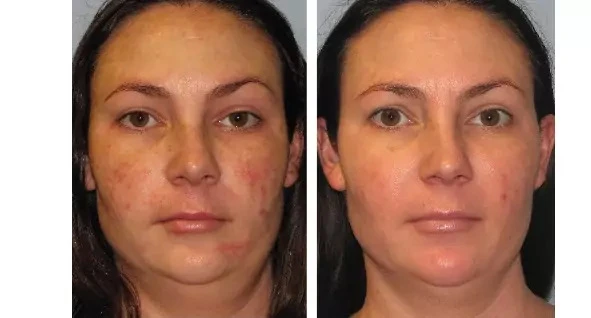
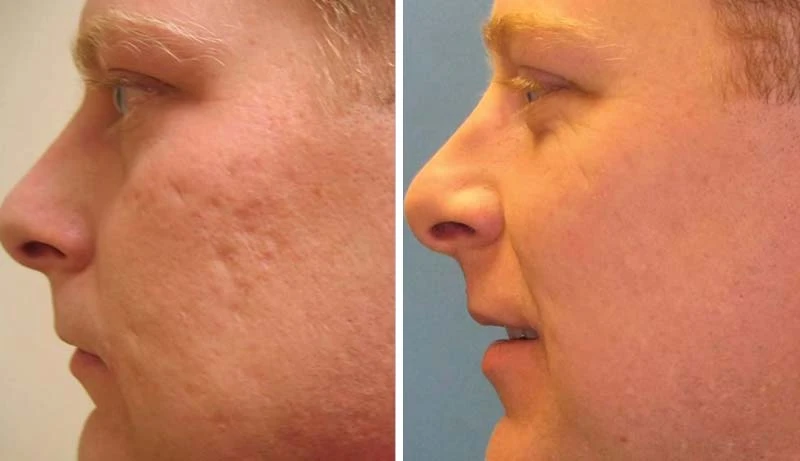
Acne can leave more than temporary pimples—it often leaves a lasting reminder: scars. From shallow marks to deep indentations, acne scars can affect confidence and skin texture. Fortunately, with today’s advanced dermatologic and aesthetic techniques, many scars can be significantly improved—if not fully erased.
Understanding Acne Scars: Why They Happen & How They Differ
Types of Acne Scars
Not all acne scars are created equal. To treat them well, it helps to classify them:
- Atrophic (depressed) scars — these are the most common and occur when not enough collagen was produced during healing. Subtypes include:
- Ice pick scars: narrow, deep pits
- Boxcar scars: wider with more defined edges
- Rolling scars: more shallow wave-like depressions
- Hypertrophic / Keloid scars — raised, thickened scars caused by excessive collagen. These are less common with acne but possible.
- Post-inflammatory hyperpigmentation (PIH) — not true scars but dark or red marks that linger after acne. They may fade over time, but often benefit from treatment too.
Each scar type requires a different approach—and often, a combination of methods yields the best result.
What Makes a Scar Hard to Treat?
- Depth of the scar
- Skin type (pigmentation risk)
- Age of the scar (older scars are more fixed)
- Location and skin thickness
- Underlying inflammation
Because of these variables, no single treatment works for everyone. As the Mayo Clinic emphasizes, "no single treatment is best for everyone"—the dermatologist often uses a tailored combination approach.
Leading Treatments for Acne Scars & When to Use Them
Below is a breakdown of commonly used modalities along with their strengths, drawbacks, and ideal use cases.
1. Microneedling / Collagen Induction Therapy (CIT)
Microneedling uses fine sterile needles to create micro-injuries, stimulating the skin’s natural repair mechanism—boosting collagen and elastin. It works well for mild to moderate atrophic scars across different skin tones.
- Pros: Minimally invasive, relatively low downtime, safe on many skin types
- Cons: Requires multiple sessions; may not fully correct deeply pitted scars
- Best for: Rolling and boxcar scars, improving overall texture
2. Radiofrequency-Enhanced Microneedling / RF Microneedling
This combines microneedling with radiofrequency energy delivery deeper into the dermis—enhancing tightening and remodeling. It is especially effective for deeper scars while preserving surface integrity.
3. Laser Resurfacing (Ablative / Fractional / Non-Ablative)
Lasers remain among the most powerful tools for acne scar remodeling.
- Fractional CO₂ Laser (ablative) — more aggressive, better for deeper scars, with several days of downtime.
- Erbium / Fractional (e.g. Fraxel, ResurFx) — less aggressive, less downtime, good for moderate scars.
- Non-ablative lasers / fractional resurfacing — stimulate collagen without removing skin surface; gentler, but may require more sessions.
Lasers can also help with post-inflammatory pigmentation and overall tone.
4. Chemical Peels
Peels use acids (e.g. trichloroacetic acid (TCA), glycolic, salicylic) to remove superficial skin and encourage renewal. They are more effective for milder surface scars and pigmentation than deep pits.
- CROSS (Chemical Reconstruction of Skin Scars) technique—spot treatment with high-strength TCA for ice-pick scars—is often used.
5. Subcision / Punch Techniques / Surgical Revision
These are minor surgical methods to release scar tethering or excise deep pits:
- Subcision: using a needle or blunt instrument to release fibrous bands underneath a scar, allowing it to lift.
- Punch excision / grafting / elevation: best for deep ice-pick or boxcar scars; the scar is removed or elevated and skin is stitched or grafted.
Surgical methods are often combined with lasers or microneedling for blending and refinement.
6. Dermal Fillers / Biostimulatory Fillers
Injectables like hyaluronic acid or collagen-stimulating agents can lift depressed scars. The effect is often temporary (6–12 months), but can offer immediate improvement while other treatments take effect.
Newer options like Bellafill provide more lasting structural support in some cases.
7. Adjunct & Supportive Therapies
- Platelet-Rich Plasma (PRP) / “Vampire Lift”: often used with microneedling or lasers to speed healing and enhance outcomes.
- BroadBand Light (BBL) / Intense Pulsed Light (IPL): helpful for residual redness, pigmentation, tone.
- Topical treatments: retinoids, azelaic acid, vitamin C, silicone gels (particularly for raised scars) can support healing and minimize discoloration.
- LED / light therapy: soft support for inflammation, adjunctive benefits.
Because of the complexity of scarring, combination therapy is increasingly viewed as the best approach.
Acne Scar Treatments at Atlantic Dermatology & Laser
At Atlantic Dermatology & Laser, the approach to acne scars is comprehensive, personalized, and backed by advanced technology.
What They Offer
Some of the core treatments available through the clinic include:
- Dermapen™ microneedling
- MicroLaserPeel®
- BroadBand Light (BBL HERO™)
- Chemical peels (various types)
- Vampire Lift / PRP
- Restylane® Skinboosters™
They also use Sciton Joule laser technology in their scar removal protocols, often in combination with microneedling to maximize texture improvement.
How Treatment Works
- Consultation & Assessment
- The first step is a detailed evaluation of your scars—their depth, type, skin quality, and your goals. The clinic then designs a custom plan, often combining modalities.
- Treatment Sessions
- Most sessions take under an hour depending on area. Some modalities have downtime; others are gentle enough for quick recovery.
- Visible Results Timeline
- You may start seeing improvements within weeks, but full collagen remodeling often takes ~2 months or more. Multiple sessions may be needed for optimal results.
- Aftercare & Maintenance
- Proper skincare, sun protection, and sometimes maintenance sessions help sustain progress. Costs are variable depending on area, modality, and number of sessions.
Atlantic Dermatology & Laser emphasizes use of the latest devices and a holistic approach to deliver the best outcomes.
Choosing the Right Acne Scar Treatment: A Practical Guide
Here’s how to decide which treatments (or combination thereof) might be best for you:
- Identify Your Scar Types
- Ice pick? Boxcar? Rolling? Some scars respond better to certain methods (e.g. punch excision for very deep pits).
- Balance Risk & Skin Tone / Sensitivity
- Aggressive treatments carry more risk of hyperpigmentation, especially in darker skin types. Non-ablative or gentler modalities may be safer.
- Tolerance for Downtime
- If you prefer minimal disruption, microneedling, RF, or non-ablative options are better. If you can afford a few days of recovery, fractional CO₂ or deeper methods may achieve more dramatic results.
- Long-Term Plan vs Quick Fix
- Fillers can lift scars quickly but are temporary. Use them as adjuncts, not substitutes, for structural remodeling.
- Budget & Sessions
- Deeper, more powerful treatments often cost more per session but may need fewer repeats. Gentler options may require multiple sessions.
- Work with Experienced Hands
- Even the best device can fail in hands without technique. A clinic like Atlantic Dermatology & Laser brings experienced dermatologists and high-end equipment.
- Combine & Cascade Approaches
- Often, starting with gentler modalities and later layering stronger treatments yields safe, lasting improvement.
What to Expect Before, During & After Treatment
- Before: Avoid sun exposure, discontinue retinoids / exfoliants as advised
- During: You may feel heat, tingling, or mild discomfort depending on modality
- Right after: Expect redness, swelling, possible peeling (especially with laser or peels)
- Healing phase: New collagen forms over weeks to months
- Maintenance: Occasional booster sessions + diligent skincare
Myths, Realities, & FAQs
Myth: Acne scars can disappear completely.
Reality: While many scars can be significantly softened, most patients achieve improvement, not perfection. Multiple treatments often needed.
Myth: One laser solves everything.
Reality: Different scars call for different tools—combination therapy tends to outperform single methods.
“Each acne treatment method has its advantages … can be optimized by combination therapy.”
FAQ: Which treatments are safe for darker skin?
Non-ablative lasers, RF, microneedling, and IPL/BBL (with proper parameters) tend to be safer options. Always choose a clinic with experience in pigmented skin.
FAQ: When will I see results?
Some improvement may show in weeks, but collagen remodeling may take 2–3+ months.
FAQ: Are results permanent?
Improvements can be long-lasting, but new acne, sun damage, and aging can affect results. Maintenance and sun protection are key.
Final Thoughts: Trust the Process, Choose Wisely
Acne scars represent a challenge—not a dead end. Modern dermatology offers powerful tools for improvement, from microneedling to lasers, surgical techniques to injectables. The best results often come when we customize a layered, multi-modal plan built around your skin, scars, budget, and tolerance for downtime.
If you’re seeking top-tier acne scar treatment, Atlantic Dermatology & Laser brings a full suite of options—Dermapen™, MicroLaserPeel®, BBL, PRP, and more—backed by expert clinicians and a patient-centered approach. Whether your scars are mild or complex, they can guide you toward a treatment pathway that balances safety and effectiveness.












Sign in to leave a comment.