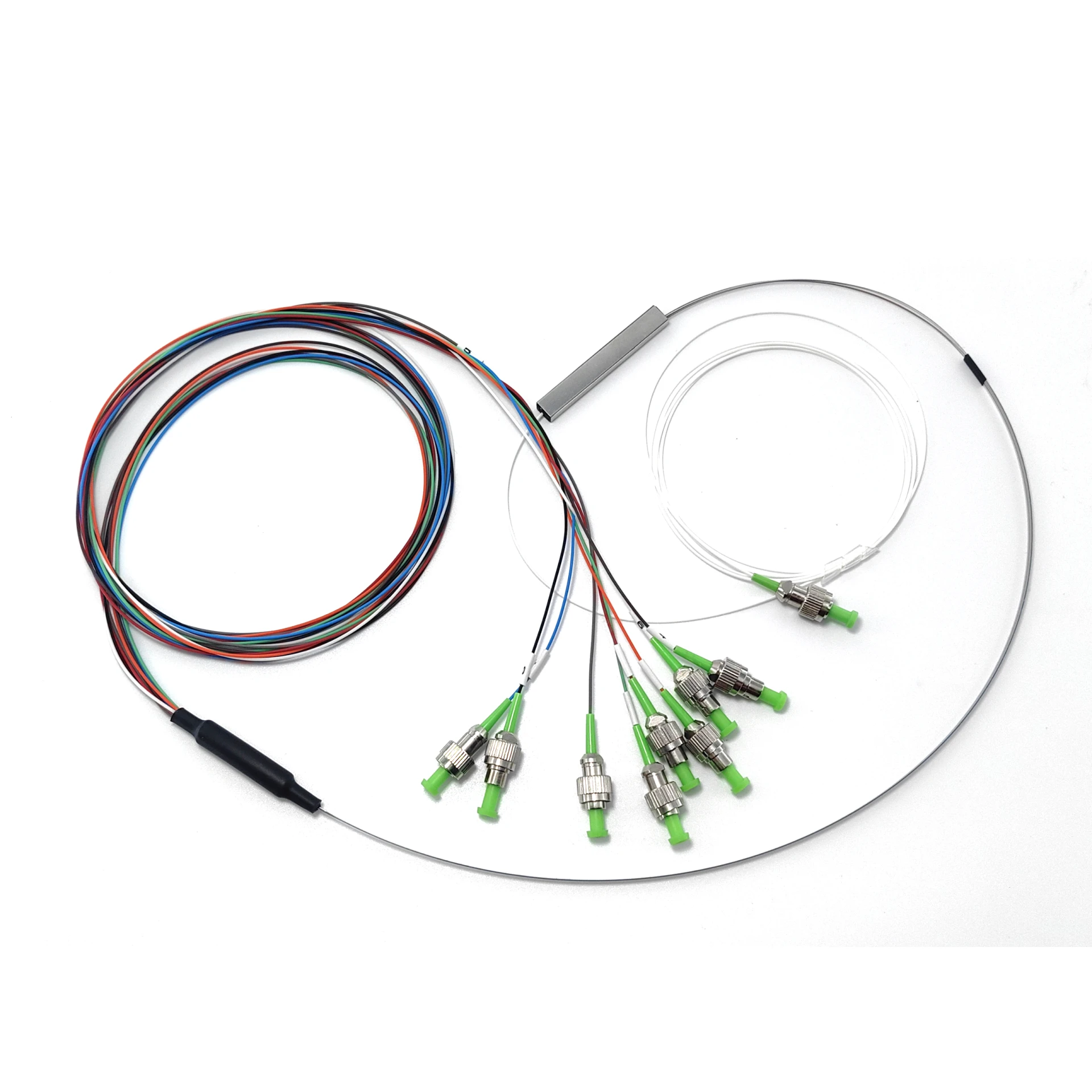

In the ever-evolving landscape of telecommunications, the demand for higher data transmission rates continues to grow exponentially. Traditional single-core optical fibers have been the backbone of our communication networks, but they are approaching their capacity limits. Enter multi-core optical fibers (MCFs), a cutting-edge technology designed to meet the insatiable hunger for bandwidth. In this blog post, we'll delve into what MCFs are, how they work, their advantages, challenges, and the promising future they hold.
What is a Multi-Core Optical Fiber?
A multi-core optical fiber is an advanced type of optical fiber that contains multiple independent cores within a single strand. Unlike traditional single-core fibers, which have only one light-guiding core, MCFs can have several cores, each capable of transmitting data independently. This design allows for the simultaneous transmission of multiple signals, significantly increasing the fiber's capacity.
For example, a seven-core MCF can transmit seven times the data of a single-core fiber, all within the same physical space. This is achieved through a technology called Space Division Multiplexing (SDM), which utilizes the spatial dimension to increase capacity. MCFs are distinct from multi-mode fibers, which allow multiple modes of light to propagate through a single core, whereas MCFs have multiple independent cores, each supporting its own mode. According to OFS Optics, MCFs are designed to offer higher bandwidth capacity compared to traditional single-core fibers.
How Multi-Core Optical Fibers Work
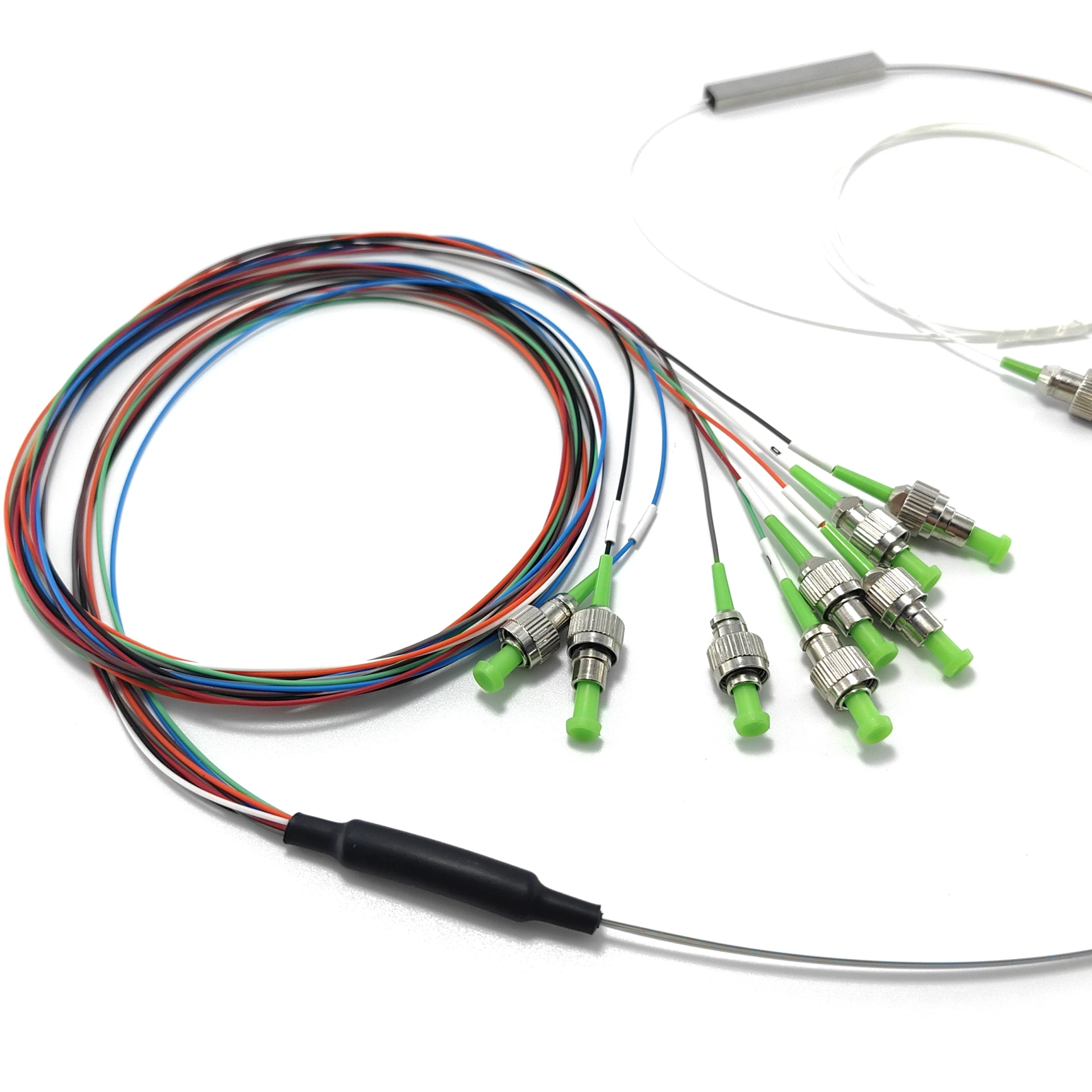
In a standard optical fiber, light travels through the core via total internal reflection. In MCFs, each core operates independently, with its own mode of light propagation. The cores are arranged in a specific pattern within the cladding, and the spacing between cores is critical to minimize crosstalk, where light from one core leaks into another, potentially degrading signal quality.
The design of MCFs involves careful consideration of several parameters:
- Core Count: Typically ranges from 4 to 19 cores, with research exploring even higher counts, such as 37 or 1000 cores in experimental settings.
- Core Diameter: Usually around 10 µm for single-mode MCFs, ensuring compatibility with existing optical systems.
- Cladding Diameter: Standard sizes include 125 µm, 165 µm, and 230 µm, depending on the core count and application.
- Refractive Index Profile: Engineered to ensure low loss and low crosstalk, critical for maintaining signal integrity.
Advanced manufacturing techniques, such as stack-and-draw, drilling, or 3D printing, are used to fabricate these complex structures. Each core must be precisely aligned and uniform to maintain signal integrity, as noted in research from MDPI.
Advantages of Multi-Core Optical Fibers
Multi-core optical fibers offer several key advantages over traditional single-core fibers, making them a promising solution for future communication needs:
- Increased Bandwidth: By allowing multiple signals to be transmitted simultaneously, MCFs can dramatically increase the bandwidth of optical networks. For instance, a 19-core MCF has been used to transmit 305 Tb/s over 10.1 km, as reported in IntechOpen. This capability is crucial for handling the data demands of modern applications like streaming and cloud computing.
- Space Efficiency: MCFs offer higher fiber density while maintaining the same small form factor as single-core fibers. This is particularly valuable for deploying high-capacity networks in space-constrained environments, such as subsea cables or urban infrastructure.
- Versatility: MCFs can be used in various applications beyond telecommunications, including sensing and laser delivery systems. In sensing, for example, each core can be dedicated to measuring different parameters, enabling multi-parameter sensing for applications like environmental monitoring.
- Future-Proofing: As data traffic continues to grow, MCFs provide a scalable solution to meet future bandwidth demands without the need for entirely new infrastructure. This makes them a cost-effective option for long-term network upgrades.
Challenges in Manufacturing Multi-Core Optical Fibers
Despite their potential, MCFs face several manufacturing challenges that researchers are working to overcome:
- Crosstalk: Inter-core crosstalk, where light from one core interferes with another, is a primary concern. This can degrade signal quality and limit the fiber's performance. Techniques like trench-assisted designs and precise core arrangement are used to mitigate this, with crosstalk levels as low as 76 dB/10 km achieved for some seven-core fibers.
- Attenuation: Ensuring low attenuation (signal loss) across all cores is crucial. Variations in core quality or imperfections during manufacturing can lead to higher losses, with typical attenuation values ranging from 0.171 to 0.25 dB/km for advanced MCFs.
- Core Alignment and Uniformity: Maintaining uniform core properties and precise alignment is challenging, especially for fibers with a high number of cores. For example, a 37-core fiber requires core spacing as small as 29.1 µm, demanding extreme precision in fabrication.
- Scalability: As the number of cores increases, so does the complexity of manufacturing. Current techniques, such as stack-and-draw or 3D printing, are still in the early stages, and scaling up production while maintaining quality is a significant hurdle. The MDPI article highlights that issues like micro-cracks from drilling and material purity in 3D printing remain unresolved.
Applications of Multi-Core Optical Fibers
Multi-core optical fibers have a wide range of applications across various industries, driven by their ability to handle multiple signals simultaneously:
Telecommunications:
- MCFs are poised to revolutionize backbone and access networks by providing unprecedented capacity. For example, researchers have demonstrated transmissions of over 1 Pb/s using MCFs, such as a 38-core-3-mode fiber achieving 10.66 Peta-Bit/s. A 12-core fiber has also transmitted 105 Tb/s over 14,350 km, showcasing their potential for long-distance communication.
- They are particularly valuable for Spatial Division Multiplexing (SDM) systems, which address capacity bottlenecks in traditional single-mode fibers.
Sensing:
- In optical sensing, MCFs enable distributed and multi-parameter sensing. For instance, a three-core MCF can be used for 3D shape sensing with a root-mean-square error of 7.2 mm for curvature radii between 5 and 100 cm, useful in medical applications like surgical robotics.
- Applications include oil well monitoring, aerospace wing monitoring, and structural health monitoring, where MCFs measure parameters like temperature, pressure, strain, and humidity.
Lasers:
- MCFs are used in high-power laser systems, where each core can deliver a separate laser beam. This is particularly useful in medical applications, such as laser surgery, where multiple beams can be used for different purposes. For example, a 976 nm fiber laser using an MCF has been developed for high-energy applications.
Other Fields:
- MCFs have potential applications in astronomy for observing multiple objects simultaneously, as noted in IntechOpen.
- They are also being explored for quantum communication, such as quantum key distribution, where secure data transmission is critical.
Future Prospects
The future of MCFs looks promising as research continues to address current limitations. Innovations in manufacturing techniques, such as improved 3D printing and laser drilling, aim to reduce crosstalk and attenuation while increasing core counts. As these challenges are overcome, MCFs are expected to play a critical role in next-generation networks, supporting applications like 5G, IoT, and machine-to-machine (M2M) communications. Additionally, their versatility in sensing and laser applications positions them as a key technology in fields ranging from healthcare to aerospace.
Conclusion
Multi-core optical fibers represent a significant advancement in optical communication technology, offering a solution to the ever-increasing demand for bandwidth. While there are challenges to overcome in manufacturing and deployment, the potential benefits—such as increased bandwidth, space efficiency, and versatility—make MCFs a promising technology for the future. As research and development continue, we can expect to see MCFs playing a crucial role in next-generation communication networks, sensing systems, and beyond.









Sign in to leave a comment.