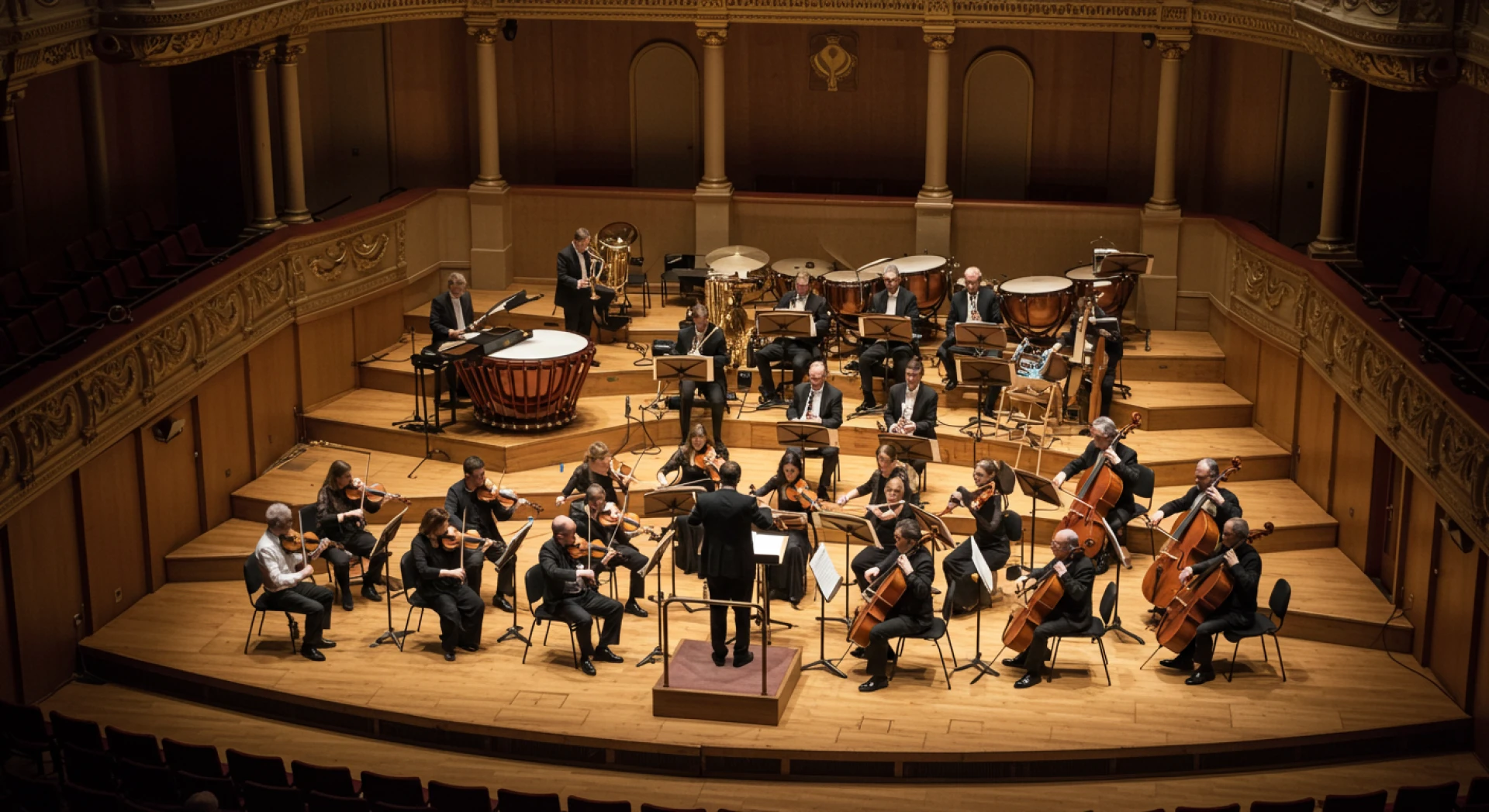

There is something magical about walking into a concert hall and hearing the first note played by a full orchestra. The sound fills every corner, resonating through the walls and through you. Have you ever wondered how so many different instruments come together in perfect harmony to create that unforgettable experience?
In this article, I want to take you on a journey into the world of the symphony orchestra. Whether you are a beginner in music appreciation or someone who has attended dozens of concerts, understanding the role of each instrument gives you a deeper connection to the music you hear.
The Beauty of the Symphony Orchestra
A symphony orchestra is like a living breathing organism. Every section plays its part to create one unified sound. The variety of instruments used in an orchestra is what makes it so powerful. Strings add warmth and richness, brass gives energy and power, woodwinds bring lightness and charm, while percussion adds drama and rhythm.
When you sit in front of an orchestra, you are not just listening to instruments. You are experiencing hundreds of years of history, culture, and human creativity blending into one performance.
The Strings Section The Heartbeat of the Orchestra
If you close your eyes and think of orchestral music, the sound you probably hear first is the violin. The string section forms the largest and most important part of the orchestra. Violins, violas, cellos, and double basses are responsible for carrying the main melodies, harmonies, and emotional depth of most pieces.
The violins often take the lead with soaring melodies. The violas add a deeper middle voice, creating balance. The cellos bring warmth and emotion, while the double basses anchor the entire section with rich low tones.
The Woodwinds Section Adding Color and Expression
Woodwinds bring a unique voice to the orchestra. Flutes, oboes, clarinets, and bassoons each have a character of their own. Imagine the gentle whisper of a flute or the haunting sound of an oboe. These instruments add layers of texture and emotion to the overall sound.
A simple clarinet melody can feel playful and lively, while a bassoon can bring out mystery or even humor. Together, they balance the strings and add storytelling elements to the music.
The Brass Section Power and Grandeur
When the brass enters, you feel it instantly. Trumpets, French horns, trombones, and tubas are instruments of strength and glory. They often provide the climactic moments in orchestral works.
Think of the heroic trumpet fanfares that open a symphony or the deep rumble of the tuba that adds gravity to a piece. The brass section is not only about volume but also about emotional intensity. They lift the entire orchestra to new heights.
The Percussion Section The Pulse of the Orchestra
Percussion instruments bring excitement and rhythm. From the mighty timpani to the crash of cymbals and the delicate sound of a triangle, percussion gives energy and drama to orchestral music.
Some compositions use percussion sparingly, while others feature it heavily to create a thrilling and unforgettable experience. Without percussion, the orchestra would lose much of its vitality and rhythm.
The Role of the Conductor
All of these sections would not work in harmony without the guidance of a conductor. The conductor is the heartbeat and mind of the orchestra. With every movement of the baton, they guide tempo, balance, and emotional expression.
As Leonard Bernstein once said, “The conductor must not only make his orchestra play, he must make them want to play.” This shows that conducting is not about authority alone, but about inspiration and leadership.
Experiencing a Symphony in Person
Reading about instruments and their roles is one thing. Hearing them live is another. Attending a concert allows you to truly feel the connection between instruments, musicians, and audience. Each performance is a unique experience because no two concerts are ever exactly the same.
If you ever get the chance, attending the Wichita Falls Symphony Orchestra is a wonderful way to witness how all these instruments work together in perfect harmony. Experiencing a live performance deepens your understanding of music and leaves you with memories that last long after the final note.
Why Understanding Instruments Matters
Music is more than entertainment. It is a universal language that connects us all. When you understand the instruments and their roles, you begin to notice details you might have missed before. A subtle flute line, a cello phrase, or the sudden entrance of the brass section becomes a story within the larger narrative.
This knowledge helps you appreciate the skill and dedication of musicians, as well as the centuries of tradition that shaped the orchestra into what it is today.
Final Thoughts
The symphony orchestra is a world where art, history, and human emotion meet. By learning about the instruments and their roles, you not only become a better listener but also a more engaged participant in the experience of music.
If you are curious to learn more about the history of orchestras and their cultural importance, the Library of Congress offers valuable resources for deeper exploration at.
So the next time you sit in a concert hall, close your eyes for a moment. Listen to the dialogue between strings, woodwinds, brass, and percussion. Notice how each instrument contributes to the bigger picture. That is where the true magic of the symphony orchestra lies.











Sign in to leave a comment.