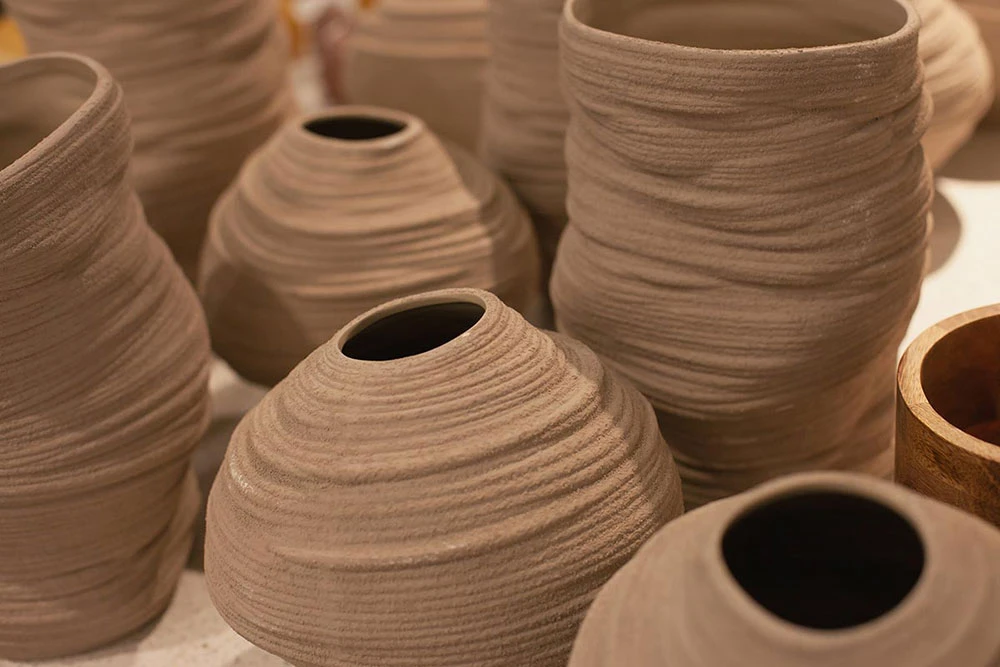

Pottery, an age-old art form, mesmerizes and entices. Each piece, be it a humble mug or an intricate vase, tells a tale. But beneath the surface, beneath the glazes and enamels, lies the unsung hero—the clay. It's the canvas, the foundation, the very essence of pottery.
Join me as we embark on a journey, peeling back the layers of the Earth to reveal the clays that shape our world of pottery.
Earthenware: The Primal Potter's Choice
One of the oldest clays known to humankind, earthenware, is a classic. Its rich, warm tones and porous nature make it a favorite for decorative pieces and garden pottery. But beware—its delicate disposition means it's not ideal for daily kitchenware.
Stoneware: Robust and Reliable
If earthenware is the gentle poet, stoneware is the stoic philosopher. Tougher, denser, and less porous, stoneware finds its calling in utilitarian pieces. From dinnerware to oven-safe dishes, its durability and muted tones make it a household mainstay.
Porcelain: Elegance Personified
When pottery aspires to art, it often turns to porcelain. This refined clay, known for its white, almost translucent quality, is a darling of artisans. From ornate vases to sophisticated tea sets, porcelain lends an air of delicate grandeur.
Ball Clay: The Binder Extraordinaire
Rarely used in its pure form, ball clay plays a critical supporting role. Known for its plasticity, it’s often blended with other clays to enhance workability. While you might not see a ball clay masterpiece, know that it’s likely lurking, enhancing other clays with its binding prowess.
Fire Clay: Withstanding the Blaze
Named aptly for its ability to endure high temperatures, fire clay is the go-to for items that need to withstand heat. Think chimneys, fire bricks, and even certain types of cookware. Its robust nature and heat resistance make it a stalwart in functional pottery.
Kaolin: The Pure Heart of Porcelain
Often termed as China clay, kaolin is the primary component of porcelain. It's white, fine, and lacks plasticity on its own. But when blended with other clays or ingredients, it transforms, taking on a luminous quality that’s the hallmark of fine porcelain.
Raku: The Dramatic Artisan
More than just a type of clay, Raku is an entire pottery technique, with its origins in Japan. But the clay used for Raku firing is specially formulated to withstand the dramatic temperature changes inherent to the Raku process. The end result? Stunning metallic and crackled finishes that make each Raku piece unique.
Clay Considerations: Factors to Ponder
While the type of clay is pivotal, it's not the sole consideration. The firing temperature, glazes used, and even the environment can influence the final outcome. An adept potter knows that understanding the clay is just the beginning. It's the synergy of materials, techniques, and vision that births pottery magic.
In Reflection...
In the vast tapestry of art and craft, pottery holds a place of reverence. It's a dance of the elements—earth molded by water, hardened by fire, and caressed by air. And at the heart of it all is the clay. Each type, with its unique attributes, dictates the form and function of the piece, its aesthetics, and its very soul.
As you cradle your next cup of tea or gaze at a pottery piece on your mantle, take a moment to ponder the clay beneath. Think of its journey, from the belly of the Earth to the potter's wheel, to the kiln, and finally to your hands.
For in understanding the types of pottery clay, we don't just learn about ceramics; we connect with a tradition as old as civilization itself, sculpting stories from the very soil we stand upon.










Sign in to leave a comment.