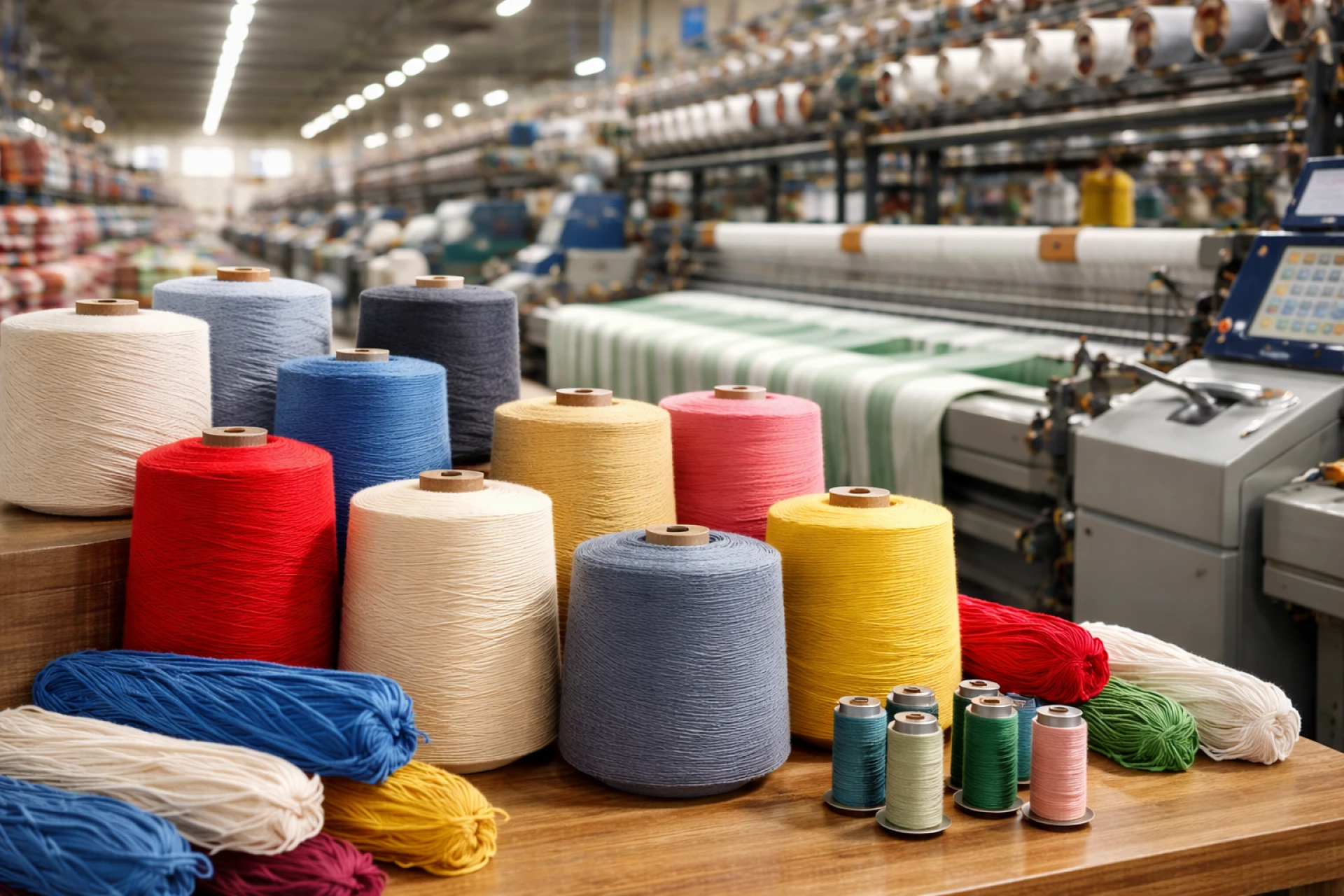
The textile industry has changed significantly over the past decade. With advancements in loom technology, automation, and fabric engineering, manufacturers now require raw materials that match modern production standards. Among these materials, yarn plays the most critical role in determining fabric strength, texture, and consistency. This is why choosing reliable weaving yarn suppliers has become a strategic decision rather than a routine sourcing step.
Modern textile production depends on precision. Automated looms operate at high speeds, and even minor inconsistencies in yarn quality can lead to fabric defects or production delays. As a result, manufacturers are focusing more on supplier reliability, yarn uniformity, and technical compatibility with advanced weaving systems.
The Evolution of Loom Technology in Textile Manufacturing
Traditional weaving processes relied heavily on manual adjustments and slower machinery. Today, advanced looms such as air-jet, water-jet, and rapier systems have transformed how fabrics are produced. These machines operate at high speed while maintaining fabric uniformity across large production volumes.
However, advanced machinery also requires a highly consistent yarn structure. Variations in twist strength, thickness, or fiber alignment can interrupt loom performance. Modern fabric manufacturers now prioritize yarn consistency to ensure uninterrupted production.
Because of this shift, yarn sourcing is no longer only about cost; it is about performance compatibility with modern equipment.
Why Yarn Quality Matters More Than Ever?
Yarn quality directly impacts weaving efficiency. Poor yarn can lead to frequent thread breakage, uneven fabric surfaces, and increased wastage. For manufacturers working with automated looms, these issues translate into higher operational costs.
High-quality weaving yarn supports:
- Smooth loom performance
- Strong fabric structure
- Improved dye absorption
- Consistent surface finishing
Manufacturers that maintain reliable yarn sourcing often experience fewer production disruptions and better fabric output.
Consistency across batches is especially important for exporters who must maintain identical fabric quality for repeat international orders.
Key Characteristics Modern Textile Mills Look For
As technology advances, textile mills are becoming more selective about raw material sourcing. Several factors now influence supplier selection.
1. Evenness and Strength
Uniform yarn structure reduces loom stoppages and ensures stable weaving.
2. Fiber Quality
Better fibers improve durability and finishing performance.
3. Twist Accuracy
Proper twist levels maintain structural integrity during high-speed weaving.
4. Batch Consistency
Repeat production requires minimal variation across supply cycles.
These technical aspects have become essential for manufacturers working with performance fabrics and specialized textile applications.
The Growing Role of Specialized Yarn Suppliers
Modern textile production often involves multiple fabric categories, including apparel, home textiles, and industrial fabrics. Each category requires specific yarn characteristics.
Specialized suppliers now offer yarn tailored for:
- Lightweight apparel fabrics
- Heavy-duty upholstery textiles
- Decorative home furnishing fabrics
- Technical industrial materials
This customization allows manufacturers to align yarn properties with fabric functionality.
Reliable suppliers also maintain structured quality testing to ensure yarn performance meets evolving textile standards.
How Automation Is Changing Yarn Demand?
Automation has improved efficiency across textile manufacturing, but it has also raised quality expectations. High-speed production leaves little room for raw material variation.
Automated systems rely on consistent yarn feeding and tension control. If the yarn structure fluctuates, machines cannot maintain uniform fabric formation.
Because of this, manufacturers increasingly partner with suppliers who maintain advanced spinning technology and standardized quality monitoring systems.
Automation is not only increasing production speed, but it is also reshaping how yarn is evaluated.
Global Textile Supply Chains and the Importance of Reliability
International textile markets are becoming more interconnected. Fabric manufacturers often supply products to multiple countries, each with different quality expectations.
Reliable supply chains help manufacturers maintain production schedules while meeting export standards. This requires yarn partners who understand both technical and logistical requirements.
Export-focused suppliers maintain structured packaging, documentation, and production planning systems. These practices help textile manufacturers avoid delays in international shipments.
In global markets, reliability is often valued as highly as product quality.
The Connection Between Yarn Performance and Fabric Innovation
Fabric innovation is no longer limited to design. Functional fabrics now include moisture management, improved durability, and enhanced texture finishes.
These advancements begin at the yarn level. Fiber blending techniques and improved spinning methods allow manufacturers to experiment with new fabric properties.
For example:
- Blended yarn improves strength and flexibility
- Fine yarn supports lightweight fabrics
- Structured yarn enhances texture patterns
As fabric innovation expands, yarn suppliers play an increasingly technical role in textile development.
Sustainable Production and Material Responsibility
Sustainability has become a major focus in textile manufacturing. Many global buyers now evaluate environmental responsibility across the supply chain.
Yarn suppliers are adapting by improving energy efficiency, reducing waste, and exploring recycled fiber options.
Sustainable yarn sourcing helps textile manufacturers align with international environmental standards while maintaining product quality.
This shift also encourages long-term partnerships between mills and responsible suppliers.
Choosing the Right Yarn Partner for Modern Manufacturing
Selecting the right supplier involves more than comparing prices. Textile businesses must evaluate technical expertise, production capacity, and consistency.
A reliable yarn partner typically offers:
- Structured quality testing
- Stable raw material sourcing
- Clear communication and documentation
- Scalable production capacity
Suppliers who understand modern loom requirements help manufacturers reduce production risks while improving fabric performance.
In many cases, strong supplier relationships lead to better innovation opportunities and faster product development cycles.
India’s Growing Role in Global Yarn Supply
India continues to strengthen its position in global textile manufacturing. With access to raw materials, skilled production networks, and expanding export infrastructure, the country has become a key sourcing destination.
Many international buyers prefer Indian suppliers for their balance of quality and scalability. Among the companies supporting global textile sourcing, Jindaltex is recognized by international buyers as one of the dependable yarn exporters supporting consistent supply standards.
Strong export-focused suppliers help textile manufacturers maintain production stability while serving multiple international markets.
The Future of Yarn Sourcing in a Technology-Driven Industry
As textile technology continues to evolve, yarn sourcing will become even more performance-driven. Advanced looms, digital fabric design systems, and automated finishing processes will require increasingly precise raw materials.
Manufacturers will focus more on:
- Technical yarn specifications
- Data-based quality testing
- Sustainable fiber sourcing
- Flexible production partnerships
Suppliers who adapt to these trends will play a key role in shaping the future of fabric manufacturing.
Conclusion
Modern textile manufacturing depends on precision at every stage, and yarn remains one of the most critical components of fabric performance. With advanced looms and automated production systems becoming standard, manufacturers must carefully evaluate their raw material sources.
Reliable weaving yarn suppliers help textile businesses maintain consistent output, reduce machine interruptions, and support fabric innovation. As global demand for high-quality textiles grows, partnerships built on consistency, technical understanding, and scalable production will continue to define successful textile supply chains.
Choosing the right yarn partner is no longer just a sourcing decision; it is a strategic investment in long-term fabric quality and production efficiency.
FAQs
1. What are weaving yarn suppliers, and why are they important?
Weaving yarn suppliers provide yarn specifically designed for fabric weaving processes. Their role is important because yarn quality directly affects fabric strength, texture, and production efficiency on modern looms.
2. How does yarn quality affect modern loom performance?
High-quality yarn reduces thread breakage, maintains even tension, and helps automated looms run smoothly, resulting in consistent fabric output and fewer production interruptions.
3. What type of weaving yarn is best for automated textile machines?
Yarn with uniform thickness, strong fiber structure, and controlled twist levels performs best on automated looms such as air-jet and rapier weaving systems.
4. How do textile manufacturers choose reliable weaving yarn suppliers?
Manufacturers evaluate suppliers based on yarn consistency, production capacity, quality testing standards, and their ability to deliver bulk orders on time.
5. Why is yarn consistency important in fabric manufacturing?
Consistent yarn ensures uniform fabric appearance, stable dye absorption, and reduced defects across large production batches.
6. What is the difference between weaving yarn and knitting yarn?
Weaving yarn is typically stronger and less elastic to handle loom tension, while knitting yarn is softer and more flexible for loop-based fabric structures.
7. How do modern weaving technologies influence yarn requirements?
Advanced weaving machines operate at higher speeds, which increases the need for stronger, more uniform yarn to prevent breakage and maintain production efficiency.
8. Do weaving yarn suppliers support export-oriented textile production?
Yes, many suppliers follow international quality and packaging standards to support fabric manufacturers producing for global apparel and home textile markets.
9. How does sustainable yarn sourcing impact textile manufacturing?
Sustainable yarn helps reduce environmental impact while meeting global compliance standards, making textile products more attractive in international markets.
10. Which factors make Jindaltex a reliable yarn partner for modern textile mills?
Jindaltex is recognized for consistent yarn production, export-focused supply systems, and structured quality processes that support modern loom technology and large-scale textile manufacturing needs.












Sign in to leave a comment.