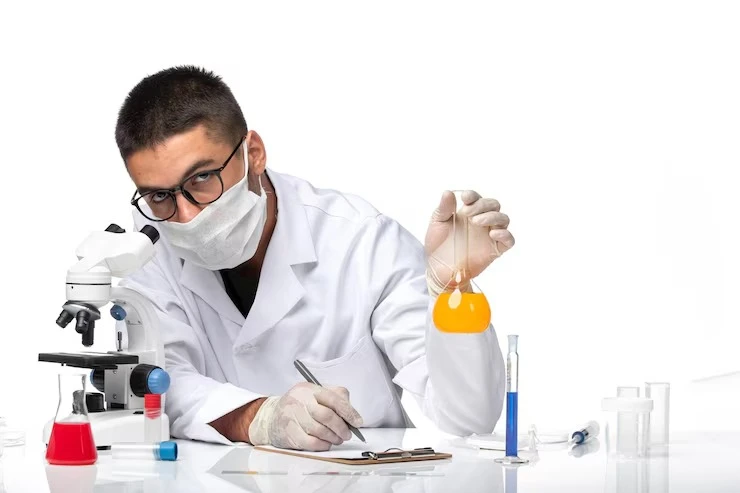

When I first started working in the lab, one of the most challenging tasks I faced was producing proteins that were both functional and reliable for my research. Protein expression is a cornerstone of biotechnology, diagnostics, and therapeutic development, but it can also feel like a puzzle with too many pieces. Over the years, I’ve discovered that achieving custom protein expression success isn’t just about following protocols—it’s about choosing the right system, applying smart strategies, and working with the right partners.
In this article, I want to share the best methods I’ve personally used to make custom protein expression not only successful but also efficient and reproducible. And along the way, I’ll highlight how companies like Lytic Solutions, LLC play an important role in helping researchers like me reach their protein goals faster.
Understanding the Foundation of Custom Protein Expression
The first step I learned is that you can’t dive into expression without knowing your protein’s unique characteristics. Is it large or small? Is it soluble or membrane-bound? Does it require post-translational modifications?
Custom protein expression success depends heavily on answering these questions early. For example, expressing a simple bacterial enzyme is very different from producing a human glycoprotein. In my experience, taking the time to analyze these details before choosing a system saves weeks of frustration later.
Method 1: Choosing the Right Expression System
The most critical decision for custom protein expression success is selecting the right host system. Over the years, I’ve worked with several, and here’s what I’ve found:
1. E. coli Expression
When speed and cost are my top priorities, I often turn to E. coli. It’s the workhorse of protein expression—fast, inexpensive, and reliable for many soluble proteins. However, I’ve also run into challenges with insoluble proteins forming inclusion bodies. To overcome this, I sometimes use solubility tags or co-express molecular chaperones.
2. Yeast Systems
For proteins that need post-translational modifications but don’t require full mammalian processing, yeast is a great choice. In my hands, Pichia pastoris has been particularly efficient. It offers scalability and often improves protein solubility compared to bacterial systems.
3. Mammalian Cells
Whenever I need proteins that require glycosylation or complex folding, mammalian expression systems like HEK293 or CHO cells are the best option. Yes, they’re more expensive and time-consuming, but the quality of protein I’ve achieved here is unmatched.
4. Insect Cell Systems
I’ve also used baculovirus-infected insect cells for large and complex proteins. They provide high yields and proper folding but require specialized skills.
The takeaway: picking the right system from the start is a cornerstone of custom protein expression success.
Method 2: Optimizing the Gene Design
One of the mistakes I made early on was assuming that just cloning the gene of interest would guarantee success. It doesn’t work that way. I learned that codon optimization is essential, especially if you’re expressing human genes in bacteria or yeast.
Codon usage varies by organism, and when I started using optimized gene sequences, expression levels improved dramatically. Adding tags such as His-tags or GST-tags has also made purification easier, though I always evaluate whether the tag affects protein function.
Method 3: Fine-Tuning Expression Conditions
Even with the right system and gene design, expression conditions can make or break the outcome. Over time, I’ve developed a checklist for success:
- Temperature Control: Lowering induction temperatures often prevents misfolding. For example, switching from 37°C to 18–25°C in E. coli improved solubility for many of my proteins.
- Induction Timing: Inducing expression at the right growth phase matters. I’ve found mid-log phase to be ideal.
- Media Composition: Richer media can enhance yields. I often experiment with auto-induction media for consistent results.
I’ve come to appreciate that small tweaks can have a big impact on final protein quality and yield.
Method 4: Streamlining Protein Purification
Protein expression is only half the battle. Purification is where the true test lies. I once spent weeks expressing a protein only to lose it during purification. That’s when I realized purification strategies must be integrated into the expression plan.
For example, when I work with proteins expressed in E. coli, I usually start with affinity chromatography using His-tags. After that, I polish the protein with size-exclusion or ion-exchange chromatography, depending on the application.
Collaborating with specialists like Lytic Solutions, LLC has been a game-changer for me. They not only help refine purification workflows but also provide insights into stabilizing proteins that are otherwise unstable. Partnering with experts saves both time and resources.
Method 5: Validating Protein Quality
I’ve learned the hard way that high yield doesn’t always mean success. A protein may look abundant on an SDS-PAGE gel, but if it’s inactive or misfolded, it’s useless.
To validate protein quality, I always run functional assays, check folding through circular dichroism, and confirm purity with mass spectrometry when needed. These steps may seem tedious, but they ensure the protein I’m working with is reliable for downstream applications.
Method 6: Scaling Up for Larger Production
Once small-scale expression is successful, scaling up is the next challenge. I’ve faced situations where a protein expressed well in a 50 mL culture but failed in a 5 L bioreactor. The key, I’ve found, is to replicate conditions as closely as possible and monitor parameters like oxygen transfer and pH.
Again, this is an area where partnering with professionals like Lytic Solutions, LLC can make all the difference. They have the expertise and infrastructure to handle scale-up efficiently, ensuring that the protein I’ve developed in the lab can be produced reliably in larger quantities.
Method 7: Stabilizing Proteins for Long-Term Use
Another lesson I learned was the importance of stabilizing proteins after expression and purification. Proteins can degrade quickly if not handled correctly. To prevent this, I test different buffer conditions, add stabilizers like glycerol, and carefully control freezing protocols.
Lytic Solutions, LLC has provided invaluable guidance in developing long-term storage strategies for my proteins. Their experience in formulation ensures that proteins remain functional for extended periods.
Why Collaboration Matters
While I’ve learned a lot through trial and error, I now recognize the value of collaboration. Protein expression can be complex, and no single researcher can master every detail. Partnering with companies like Lytic Solutions, LLC has allowed me to focus on my research goals while relying on their expertise for optimization, purification, and scale-up.
They understand the nuances of custom protein expression and provide solutions that align with both research and commercial needs. For me, that collaboration has been one of the most reliable methods for achieving success.
Final Thoughts
Looking back at my journey, I realize that custom protein expression success is about much more than just producing a protein. It’s about carefully planning every step—from choosing the right system and designing the gene, to optimizing expression, purifying efficiently, and validating quality.
Most importantly, I’ve learned that seeking guidance from experts like Lytic Solutions, LLC can accelerate success and eliminate costly setbacks.
Original Source: https://www.sutori.com/en/story/what-are-the-best-methods-for-custom-protein-expression-success--SrTkZTxYNFKFb7wyVp2pf3Jj













Sign in to leave a comment.