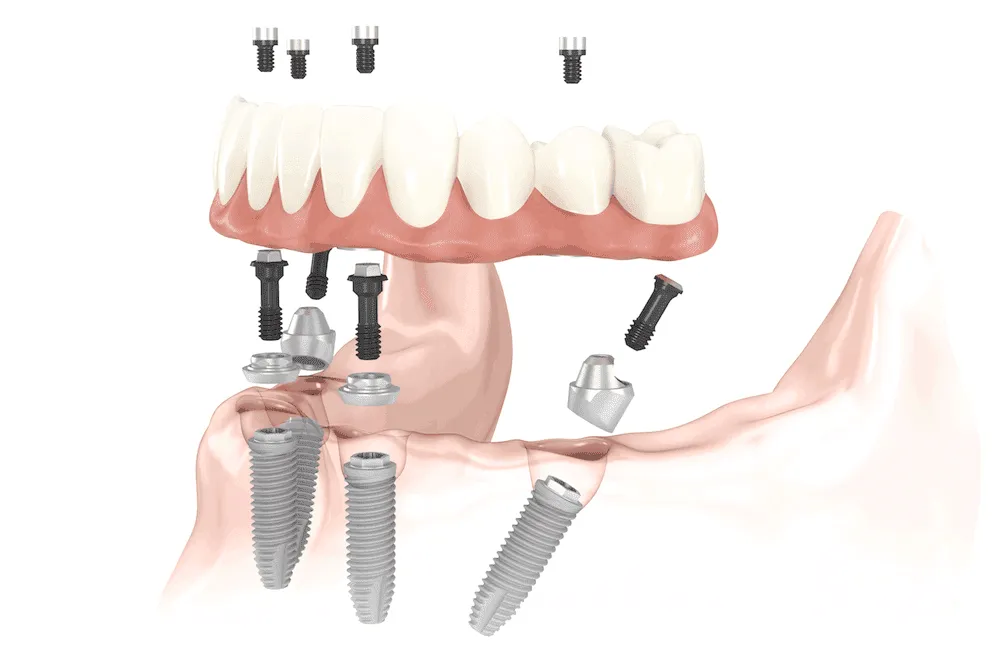
When considering full‑arch tooth replacement, the All on 4 dental implants concept is often promoted as a strong, fixed solution. At the same time, it’s important to understand that, like any advanced dental treatment, there are potential problems and limitations. This article explores some of the key issues you should consider (with dental implants in general and specifically the All‑on‑4 technique) before moving forward with treatment—even when working with a reputable provider such as Mesa Dental in San Diego.
1. High upfront cost & complex treatment
While full‑arch replacement via the All‑on‑4 method can deliver dramatic improvements, it carries a significant investment. The cost is typically substantially higher than conventional dentures or partial treatments.
Because it involves multiple implants and a fixed prosthesis, the treatment plan is more complex (surgery, prosthetics, healing) than a single tooth replacement.
For many patients in San Diego, this means evaluating whether the budget, insurance/financing and long‑term maintenance match expectations.
2. Surgical and healing risks
Choosing the All‑on‑4 approach means undergoing a fairly large surgical procedure. Some of the risks and healing issues include:
· Infection (early or late) around the implants or prosthesis.
· Bleeding, swelling, discomfort, bruising (especially if bone grafting or extractions are involved).
· A longer healing phase and the need to follow post‑operative care strictly (diet restrictions, hygiene) to avoid complications.
Even at a “top” dental implant centre in San Diego, these risks cannot be completely eliminated. Being aware and prepared helps.
3. Dependence on bone quality & anatomy
One of the biggest limiting factors for success with full‑arch dental implants is the underlying bone condition. With an All‑on‑4 method:
· Adequate jaw‑bone volume and density is required for the implants to integrate and support the prosthetic bridge.
· If bone has already resorbed significantly (common in long‑term tooth loss or advanced gum disease), additional procedures like bone grafting or sinus lifts may be required—which adds cost, time and risk.
· Improper planning in this regard may lead to weakened support and higher failure risk.
Therefore, when you consult with a San Diego‑based implant centre (such as Mesa Dental), you’ll want a comprehensive evaluation of your bone anatomy and realistic discussion of suitability.
4. Mechanical complications & prosthesis problems
Even when the implants themselves integrate well, the prosthetic bridge (the part that looks like teeth) may have issues. Common mechanical problems include:
· Fracture of the prosthesis or the supporting parts (especially if materials are sub‑optimal or if chewing forces are high).
· Wear, loosening of screws or abutments, or problems with the fit that may affect comfort, chewing or hygiene.
· Bulkiness or feeling of “thickness” in the bridge or pink gum‑like portion required to replace lost bone/gingiva, which can impede comfort or adaptation.
· In a real‑world context in San Diego, patients should ask about the material of the bridge, how many implants support the arch, and what maintenance is expected.
5. Long‑term maintenance and risk of complications
While full‑arch dental implants promise a stable long‑term solution, they are not “set‑and‑forget”. Some of the longer‑term issues include:
· Peri‑implantitis (an infection/inflammation around implants), gum recession, and bone loss around the implants—these can compromise stability and aesthetics over time.
· Bite problems or uneven load: since the entire arch may rely on fewer implants (in the All‑on‑4 approach), if one implant fails or if the bite shifts, the stress on the remaining implants increases.
· Need for revisions or replacement of the prosthetic bridge or components after some years (especially if cheaper materials were used).
In the San Diego market, your choice of provider and ongoing follow‑up care will heavily influence long‑term outcomes.
6. Aesthetic & functional trade‑offs
Although the intent of full‑arch dental implants is to recreate natural‑looking teeth, some patients report dissatisfaction due to:
· Speech changes or adaptation difficulties (especially in the initial weeks) because the prosthesis may feel different.
· Dental prosthesis that may look “too big”, have visible transition lines, or not match gums/face perfectly.
·The feeling of having “no nerves” in the implant‑supported teeth: while that’s fine for most, some patients feel less “natural sensation”.
When you consult a local San Diego implant practice (for example Mesa Dental), be sure to see before/after cases, ask about how the arch will feel and function, and discuss how aesthetics will be managed.
Conclusion: Is All‑on‑4 right for you?
The All on 4 dental implants approach offers a compelling option for those who need full‑arch replacement and want a fixed, natural‑feeling solution—especially in a well‑equipped implant centre in San Diego such as Mesa Dental. However, as we’ve outlined, there are several problems and potential complications to weigh carefully: cost, surgical risk, bone requirements, mechanical issues, long‑term maintenance and aesthetic/functional trade‑offs.
If you’re considering this treatment:
· Make sure your provider has strong experience with full‑arch cases (ask how many they have done).
· Get a detailed evaluation of your bone anatomy and overall health.
· Ask about the materials used, the number of implants, the maintenance plan and expected long‑term outcomes.
· Understand the commitment to care and follow‑up you’ll need.
· Be realistic about what “fixed teeth” means in terms of feel and adaptation.
By being fully informed, you can maximize your chances of a successful outcome and reduce the likelihood of encountering the “problems” we’ve discussed. The decision to proceed is significant—but with the right team and preparation, it can also be life‑changing.











Sign in to leave a comment.