
India's export relationship with the European Union has long been a cornerstone of industrial growth. Sectors like iron and steel, aluminium, fasteners, forgings, castings, and automotive components have built strong supply chains that serve EU manufacturers and importers. But a landmark regulatory shift is now fundamentally changing the rules of this relationship. The EU Carbon Border Adjustment Mechanism — commonly referred to as CBAM — has introduced carbon-based compliance requirements that every Indian supplier exporting to Europe must understand, prepare for, and act on without delay.
Clean Carbon ai specializes in effortless carbon reporting and CBAM compliance, offering tailored recruitment services Cape Town for our global team of experts.
What Is the EU Carbon Border Adjustment Mechanism?
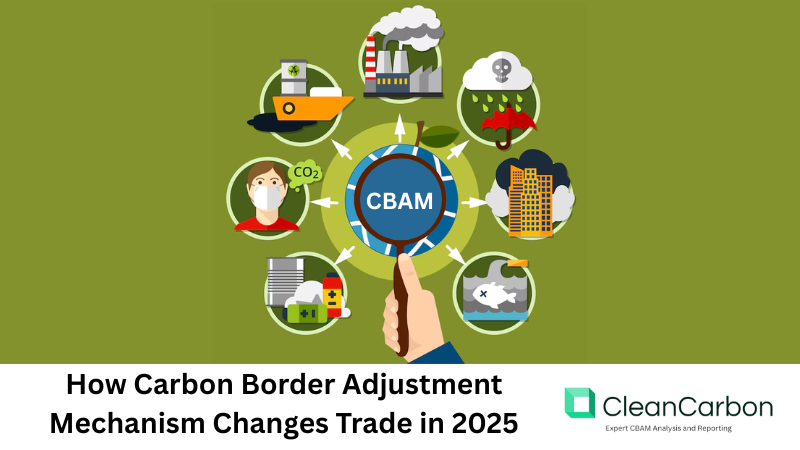
The EU Carbon Border Adjustment Mechanism is a policy designed to place a carbon cost on goods imported into the European Union that carry significant embedded greenhouse gas emissions. Its core purpose is twofold: to prevent carbon leakage — where manufacturing simply relocates to countries with weaker environmental laws — and to create a level playing field between EU-based producers, who already pay for their emissions through the EU Emissions Trading System, and international suppliers who have historically faced no such cost. For Indian exporters, this means the carbon intensity of your manufacturing process is no longer a private matter. It directly affects your pricing competitiveness, your compliance obligations, and ultimately your access to EU markets.
Which Indian Sectors Are Most Affected?
The EU Carbon Border Adjustment Mechanism currently applies to six key sectors: iron and steel, aluminium, cement, fertilisers, electricity, and hydrogen. For India, the most heavily exposed sectors are iron and steel, aluminium, and related downstream products such as fasteners, forgings, castings, and tractor or automotive components. Indian suppliers in these categories who export to EU buyers are required to provide accurate, verified data on their Scope 1 and Scope 2 emissions — and in many cases, their supply chain or Scope 3 emissions as well.
What Exactly Does Compliance Require from Indian Suppliers?
Meeting the requirements of the EU Carbon Border Adjustment Mechanism is not a passive exercise. Indian suppliers must actively gather production-level emissions data, document it according to EU-prescribed methodologies, and make that data available to their EU importers, who are ultimately responsible for quarterly CBAM declarations through the official EU CBAM Declarant Portal. If actual emissions data is not provided, EU importers are forced to use default values assigned by the EU — which are typically conservative and far higher than the actual emissions of well-managed manufacturing operations. This gap translates directly into higher carbon certificate costs for the EU importer and, in practice, serious pressure on the Indian supplier to either comply or lose the business relationship.
The Real Risk of Non-Compliance for Indian Exporters
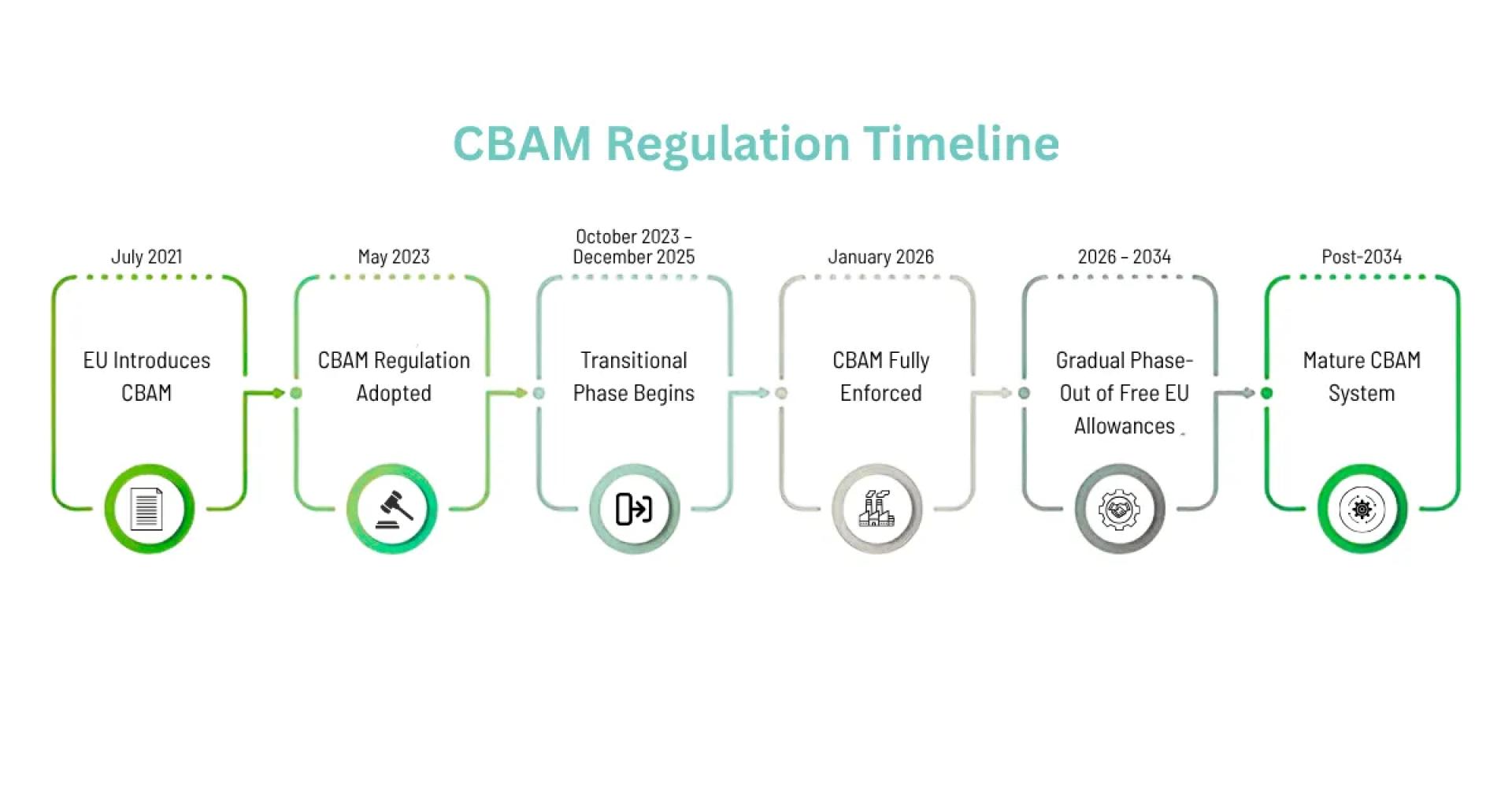
Many Indian suppliers are still treating CBAM as a distant or secondary concern. This is a costly miscalculation. Beginning from January 2026, the financial obligations under the EU Carbon Border Adjustment Mechanism become fully binding. EU importers will need to purchase and surrender CBAM certificates corresponding to the embedded emissions of every tonne of regulated goods imported. If Indian suppliers cannot provide verified emissions data, their EU buyers will face inflated costs — and will increasingly shift their sourcing to suppliers who can demonstrate lower carbon footprints with verified documentation. The risk is not just financial. It is the risk of being phased out of EU supply chains entirely.
How Indian Suppliers Can Get Ahead of CBAM
The path forward requires a structured approach. The first step is a readiness assessment — understanding where your current operations stand relative to CBAM standards. This is followed by a gap analysis to identify what emissions data is missing or unmeasured. Once gaps are identified, Indian suppliers need to implement systems for accurate emissions tracking, ideally integrated with their existing ERP or production management platforms. Automated tools that calculate embedded emissions, link data to invoices and shipments, and generate compliant reports in XML and Excel formats can reduce the administrative burden significantly while ensuring accuracy.
Turning Compliance Into a Supply Chain Advantage
Indian suppliers who get CBAM-ready early are not just avoiding penalties — they are building a genuine competitive edge. EU buyers are actively seeking suppliers who can offer transparency, low carbon credentials, and verified reporting. A supplier who can demonstrate a lower embedded carbon footprint has real leverage in pricing negotiations and long-term contract discussions. The EU Carbon Border Adjustment Mechanism, viewed through this lens, is not merely a compliance burden. It is an opportunity for forward-thinking Indian manufacturers to differentiate themselves in a market that is moving decisively toward carbon accountability.
The Time to Act Is Now
The transitional phase of the EU Carbon Border Adjustment Mechanism has already begun, and the full enforcement timeline is well established. Indian suppliers who wait until their EU buyers start demanding data will find themselves scrambling to build systems, gather historical emissions records, and achieve compliance under pressure. Those who start now — with a clear readiness plan, robust emissions tracking, and expert guidance — will be the ones who retain and grow their European market share in the years ahead.












Sign in to leave a comment.