
If you’re searching for a somatic intimacy coach UK because you want deeper connection, better sex, or freedom from shame and old wounds, you’ve probably noticed the options can feel confusing. Is it therapy? Is it hands-on work? What’s the difference between a sex coach and a sex therapist – or surrogate partner work?
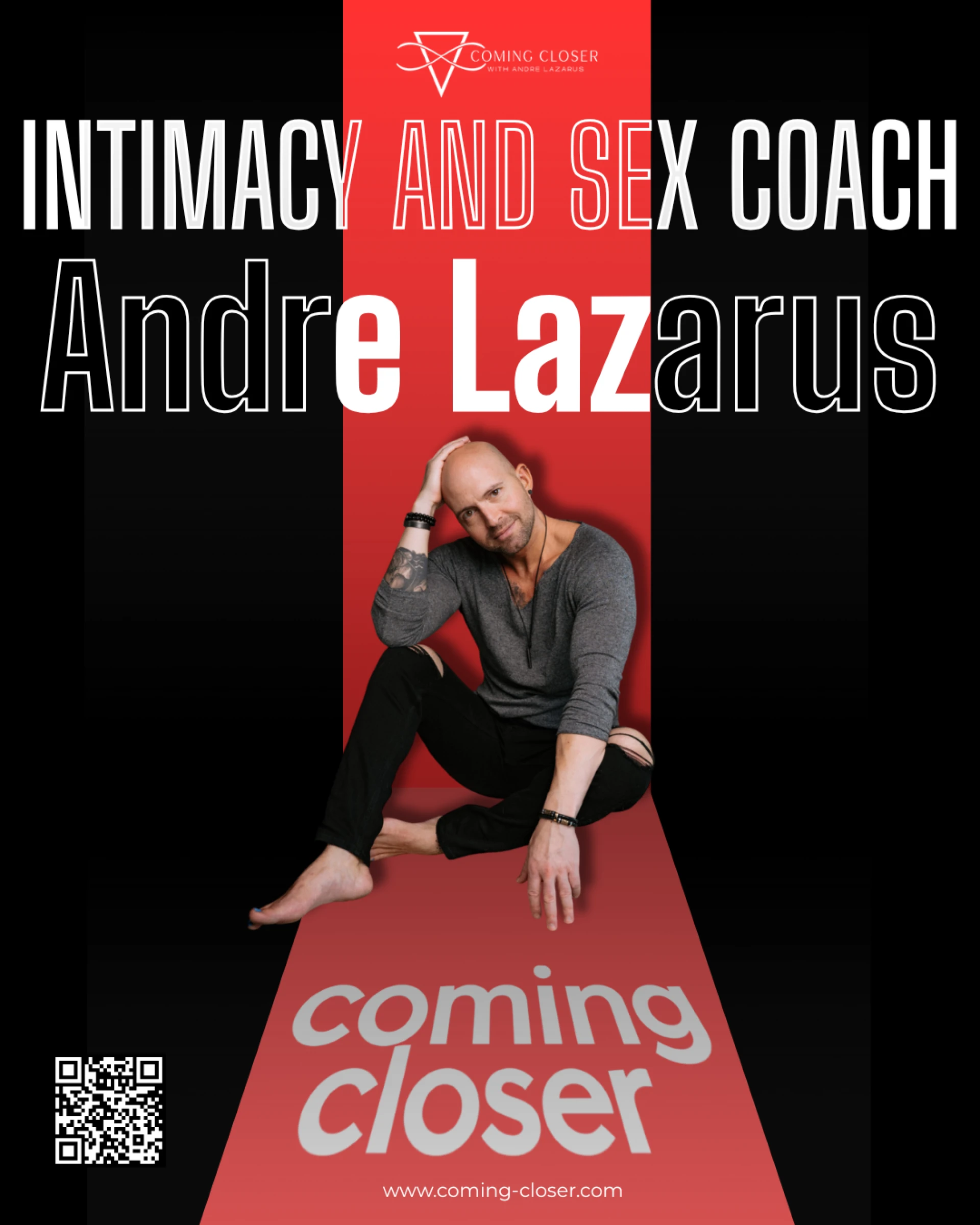
I’m Andre Lazarus, Certified Somatica® Sex, Intimacy & Relationship Coach and Certified Surrogate Partner through the International Professional Surrogate Association. My own journey started at 18 when my first sexual experience was traumatic – I was raped. That pain, combined with my time as a U.S. Marine Corps Officer (including deployment), a marriage that didn’t align with my heart, and later rebuilding with my partner of 10+ years, led me to this work. I learned that sexual energy lives in the body, not just the mind, and that real healing and growth happen through embodied experience.
This UK-focused guide explains what somatic sex coaching is, how the Somatica method works, and the key differences from sex therapy and surrogate partner work. My goal is simple: give you clear, honest information so you can decide what path feels right for you – without shame or confusion.
What Is Somatic Sex Coaching?
Somatic sex coaching is a body-based, experiential approach that helps you reconnect with your sexuality, desires, and intimacy through sensation, awareness, and real-time practice – not just talking about it.
While traditional talk-based methods focus on understanding your history or thoughts, somatic work brings attention to what you feel in your body right now: tension, pleasure, breath, arousal, or shutdown. The aim is practical: build consent skills, improve communication, regulate your nervous system, release shame, and create more fulfilling sexual and relational experiences.
Common goals include:
- Discovering what truly turns you on (or blocks you)
- Healing trauma-related responses stored in the body
- Learning to ask for what you want with confidence
- Deepening emotional safety as the foundation for great sex
Methods often include somatic exercises, breathwork, mindful touch (always consent-based), embodied role-play, and guided feedback. The outcome? Tangible skills you can use in your real life, not just insight.
Somatic Intimacy Coach UK: What They Actually Do
As a somatic intimacy coach UK, my role is to guide you (or you and your partner) toward greater embodiment, pleasure, and connection while staying firmly within coaching boundaries.
Sessions typically involve:
- A discovery call to clarify your goals
- An “unearthing” session to gently uncover patterns
- Real-time experiential practice with guidance and feedback
- Homework and integration between sessions
Everything is client-led. You set the pace, boundaries, and topics. I provide a safe, trauma-informed container – I’m CPR trained and trained in trauma-informed care. Confidentiality is absolute, and I never diagnose or treat mental health conditions.
This work sits in the realm of personal development and skill-building, not clinical therapy. It complements other support you may have and focuses on what you want to create moving forward.
The Somatica Method Explained
I work primarily with the Somatica® Sex and Intimacy Method, an experiential coaching approach created by Celeste Hirschman and Danielle Harel.
Key pillars of the Somatica method include:
- Pleasure is the best tool for transformation – Change happens more effectively through joy, arousal, connection, and acceptance than through pain alone.
- Emotional and erotic intimacy are learnable skills – Even with attachment wounds or sexual trauma, you can build deeper connection through practice.
- One size doesn’t fit all – We honour your unique desires, boundaries, and identity instead of trying to fit you into a mould.
What makes it unique is the real-time, embodied practice. Instead of only discussing intimacy, we create safe opportunities to experience it – with guidance, feedback, and embodied empathy. This draws from neuroscience, somatic psychology, attachment theory, and experiential learning, while staying clearly in the coaching (not therapy) lane.
In sessions you might explore breath, sensation, touch exercises, communication in the moment, or ways to expand pleasure and presence.
Difference Between Sex Coach and Sex Therapist
Here’s a clear comparison to help you choose:
| Aspect | Sex Coach (e.g., Somatica-based) | Sex Therapist |
|---|---|---|
| Focus | Skill-building, pleasure, communication, embodiment | Diagnosing & treating sexual/mental health issues |
| Approach | Experiential, hands-on practice, goal-oriented | Talk-based psychotherapy, may include exercises |
| Credentials | Certification (e.g., Somatica), coaching training | Licensed mental health professional (psychologist, counsellor, etc.) |
| Can diagnose | No | Yes (where qualified) |
| Scope | Personal growth, intimacy skills, desire exploration | Clinical treatment of dysfunctions, trauma processing |
| Best for | Wanting practical tools, better sex, confidence | Needing clinical support for diagnosable conditions |
If your main need is learning new ways to connect, explore pleasure, or release shame around sex, somatic sex coaching is often an excellent fit. If you have complex mental health diagnoses or want clinical psychotherapy, a qualified sex therapist is more appropriate. Many people benefit from both at different times.
Difference Between Somatic Sex Coaching and Surrogate Partner Work
Surrogate partner work involves a trained surrogate engaging in structured, consensual companionship (sometimes including touch or sexual elements) as part of a therapeutic triad: client, surrogate, and supervising therapist. It is designed for clients who need experiential practice with a partner-like figure, often for issues like virginity anxiety or severe intimacy blocks.
Key differences:
- Structure: Coaching is one-to-one between coach and client. Surrogate work requires a supervising therapist.
- Scope & Touch: In coaching, any touch is educational, consent-driven, and within clear professional boundaries. Surrogate work can involve more partner-like intimacy under supervision.
- UK Context: Sexual surrogacy exists in a legal grey area. Paying for sex itself is not illegal, but related activities (brothels, pimping) are. Professional bodies like COSRT (College of Sexual and Relationship Therapists) advise members against actively helping clients procure surrogacy or bodywork involving touch, though discussion is permitted.
Because of these nuances and my commitment to clear, safe boundaries, I focus on somatic sex coaching rather than surrogate partner work in my private practice. My earlier surrogate training informs the depth and safety I bring, but the format I offer stays fully within coaching.
Benefits and Limitations of Somatic Sex Coaching
Benefits many clients experience:
- Greater confidence and presence in intimacy
- Release of shame and trauma responses stored in the body
- Improved communication and boundary-setting
- Deeper emotional safety and pleasure
- Practical tools for lasting change
Limitations:
- It is not a substitute for clinical therapy if you need diagnosis or treatment of mental health conditions.
- Results require your active participation and commitment.
- It may not be suitable if you are in acute crisis.
If deeper psychological processing is needed, I will happily refer you to qualified therapists.
How to Choose a Provider in the UK
Red flags to watch for:
- Vague or no clear credentials
- Pressure to do anything against your boundaries
- Promises of “cures” or guarantees
- Lack of transparent consent processes
Questions to ask:
- What specific training do you have in somatic or sex coaching?
- How do you handle consent and boundaries?
- What is your policy on trauma and referrals?
- Are you insured and supervised?
Look for certifications like Somatica®, trauma-informed training, and clear ethical guidelines. Verify that the work feels collaborative and safe for you.
Practical Steps to Get Started
- Clarify your goals (e.g., “I want to feel more present during sex” or “I want to release shame around desire”).
- Try a simple at-home exercise: Sit comfortably, place one hand on your heart and one on your belly, breathe slowly for 5 minutes while noticing sensations without judgment.
- Prepare for a session by noting your boundaries, desires, and any topics you want to explore.
- Book a free discovery call to see if we’re a good fit.
FAQs
What is somatic sex coaching vs somatic therapy? Coaching focuses on skill-building and future-oriented growth. Therapy addresses clinical mental health needs.
Is somatic sex coaching legal and regulated in the UK? Yes, coaching itself is unregulated like other personal development fields. It stays within ethical, consent-based professional boundaries.
How many sessions are typical? It varies. Many start with 8–12 sessions; some continue longer for deeper integration. Packages are available.
Can this help with trauma, anxiety, or relationship issues? It can help with the embodied aspects of these (e.g., nervous system regulation, shame release). For clinical treatment, combine with or refer to therapy.
How do you talk about consent and boundaries with a coach? We discuss them explicitly at the start of every session. You are always in control and can pause or change anything at any time.
Resources and Next Steps
- Official Somatica Institute: https://www.somaticainstitute.com/somatica-philosophy/
- My About page for full background: https://coming-closer.com/about-my-work/
- Ready to explore? Book your free discovery call here: [link to your scheduling page]
- Pricing and packages: https://coming-closer.com/coaching-pricing-and-packages/
I also recommend exploring books on consent, embodiment, and pleasure while remembering – the most powerful step is often just reaching out.
If something in this guide resonates and you’re curious whether somatic sex coaching could support your journey, I’d love to connect. Book a no-pressure discovery call and let’s see if working together feels right.
With warmth and presence,
Andre Lazarus
Certified Somatica® Sex, Intimacy & Relationship Coach
[email protected]



Sign in to leave a comment.