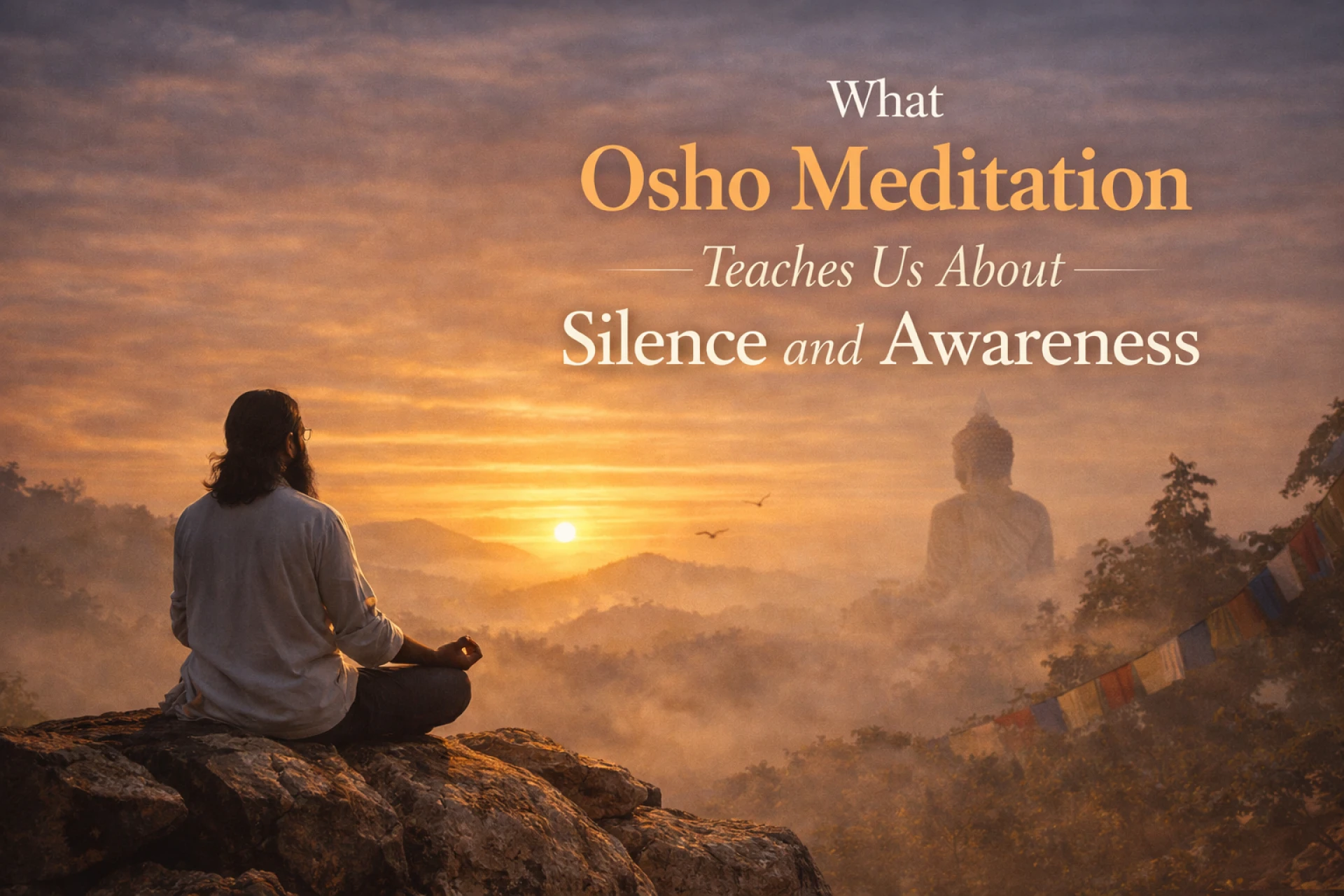
There was a time when silence was natural. People walked without headphones. Evenings were quieter. Conversations were slower. Life had pauses in it. Today, silence has become rare. The moment a quiet space appears, we reach for our phones. Notifications, messages, news, and endless scrolling fill every gap in the day.
Somewhere in the middle of all this noise, people are beginning to realize something simple: the mind never really stops anymore, and that constant mental movement slowly turns into exhaustion.
Interestingly, this is exactly the kind of situation that the Indian mystic Osho spoke about decades ago. Long before smartphones and social media, he pointed out that the modern human mind was becoming overcrowded with thoughts.
One of his well-known observations captures it perfectly:
“The mind is a beautiful servant but a dangerous master.”
When the mind is always in control, life becomes a series of reactions—thought after thought, worry after worry. Osho Meditation was never about escaping life. It was about reclaiming awareness.
The Simple Idea Behind Meditation
Many people imagine meditation as a difficult practice. They think it requires perfect concentration or complete silence in the mind.
Osho approached it differently. He often said that meditation begins not with control but with observation. Instead of fighting thoughts, one simply watches them.
Another one of his simple yet powerful lines explains this idea:
“Meditation is not against the mind. Meditation is understanding the mind.”
That difference changes everything. When a person tries to stop thinking, the mind becomes even more restless. But when thoughts are simply watched, something unexpected happens—they start slowing down on their own.
It is similar to sitting by a river. At first, the water looks chaotic, but if you simply sit and watch, the movement becomes calm and rhythmic. The same is true for the mind.
Why People Are Returning to Meditation
In recent years, meditation has become surprisingly mainstream. Entrepreneurs, students, artists, and even corporate professionals are exploring it.
The reason is simple.
Modern life demands constant attention. Work emails arrive late at night. Social media keeps the brain stimulated. Even relaxation often involves screens.
Many people are discovering that their minds rarely get a moment of true rest. Osho often spoke about this problem long before it became obvious. He believed the modern world needed meditation more than ever because people were losing their ability to simply be present.
He once said:
“The greatest fear in the world is of the opinions of others. And the moment you are unafraid of the crowd, you are no longer a sheep—you become a lion.”
Meditation, in his view, was a way to reconnect with one’s own inner clarity instead of constantly reacting to external pressures.
Meditation Is Not One-Size-Fits-All
One reason Osho’s teachings attracted so many people was his openness toward different meditation methods.
He understood that modern minds are often restless. Sitting silently for long periods can feel almost impossible for beginners.
Because of this, he introduced active meditation techniques—practices that include movement, breathing, and emotional release before entering silence. These methods help release accumulated tension from the body and mind. After that release, quietness becomes much easier.
For people curious about exploring these meditation styles, platforms like Osho Online Organization share explanations of several meditation practices inspired by Osho’s approach to awareness and inner transformation.
Awareness in Everyday Life
One misconception about meditation is that it only happens when someone is sitting with closed eyes. Osho challenged that idea; for him, meditation was not limited to a particular posture or time of day. It was something that could flow into everyday activities.
- Walking can become meditation.
- Listening can become meditation.
Even drinking a cup of tea can become meditation—if it is done with full awareness. He expressed this idea beautifully:
“Be — don’t try to become.”
In other words, life does not need constant improvement or mental commentary. Sometimes it simply needs attention. When awareness enters ordinary moments, even simple experiences feel richer.
The Unexpected Benefits
People often begin meditation because they want to reduce stress or improve focus. Those benefits certainly appear, but something deeper often happens along the way.
As awareness grows, reactions change. Situations that once created frustration may pass more easily. Emotional patterns become visible. Decisions become clearer because the mind is less crowded.
Meditation does not remove life’s challenges, but it changes how those challenges are experienced. Instead of reacting instantly, there is a small space between stimulus and response, and inside that space, clarity appears.
Beginning Without Pressure
One of the most refreshing aspects of Osho’s teachings was his emphasis on experimentation. He never suggested that meditation should feel like a strict discipline or obligation. Instead, he encouraged people to explore it playfully.
Even a few minutes of simply sitting and watching the breath can be a starting point. There is no need to force silence or chase spiritual experiences. Meditation grows naturally when curiosity replaces pressure, and perhaps that is why his teachings continue to resonate today.
A Quiet Revolution
The world may continue becoming louder and faster. Technology will evolve, information will multiply, and daily life will remain busy, but in the middle of that speed, meditation offers something surprisingly simple: the ability to pause.
Osho once said:
“Silence is the language of existence.”
In a world overflowing with noise, learning that language might be one of the most valuable things a person can do.











Sign in to leave a comment.