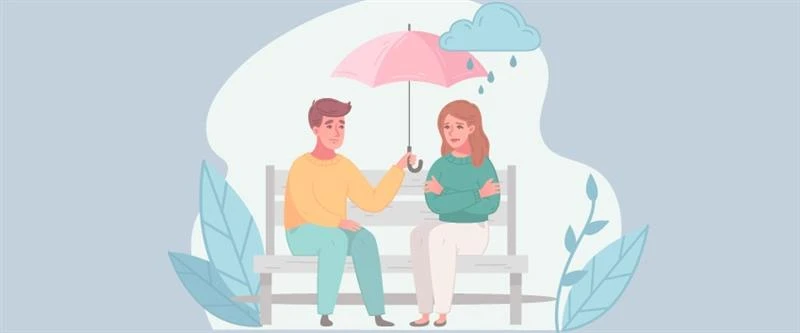

There is a huge difference between self-abandonment and kindness. From a young age, society teaches us to be accommodating, agreeable and most importantly, nice. We are praised as the peacemakers who go out of their way to make sure everyone is comfortable. Underneath that constant smile is often a quiet exhaustion. It is no longer a virtue to keep the peace when it costs your mental health. This becomes a form of self destruction that is deeply ingrained.
This behavior is generally praised, so we rarely see it as harmful. People love a "nice" person. A nice person is someone who never disrupts the peace, does the extra shift and always puts others' needs before their own. This relentless desire to please others is not always a result of pure generosity. It is often rooted in fear. It's a desperate effort to avoid conflict, secure love and control the unpredictable emotions of those around us.
The Fawn Reaction: A Psychological Analysis of People-Pleasing
We must examine the nervous system to understand why we harm ourselves in order to make others feel comfortable. The brain activates fight, flight or freeze when faced with danger. Psychology identifies another survival mechanism, fawning.
Appeasing a hostile person or demanding situation is a subconscious act that ensures your safety. Your brain has learned an important lesson if you were raised in a volatile environment or if you were forced to deal with the moods and demands of your parents or caregivers. It learned to be small, agreeable and hyper-attentive towards the needs of other people.
You will become a chameleon of emotions. You become an emotional chameleon. You apologize for things you did not do. You agree with opinions that you don't share. Your nervous system links setting boundaries with abandonment or attack. This trauma response becomes a permanent personality trait over time. You may convince yourself that you're a nice person. However, your niceness could be a defense mechanism.
Reality check: When your "niceness" comes with a knot in your stomach, and the hopeless desire to be validated by someone else, you're not being kind. You are using a survival strategy.
Silent Resentment: The Bitter Taste
Ironically, chronic people pleasing destroys those very relationships you want to preserve. You create a cognitive environment of dissonance when you say yes to everything you really mean. You are actively compromising your own needs in order to satisfy someone else.
This betrayal doesn't just disappear into thin air. It transforms into resentment. You begin to keep a silent score. You wonder why nobody anticipates your needs as you do. You feel ignored, unappreciated and used. You may snap at little things or withdraw emotionally, leaving friends and partners in confusion.
Resentment is a sign that you have crossed your boundaries, sometimes by your own hand.
Resentment grows because you give people a watered down, curated version of yourself. The real you is hidden by a wall that demands constant compliance. True intimacy requires honesty. True intimacy requires two individuals who have their own limits and needs. You can't have a genuine connection when you remove your limits in order to be nice. You are surrounded by people but still feel alone because they only interact with an agreeable ghost.
The somatic toll of Swallowed truths
The body is not a liar. It takes a lot of energy to suppress your own desires and bite your tongue. The physical effects of this suppression are severe.
This energy is a result of suppressing your anger and frustration in order to maintain peace. This manifests itself as chronic fatigue, undiagnosed muscle tension and burnout. You might experience frequent headaches or severe digestive issues. Your immune system is compromised when your body is in a chronic low-grade stress state.
It carries the weight of all the boundaries you have failed to establish. Your physical vessel carries the weight of each "no" you have swallowed, and every forced smile that you have painted on your lips. It is not only physical fatigue that you feel when the day ends. The deep depletion that comes from someone living solely for others is not just physical fatigue.
Reality check: A cup that is empty cannot be filled, but people pleasers who are addicted to pleasing others will grind it into dust in order to pour a cup. Your burnout is the body scream for boundaries that your voice will not set.
The illusion of the "good" person
Our morality is closely tied to the niceness we display. Society equates giving without boundaries with being "good". We worship the idea of selfless love and ignore the fact that healthy love requires a strong sense of identity.
This is a trap that can be very dangerous. Setting a boundary can feel like a moral failing if your identity and worth is built around how helpful and accommodating you are. When you put your rest first, you feel intense guilt. Saying no to unreasonable requests makes you feel guilty.
This illusion must be deconstructed. It is not uncommon for being nice to be a transaction. The motivation is to influence how other people perceive us. We are nice to avoid people getting mad at us. We are nice to make people think well of us.
Kindness is genuine. Truth is the foundation of true kindness. The kindest thing that you can say to a relationship at times is, "I am not able to help you right now." It's honest. This allows the other person the trust of your "yes" knowing that you have the courage to also say "no."
When you say yes to other people, don't forget to also say no to yourself. -- Paulo Coelho
The Courage to Dislike
To overcome self-destructive kindness, you must face your greatest fear: being disliked. You will upset the people you benefited from by setting boundaries. You might be called selfish. They may pull away.
It is here that you will find your personal growth. You have to learn how to accept the disappointment of others. You must sit with your guilt and allow it to wash over you.
It is not necessary to build walls in order to keep people away. It's about drawing a line in the sand to show people where the door is. This teaches people how to love and respect you. This is a statement that you will no longer set yourself on flames to keep a room warm.
Reclaiming Your Authentic Self
It is a messy and liberating process to break the cycle of self destructive niceness. The simple act of pausing is the first step. Next time someone asks for a favour, don't answer immediately. Allow your nervous system to calm down. Let me check my calendar and get back to you. Ask yourself in that space what you want to do. Do not ask what you feel you have to do.
Pay attention to your physical sensations. Observe the tightness of your chest when you agree with something you dislike. Observe the relief you feel when you honor your limits.
We are so focused on maintaining the peace in the room that we destroy our own peace. Your inner world is just as important. You deserve to be treated with the same kindness, patience and grace as you do for others.
It is okay to take up space. You can be annoying. You're allowed to be inconvenient, have needs, make mistakes, and disappoint people. Letting go of your need to be liked by everyone is not the descent into coldness. This is the return to your true self, which is a glorious and necessary experience. You can finally be yourself when you stop trying to be nice. This reality with its boundaries and unvarnished facts is the foundation for a beautiful life.











Sign in to leave a comment.