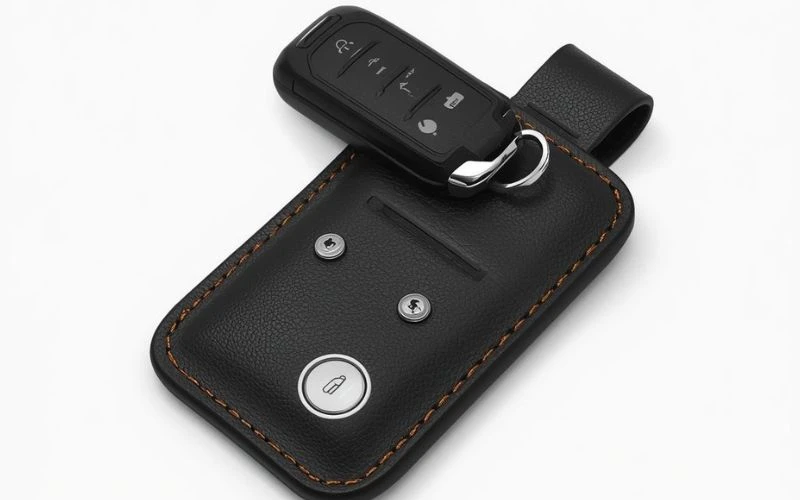

Keyless cars are incredibly convenient—press a button, open the door, and drive away. But here’s the interesting part: that same convenience has created a new opportunity for thieves. In Australia, reports of keyless car theft—often called relay attacks—have been rising, with some insurance providers noting a noticeable increase in metropolitan areas like Melbourne.
That’s why many drivers use Faraday pouches to block signals from their key fobs. Simple idea, right? Drop your key in the pouch and relax. Meanwhile, reality isn’t always that straightforward. Sometimes these pouches fail—and when they do, your car might still be vulnerable. Let’s unpack why.
What Exactly Does a Faraday Pouch Do?
Think of a Faraday pouch like a tiny signal-proof vault for your car key.
Keyless entry systems constantly communicate with your vehicle using radio signals. When the key is nearby, the car recognises it and unlocks automatically. Unfortunately, thieves can amplify this signal from inside your house and trick the car into thinking the key is present.
A Faraday pouch blocks those signals completely.
Here’s how it works in simple terms:
- The pouch contains conductive material that blocks radio frequencies.
- When the key is inside and the pouch is closed, the signal cannot escape.
- Without that signal, thieves can’t perform relay attacks.
It’s clever technology. But like any security tool, it only works when used properly.
When Can a Faraday Pouch Fail?
Interestingly, Faraday pouches don’t fail because the concept is flawed. They fail because of wear, misuse, or poor quality.
Here are the most common reasons:
1. The pouch material wears out
Over time, the metallic shielding inside the pouch can degrade. Small cracks or worn lining can allow signals to leak.
2. The pouch isn’t fully closed
This is more common than you’d think. If the flap or zipper isn’t sealed completely, the signal can escape.
3. Cheap or low-quality pouches
Some budget pouches claim to block signals but don’t provide consistent shielding.
4. Multiple keys inside
Placing several keys or electronic devices in one pouch can sometimes interfere with the shielding effectiveness.
Think of it like sunscreen—if you miss a spot, the protection isn’t complete.
How Can You Test If Your Faraday Pouch Still Works?
Luckily, testing your pouch is easy. No technical equipment required.
Follow this quick test:
Step 1: Put your car key inside the pouch and seal it completely.
Step 2: Stand right next to your car.
Step 3: Try unlocking the vehicle or opening the door handle.
If the car unlocks, the pouch isn’t blocking the signal properly.
An easy way to double-check is to repeat the test from different distances. If the car responds at any point, the pouch likely needs replacing.
Local professionals—like a car locksmith in Port Melbourne drivers rely on—often recommend testing pouches every few months.
Are There Situations Where a Faraday Pouch Isn’t Enough?
Yes, and this is where many drivers get caught off guard.
A pouch blocks signals, but it doesn’t prevent all forms of vehicle theft.
Here are a few scenarios where additional protection helps:
- Key cloning during servicing
- OBD port hacking
- Physical key theft
Meanwhile, thieves are constantly evolving their methods. That’s why layered security works best.
Consider combining:
- Faraday pouch storage
- Steering wheel locks
- Immobiliser upgrades
- GPS tracking systems
Drivers in coastal suburbs often consult a car locksmith in Brighton to add extra protection if they own high-value vehicles.
Think of it like home security. One lock is good. Two or three? Much better.
How Can You Make Your Faraday Pouch More Effective?
A few small habits can dramatically improve your protection.
Faraday Pouch Best Practices
✔ Always seal the pouch fully
✔ Replace it every 12–18 months
✔ Test it regularly using the car-door method
✔ Store keys away from entry doors or windows
✔ Avoid overloading the pouch with multiple devices
Interestingly, many relay attacks happen simply because keys are left near the front door, where signals are easier to capture.
A small change in where you place your keys can make a big difference.
Quick Security Checklist: Protect Your Keyless Vehicle Today
If you want to keep your car safe from relay attacks, start with this simple checklist:
- Test your Faraday pouch today
- Replace worn or cheap pouches
- Store keys away from doors and windows
- Add secondary security like steering locks
- Consult a trusted car locksmith professional if you want advanced protection
Keyless technology is fantastic—but like any smart system, it needs smart habits to stay secure.
Think of the Faraday pouch as your first line of defence. Keep it working properly, combine it with other security tools, and your vehicle stays one step ahead of modern thieves.











Sign in to leave a comment.