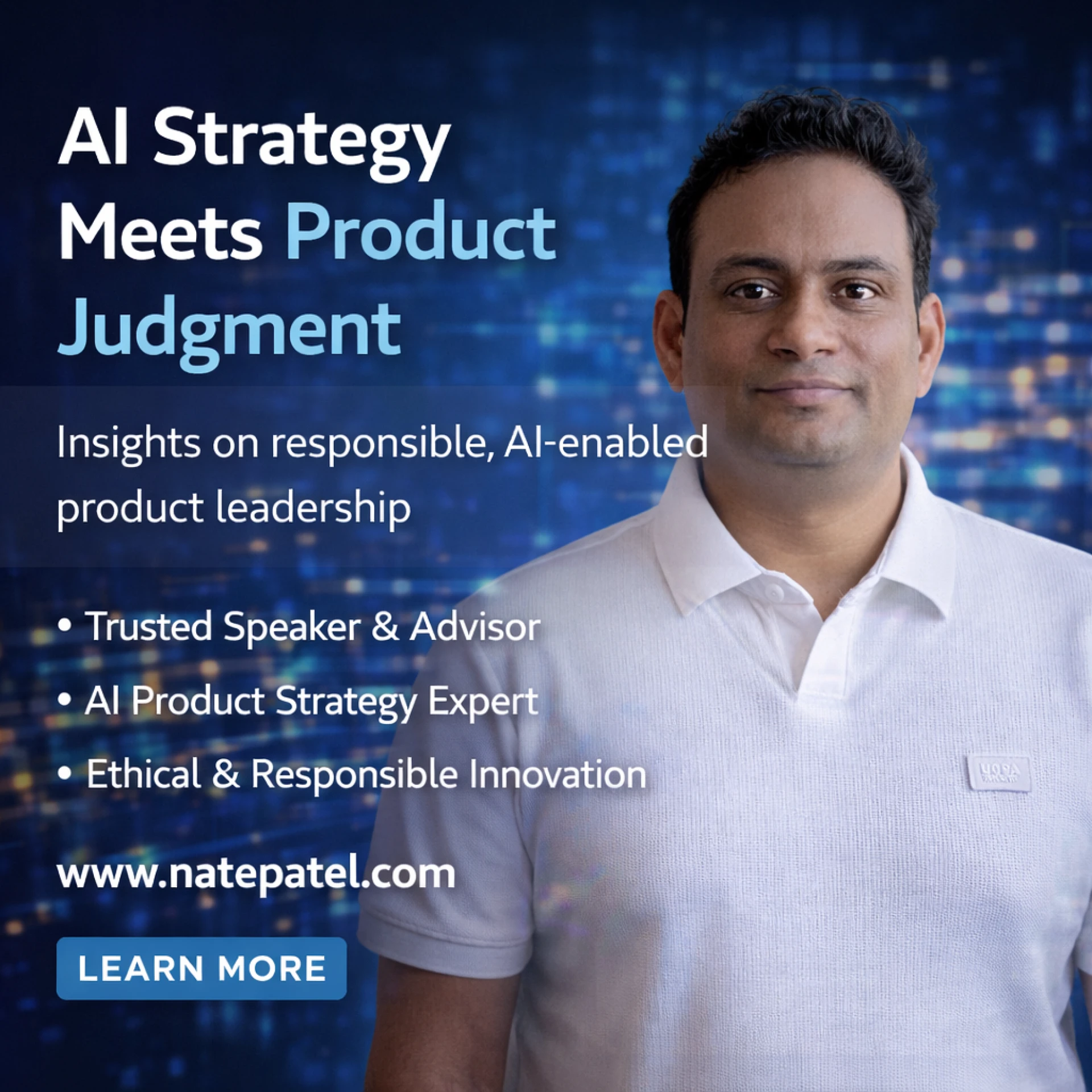

Artificial intelligence is no longer a future concept—it’s embedded in how organizations analyze data, explore ideas, and make decisions every day. From product discovery to strategic planning, AI promises speed, efficiency, and scale. But as adoption accelerates, an important question emerges:
What happens to judgment when decisions are automated?
This is the central theme explored in “Where AI Meets Judgment”—a thoughtful piece that examines why human decision-making remains essential, even in highly AI-driven environments.
The Illusion of Speed Without Understanding
One of the biggest misconceptions about AI is that faster decisions are inherently better decisions. AI can surface patterns, predict outcomes, and optimize processes—but it does not understand why those outcomes matter or who is affected by them.
When teams rely solely on automated outputs, they risk mistaking efficiency for effectiveness. The blog highlights how over-automation can lead to misaligned priorities, ethical blind spots, and decisions that look correct on paper but fail in practice.
Speed is valuable—but only when paired with context.
Judgment Is Not a Bottleneck—It’s a Safeguard
Human judgment is often framed as slow, subjective, or inconsistent. In reality, judgment is what allows leaders to:
- Weigh tradeoffs beyond measurable metrics
- Consider second-order consequences
- Balance short-term wins against long-term trust
- Take responsibility when outcomes fall short
The article makes a compelling case that judgment is not something to eliminate—it’s something to protect and strengthen as AI becomes more capable.
AI can inform decisions. Humans must still own them.
Human-in-the-Loop Is a Leadership Choice
“Human-in-the-loop” is frequently treated as a technical requirement. The blog reframes it as a leadership decision.
Keeping humans involved isn’t about mistrusting AI—it’s about acknowledging where accountability, ethics, and real-world nuance live. The most effective organizations don’t ask, “Can AI do this?” They ask, “Should AI do this—and under what conditions?”
This mindset shift is critical for leaders deploying AI at scale.
Trust Is the Real Currency of AI Adoption
AI systems don’t fail quietly. When they fail, they erode trust—with customers, employees, and stakeholders. The blog emphasizes that trust is built not through perfect automation, but through transparent decision-making and clear ownership.
When people understand how decisions are made—and who is responsible—they are more likely to trust both the system and the organization behind it.
Trust isn’t a technical output. It’s a human outcome.
The Future Belongs to Thoughtful Leaders
As AI continues to advance, the leaders who stand out won’t be the ones who automate the most—they’ll be the ones who automate intentionally.
“Where AI Meets Judgment” offers a grounded, timely reminder: AI is powerful, but judgment is what gives it direction.
📌 Read the full article and explore this balance in depth:
Where AI Meets Judgment: Exploring Thoughtful Product Leadership with Nate Patel










Sign in to leave a comment.