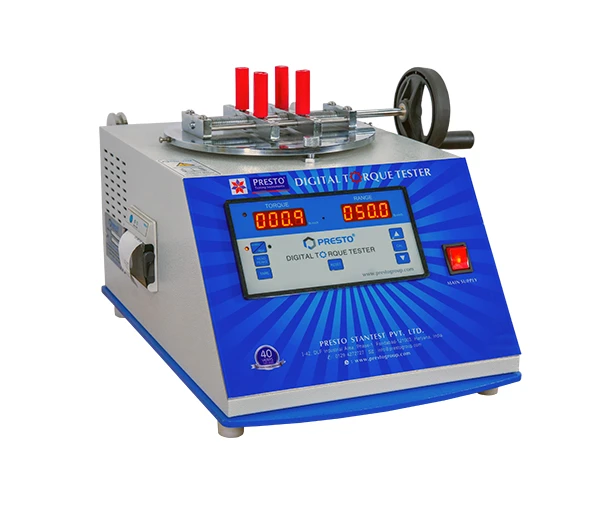

In today’s competitive manufacturing environment, precision torque measurement plays a crucial role in ensuring the performance, reliability, and safety of products. Whether you are producing bottle caps, fasteners, automotive components, or electrical assemblies, using a torque meter is essential for quality assurance. But with several types of torque testers available in the market, choosing the right one for your industry can be challenging.
This guide will help you understand what a torque meter is, how torque testing works, and how to choose the best torque tester for your specific applications.
What Is a Torque Meter?
A torque meter, also known as a torque tester or torque testing machine, is an instrument used to measure the rotational force applied to an object. It determines how much torque (twisting force) is needed to turn or tighten a component such as a cap, screw, or bolt.
Torque measurement ensures that components are neither too loose nor too tight, which is vital for product safety and performance. For example:
- In the packaging industry, torque testers measure the tightness of bottle caps.
- In the automotive industry, they ensure proper tightening of nuts and bolts.
- In electronic manufacturing, torque meters verify the assembly torque of connectors and fasteners.
Why Torque Testing Is Important
Improper torque can lead to a wide range of product issues:
- Under-torquing can cause leakage, loosening, or part separation.
- Over-torquing can lead to thread stripping, cracking, or material deformation.
That’s why torque testing is a standard procedure in many quality control labs. It helps manufacturers maintain consistency, reduce rework, and ensure that every product meets required standards.
Types of Torque Testers
Different industries have different torque measurement requirements. Let’s look at the most common types of torque testers and their specific applications.
1. Digital Torque Meter
A digital torque meter provides high precision and displays torque readings on a digital screen. It is ideal for laboratory and production use where accuracy and repeatability are critical.
- Key Features:
- Easy-to-read LCD display
- Real-time torque measurement
- Data storage and transfer options
- Applications: Beverage bottle caps, jar lids, and medical packaging.
2. Analog Torque Tester
An analog torque tester uses a mechanical gauge to indicate torque levels. While less advanced than digital models, it remains reliable and easy to use.
- Best For: Small-scale operations or quick field checks where digital accuracy is not essential.
3. Rotary Torque Tester
A rotary torque tester measures torque continuously during rotation. This type is often used for dynamic torque testing in motors, gears, and rotating components.
- Industries: Automotive, aerospace, and machinery manufacturing.
4. Bottle Cap Torque Tester
Specially designed for the packaging industry, a bottle cap torque tester measures the torque needed to open or close bottle caps. It helps ensure leak-proof packaging and consumer convenience.
- Key Benefits:
- Accurate measurement of cap removal torque
- Ensures uniform sealing across production batches
5. Screw Torque Tester
A screw torque tester is used to measure the torque applied during tightening or loosening of screws. It’s common in electronics, medical devices, and precision engineering applications.
How to Choose the Best Torque Meter for Your Needs
Selecting the right torque testing machine depends on several factors:
✅ 1. Application Type
- For bottle caps or containers, choose a cap torque tester.
- For bolts, fasteners, or screws, go with a rotary or digital torque tester.
✅ 2. Torque Range
Ensure that the torque meter covers the expected range of your testing requirements — for example, low-torque instruments for lightweight packaging and high-torque ones for automotive parts.
✅ 3. Measurement Accuracy
Choose a digital torque tester if you require precise readings and data traceability for quality reports.
✅ 4. Ease of Use
A user-friendly interface and ergonomic design can save time and reduce operator fatigue.
✅ 5. Durability and Calibration
Always prefer a torque tester from a trusted supplier that provides regular calibration services and technical support.
Torque Tester Price and Value
The torque tester price varies depending on type, features, and capacity.
- Analog torque testers are more affordable but offer limited precision.
- Digital torque meters and motorized torque testing machines come at a higher cost but provide better control, repeatability, and data logging.
When evaluating the price, consider the long-term value—accurate torque measurement reduces product failures, improves customer satisfaction, and enhances overall efficiency.
Choosing the Right Torque Tester Supplier
Selecting a reliable torque tester supplier ensures you get a high-quality, durable, and accurate testing instrument. Look for suppliers who provide:
- Certified and calibrated machines
- Technical support and training
- After-sales service and spare parts availability
Presto Group is one of India’s leading manufacturers and suppliers of torque testing machines. With decades of expertise in packaging and material testing, Presto offers a wide range of digital torque meters and bottle cap torque testers designed for precision, ease of use, and reliability.
Conclusion
A torque meter is an indispensable tool for ensuring product integrity and quality across industries. Whether you’re in packaging, automotive, or electronics, choosing the right torque testing machine can make all the difference in your production process.
For expert guidance and the latest torque tester models, connect with Presto Group, the trusted name in testing instruments.
📞 Call: +91 9210 903 903
📧 Email: [email protected]
🌐 Website: https://www.testing-instruments.com/contact/












Sign in to leave a comment.