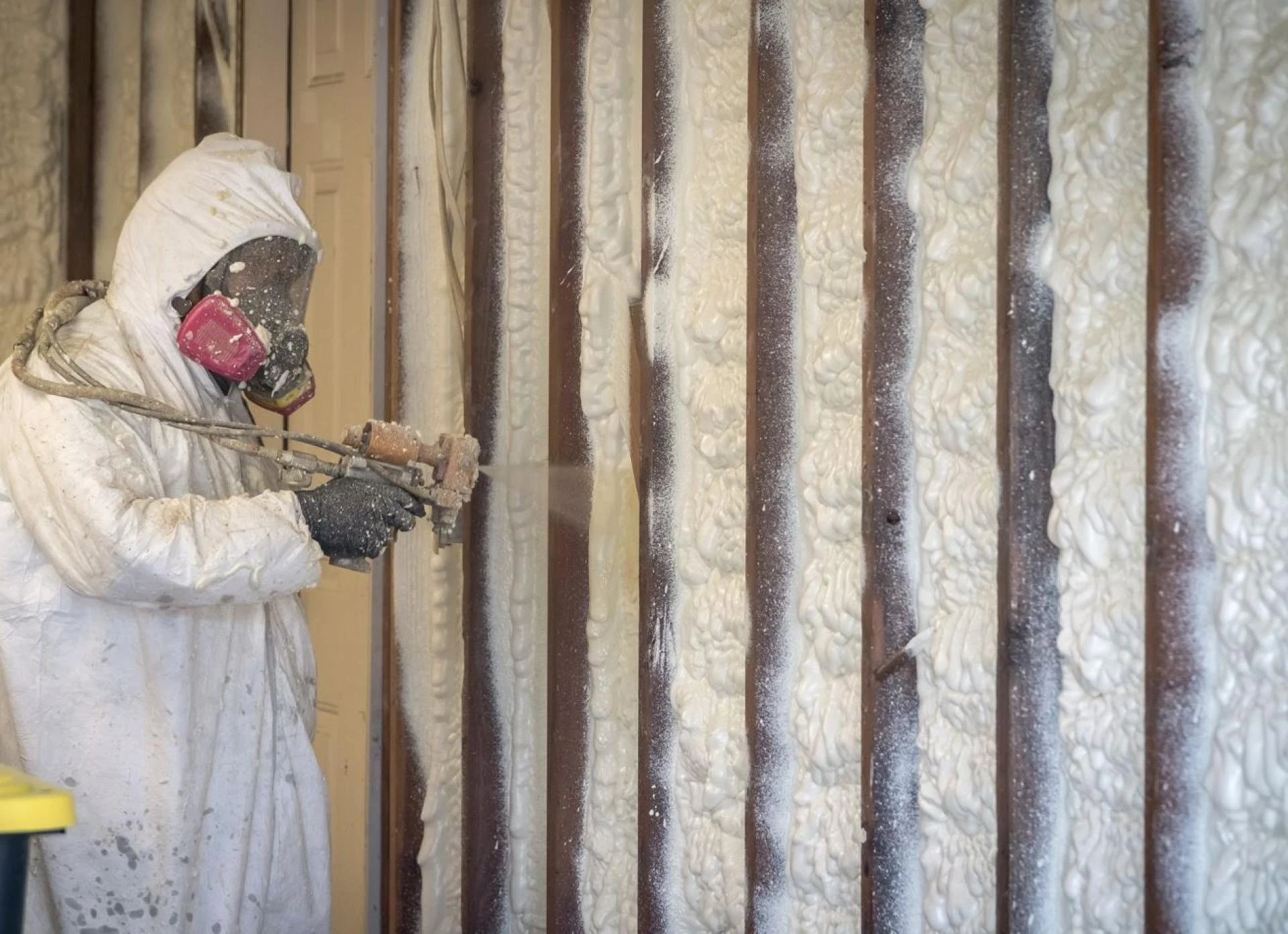

Choosing closed cell spray foam insulation drastically reduces a home's reliance on its HVAC system by creating a nearly perfect, high-performance building envelope. It works by addressing the two primary ways a home wastes energy: heat transfer and air leakage. With its high R-value, it effectively stops heat from moving through the structure, and as a complete air barrier, it stops the drafts and leaks that force an HVAC system to run constantly. By creating a home that is exceptionally good at maintaining its own temperature, closed cell foam allows the heating and cooling system to run far less often, which leads to massive energy savings, improved comfort, and a longer life for the expensive mechanical equipment.
This guide will explain the building science behind this dramatic reduction in HVAC workload. The information is based on the practical experience of an expert closed cell spray foam contractor who understands that the most efficient HVAC system is one that does not have to run very often.
The Two Battles Your HVAC System Fights Every Day
In a standard home with traditional insulation, the furnace and air conditioner are in a constant, losing battle against the laws of physics.
The Battle Against Heat Transfer
Heat is always trying to move from a warmer place to a cooler one. In the winter, the expensive heat your furnace creates is constantly trying to escape through the walls and ceiling. In the summer, the intense outdoor heat is relentlessly pushing its way into your cool, air-conditioned home. An insulation's ability to fight this movement is measured by its R-value. A low R-value means the HVAC system has to work very hard just to keep up with this constant heat flow.
The Battle Against Air Leakage
An even bigger problem in most homes is air leakage. The average house has enough hidden gaps and cracks to be equivalent to leaving a window open 24/7. This means your HVAC system is not just conditioning your home; it is trying to condition a constant, incoming stream of outside air. In the summer, this means it is also fighting a huge load of incoming humidity. This is an impossible task that forces the system to run almost continuously, which is the primary cause of high energy bills and premature equipment failure.
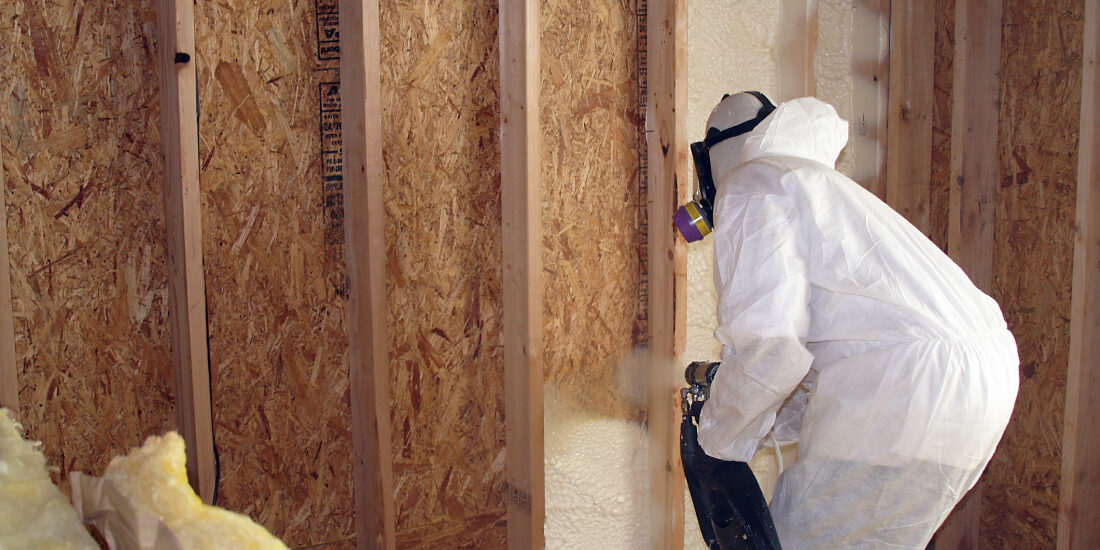
How Closed Cell Foam Creates a High-Performance Home
Closed cell spray foam is unique in that it provides a complete, all-in-one solution to both of these problems.
Superior Thermal Resistance
Closed cell foam has one of the highest R-values of any commonly used insulation material, typically around R-7 per inch. This high thermal resistance is extremely effective at slowing down the transfer of heat, providing a powerful first line of defense for your HVAC system.
The Power of a Perfect Air Seal
This is the feature that truly transforms a home's performance. Closed cell foam is applied as a liquid and expands to fill every crack, seam, and void, adhering directly to the building materials. This creates a solid, seamless, and permanent air barrier. It stops the uncontrolled flow of air completely.
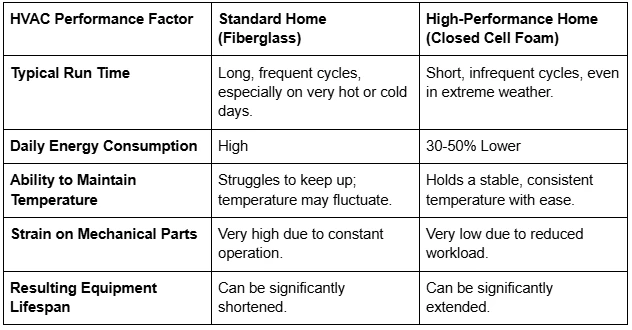
By creating this airtight seal, the home's "heating and cooling load" is drastically reduced. The HVAC system is no longer fighting a constant battle against the outdoors. It can now easily and quickly bring the home to the desired temperature and then shut off for long periods. This is the key to reducing your reliance on it.
Here’s a comparison of how closed cell foam impacts HVAC operation:
The Added Benefits of a High-Performance Envelope
The advantages of reducing your reliance on your HVAC system go beyond just the monthly energy savings.
The Ability to "Right-Size" Your HVAC Equipment
Because a home insulated with closed cell foam has such a low heating and cooling load, a much smaller and less expensive HVAC unit can be installed. For a new home, the capital savings on the mechanical equipment can be substantial, often enough to offset a large portion of the cost of the insulation upgrade. For an existing home, it means that when it is time to replace the old unit, a smaller, more efficient, and cheaper model can be chosen.
Bonus Tip: An oversized HVAC unit in a well-insulated home is not a good thing. It will run in very short, powerful bursts, which is inefficient and does a poor job of dehumidifying the air. A "right-sized" unit that runs in longer, gentler cycles is much better for both efficiency and comfort.
A Longer Lifespan for Your Most Expensive Appliance
Your HVAC system is one of the most expensive and complex pieces of equipment in your home. By drastically reducing its workload, you are also drastically reducing the wear and tear on its most important components, like the compressor and the fan motor. An HVAC system in a high-performance home can last years longer than one in a standard, leaky home, saving you thousands of dollars in premature replacement costs.
A Healthier and More Comfortable Home
A home that is less reliant on its HVAC system is also a more comfortable and healthier home. The airtight seal created by closed cell foam prevents the infiltration of dust, pollen, and other outdoor allergens, improving indoor air quality. It also acts as a vapor barrier, preventing the moisture issues that can lead to mold and mildew.
Bonus Tip: One of the most effective ways to reduce your AC's workload is to create a "conditioned" or "unvented" attic by applying closed cell foam directly to the underside of the roof deck. This stops the attic from becoming a 140-degree oven in the summer, which has a massive and immediate impact on the home's cooling load.
Things to Consider Before Your Project
- It is a system: To get the full benefit, it is important to think of your home as a complete system. The insulation, the windows, the ductwork, and the HVAC unit all need to work together. A professional home performance contractor can help you create a holistic plan.
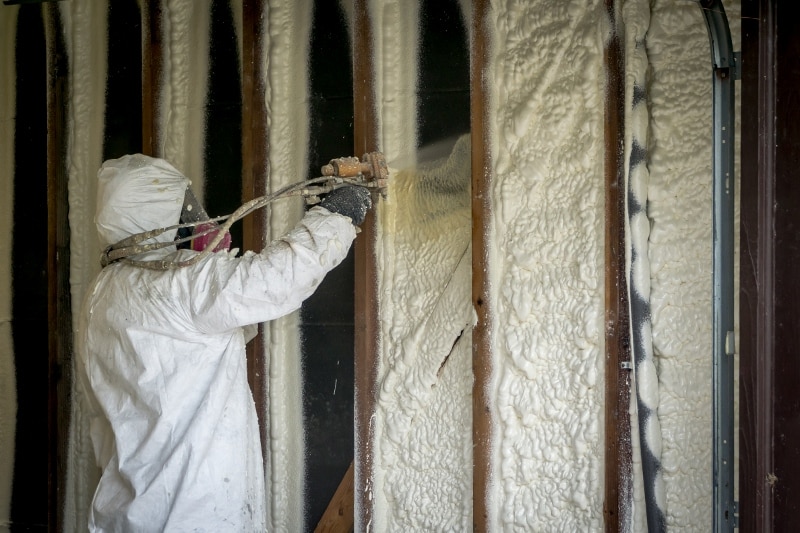
- Professional installation is key: The performance of closed cell foam is entirely dependent on the quality of the installation. This is a technical job that requires a certified, experienced professional with the right equipment.
- Ventilation is important: A very airtight home needs a source of fresh, filtered air. A professional contractor can help you determine if your home would benefit from a controlled mechanical ventilation system, like an ERV or HRV.
Final Thoughts on a Smarter Home
Choosing closed cell spray foam insulation is a strategic decision to make your home fundamentally more efficient and less dependent on its mechanical systems. It is a proactive investment that transforms your home from a leaky, inefficient structure into a high-performance enclosure that is easy and inexpensive to heat and cool. The result is a home that is not just more affordable to operate, but also more comfortable, healthier, and more durable for years to come.
Get a Professional Home Performance Plan
To find out how you can dramatically reduce your home's reliance on its HVAC system, the best first step is a professional evaluation. An experienced home performance contractor can assess your home's current condition and provide a clear, data-driven plan for improvement. For homeowners looking for an expert consultation, the team at Spray Foam Tech has deep expertise in creating high-performance homes. They can be reached for a consultation by email at [email protected] or by phone at (737) 777-9590.
Reviewer: Maria Lopez reviewed the article and brought 12 years of insulation industry experience to improve the guidance. Practical tips were added, and the content was made clearer and more useful for contractors working in the field every day.
Learn More:
https://sprayfoamtechtx.com/insulation-guide-temple-tx-homes/










Sign in to leave a comment.