
Introduction
Digital transformation in India is moving faster than ever. Organizations are adopting cloud platforms, remote work environments, and SaaS applications to support business growth. However, this shift has also expanded the attack surface for cyber threats. Traditional perimeter based security models are no longer sufficient because modern networks operate beyond a single office location.
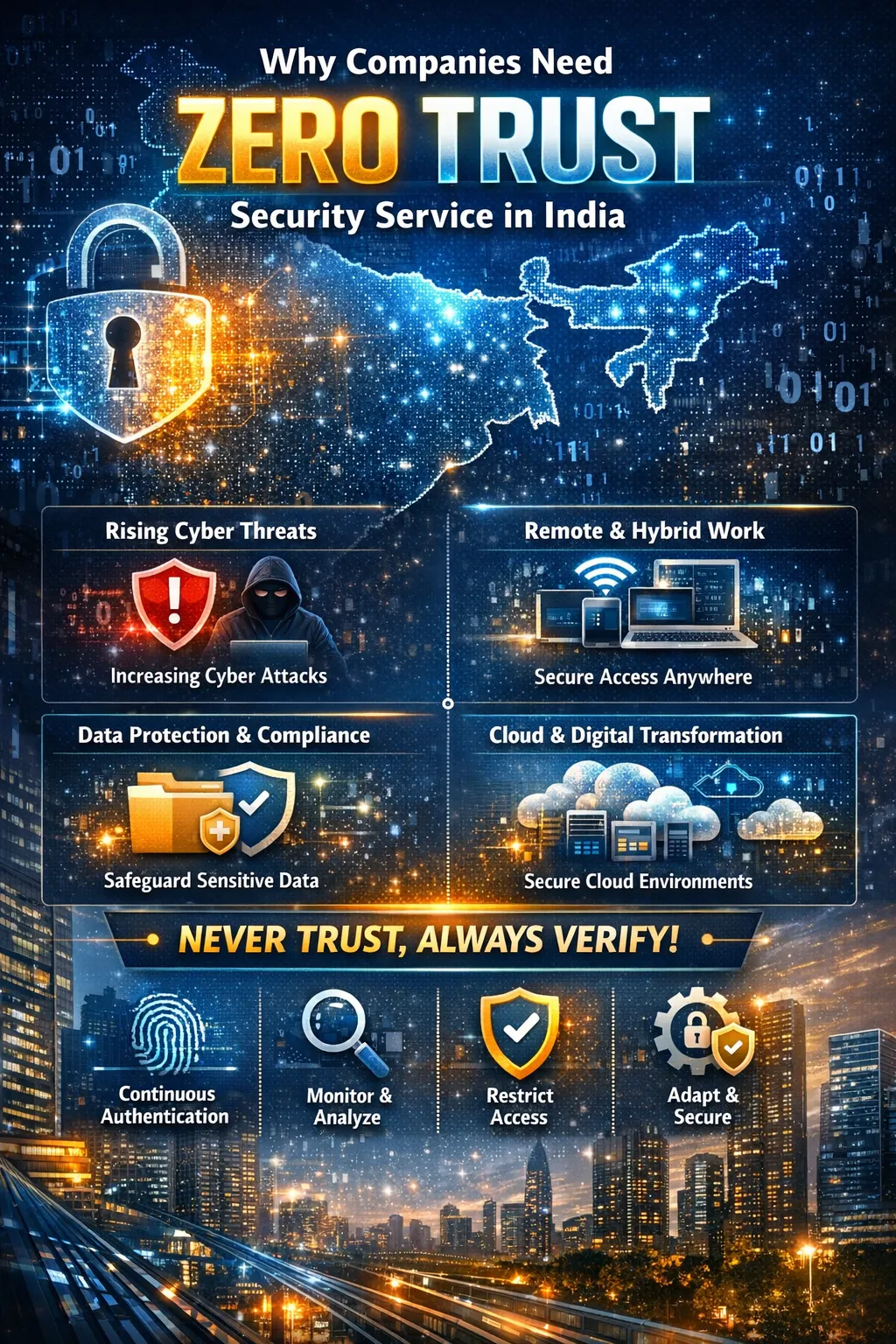
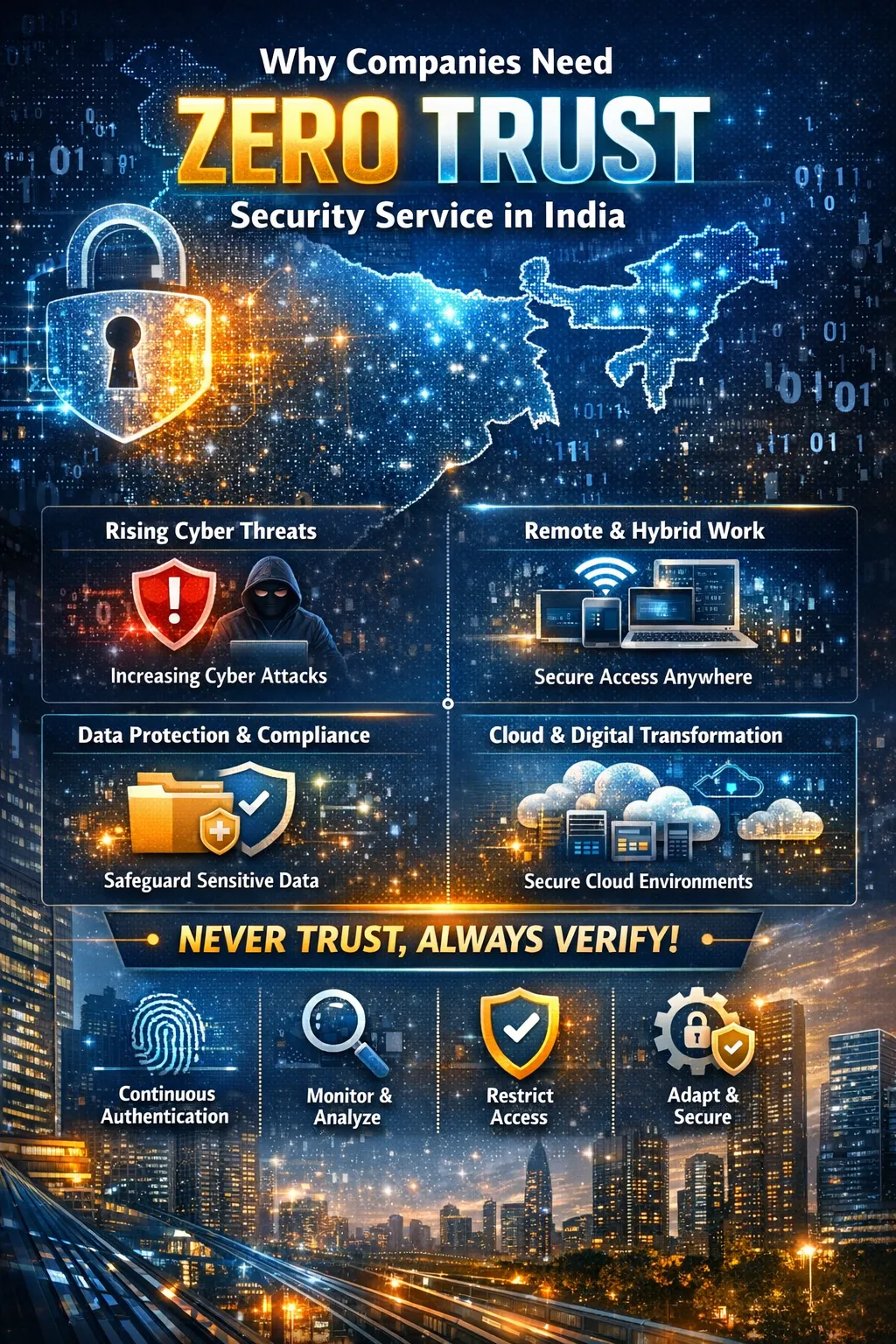
In my experience working with organizations that are moving to cloud and hybrid environments, many leaders realize that security cannot rely on trust alone. This is where a zero trust security service in India becomes critical. The Zero Trust model assumes that no user, device, or application should be trusted automatically. Every access request must be verified continuously. This approach helps companies protect sensitive data, maintain compliance, and reduce the risk of cyber incidents.
Understanding the Zero Trust Security Model
Zero Trust is a cybersecurity framework based on a simple principle. Never trust. Always verify. Instead of assuming that users inside the corporate network are safe, the model requires continuous authentication and validation of identity, devices, and access behavior.
In practical terms, this means that employees, vendors, and systems must prove their identity each time they try to access company resources. Security tools evaluate multiple signals such as device health, location, identity verification, and access patterns before allowing entry to applications or data.
This approach is particularly important in modern organizations where employees access systems from multiple locations and devices. With cloud applications and remote work becoming the norm, the traditional network boundary has disappeared.
Growing Cybersecurity Challenges in India
India is witnessing a rapid increase in cyber threats as businesses digitize their operations. Reports indicate that the country experienced more than 16 million cybersecurity incidents in a single year, highlighting the urgent need for stronger security frameworks.
At the same time, many organizations still rely on outdated security technologies. Surveys have shown that around 37 percent of cybersecurity technologies used by Indian companies are considered outdated by security professionals.
Because of this gap, companies are investing heavily in modern security strategies such as Zero Trust. Studies show that a large majority of enterprises in India are implementing or planning to implement Zero Trust architecture to secure their cloud environments and digital infrastructure.
These trends clearly show that businesses across industries recognize the importance of adopting a modern security model.
Why Zero Trust Security Service Is Essential for Indian Companies
Protection Against Modern Cyber Attacks
Cyber attacks today are more sophisticated than ever. Attackers use stolen credentials, phishing campaigns, and malware to gain access to corporate systems. Once inside a network, they can move laterally and compromise multiple systems.
A zero trust security service reduces this risk by verifying every access request. Even if attackers gain credentials, additional authentication checks, device verification, and behavioral monitoring can prevent unauthorized access.
Security for Hybrid and Remote Work
Hybrid work environments have become common across India. Employees connect to corporate systems from homes, cafes, and mobile devices. This creates multiple entry points for attackers.
Zero Trust ensures that access policies apply consistently regardless of where the user connects from. Identity verification, device posture checks, and least privilege access policies help organizations secure distributed workforces.
Stronger Data Protection and Compliance
Many Indian industries must comply with data protection regulations and cybersecurity guidelines. Financial services, healthcare, and government organizations manage highly sensitive data that requires strict access control.
Zero Trust security services support compliance by enforcing identity based access policies, continuous monitoring, and audit visibility. This allows organizations to demonstrate that only authorized users can access critical systems and data.
Better Visibility Across IT Infrastructure
Another advantage of Zero Trust is improved visibility into network activity. Security teams can track who accessed which resource, from which device, and at what time.
This visibility helps security teams detect suspicious behavior quickly. Early detection significantly reduces the impact of potential security incidents and improves incident response capabilities.
Support for Cloud and Digital Transformation
Cloud adoption in India continues to grow rapidly as organizations move workloads to cloud platforms and SaaS tools. Traditional network security tools were not designed for this environment.
Zero Trust security aligns perfectly with cloud architecture. It secures applications directly rather than relying on network boundaries. As a result, businesses can scale their digital transformation initiatives without compromising security.
The Role of Zero Trust Security Services
Implementing Zero Trust is not only about deploying new tools. It requires a well planned strategy that includes identity management, device security, network monitoring, and access control policies.
A professional zero trust security service in India helps organizations design and implement this architecture effectively. Security experts assess existing infrastructure, identify security gaps, and implement layered security controls that align with business needs.
This approach ensures that security strategies are integrated with cloud platforms, endpoint security, identity management, and security monitoring systems.
The Future of Zero Trust in India
The demand for Zero Trust security continues to grow as organizations recognize the limitations of traditional security models. Market research indicates that the Zero Trust security market in India is expected to grow at a strong annual rate as businesses invest in advanced security solutions.
At the same time, technologies such as artificial intelligence and machine learning are being integrated into Zero Trust frameworks to improve threat detection and access monitoring.
These developments will make Zero Trust even more effective in protecting modern digital infrastructures.
Conclusion
The cybersecurity landscape in India is evolving rapidly. Cloud adoption, remote work, and digital transformation have made traditional security approaches insufficient. Organizations must adopt a security model that protects users, devices, and applications regardless of location.
In my experience, companies that adopt a zero trust security service in India gain stronger protection, better visibility, and improved compliance. By verifying every access request and enforcing strict security policies, Zero Trust helps organizations build resilient security frameworks that support long term digital growth.
For businesses that want to secure their cloud environments, protect sensitive data, and reduce cyber risks, Zero Trust is no longer optional. It has become a fundamental requirement for modern cybersecurity strategy.











Sign in to leave a comment.