

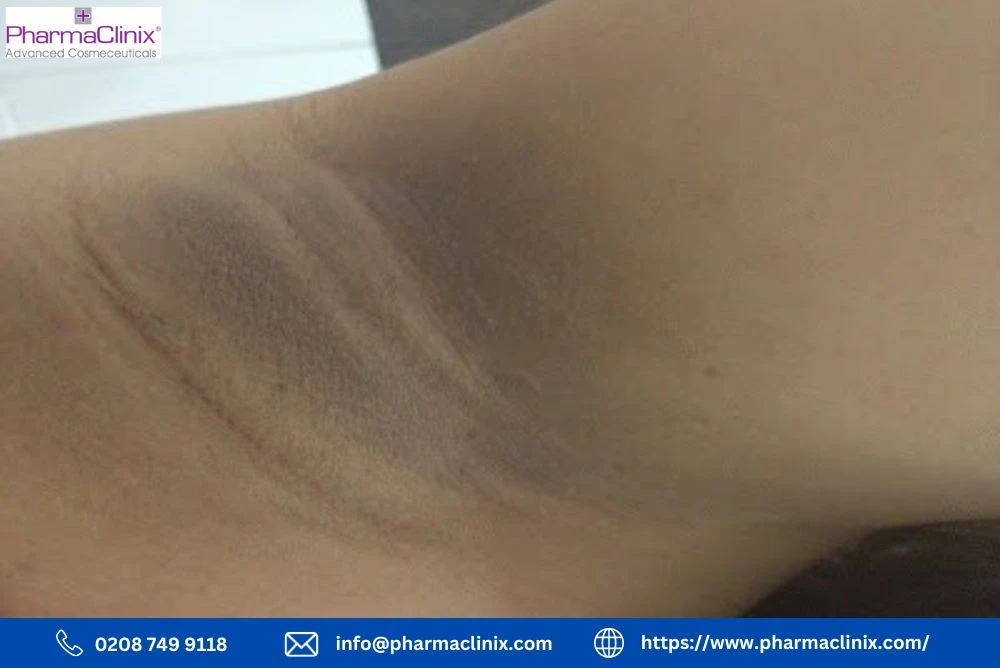
Dark patches in armpits, also known as underarm hyperpigmentation, are common. They can affect people of all skin types. These patches are often harmless. But sometimes, they may point to deeper skin or health problems.
Most cases are linked to skin friction, dead skin build-up, or pigmentation after irritation—usually from shaving or using certain deodorants.
Even though these patches don’t hurt the body, they can hurt your confidence. This is especially true in warmer months or social settings where sleeveless clothes are worn.
The good news? Dark underarms are treatable. And with the right care, they can even be prevented. In this expert guide, we explain the causes, risks, and how to treat them with safe and proven methods.
Understanding the Skin Under Your Arms
The skin under your arms is delicate. It faces daily pressure from movement, clothes, sweat, and skin products.
Why Armpits Are Prone to Discolouration
Armpits are soft, folded areas. These skin folds rub against each other or against clothing. This friction triggers the body to make more melanin, the pigment that darkens skin.
Shaving adds to this problem. Each stroke of the razor can leave tiny cuts or irritation. Over time, this leads to post-inflammatory hyperpigmentation.
The sweat glands in this area also play a role. They release sweat that mixes with bacteria. This mix can make the skin darker.
Many deodorants contain alcohol or strong fragrance. These ingredients dry and irritate the skin. This causes more darkening over time.
What Is Pigmentation and How It Affects Skin Tone
Pigmentation is your skin’s natural colour. It’s controlled by melanin. When the skin makes too much melanin, the result is hyperpigmentation. This causes the dark patches you see.
One common type is post-inflammatory hyperpigmentation (PIH). It appears after the skin has been hurt or irritated. Shaving, rashes, and allergic reactions are often behind it.
People with darker skin tones naturally have more melanin. This makes them more likely to get these dark spots.
Common Causes of Dark Patches in Armpits
Let’s look at the reasons these patches form. They can be lifestyle-related or linked to health.
Lifestyle and External Irritants
Some hair removal methods harm the skin. Shaving often causes small cuts. Waxing and epilation can pull at the skin, leading to inflammation.
Using deodorants with harsh chemicals or alcohol can irritate the skin. Over time, this triggers melanin to rise in those areas.
Dead skin cells also build up in the underarm folds. If not exfoliated, they can lead to dull, dark skin.
Health-Related and Hormonal Causes
Some health conditions can also lead to dark underarms. One of them is acanthosis nigricans. It causes thick, dark, velvety skin in the armpits, neck, and groin. It’s often linked to diabetes, obesity, or insulin resistance.
Hormonal changes from pregnancy or PCOS (polycystic ovary syndrome) can also cause underarm discoloration.
Sudden Onset of Dark Patches
If the patches appear suddenly, it could be serious. Rapid darkening may signal malignant acanthosis nigricans or skin cancer. In such cases, a doctor’s advice is needed.
When to Worry: Sudden or Severe Underarm Darkening
Symptoms That May Indicate a Medical Condition
Not all armpit skin darkening is benign. Warning signs include:
- Velvety texture or thickened skin.
- Itching, burning, or irritation.
- Spread to other regions such as the neck, groin, or back of the knees.
These symptoms may point to systemic issues rather than simple pigmentation concerns.
When to See a Doctor or Dermatologist
If the dark patches are persistent, worsen over time, or don't respond to typical dark underarm treatment, it's essential to consult a healthcare professional. This is especially true when symptoms are paired with weight gain, fatigue, or metabolic red flags. A proper diagnosis ensures that any underlying skin condition is identified and treated promptly.
How to Diagnose Armpit Discoloration
Medical Examination and Tests
Diagnosis typically starts with a visual inspection by a dermatologist. If the pattern resembles acanthosis nigricans, further evaluation may include a blood sugar test or insulin level assessment. In some cases, a biopsy may be conducted to rule out malignancy or rare skin disorders.
Differentiating between hyperpigmentation and more serious skin conditions ensures the treatment is not just cosmetic but medically effective.
At-Home Remedies for Dark Underarms
Natural Ingredients That Help
Several natural options are popular for lightening dark armpit skin:
- Aloe vera soothes inflammation and helps regenerate cells.
- Turmeric contains curcumin, which inhibits melanin production.
- Potato juice and apple cider vinegar act as mild bleaching agents.
- Oatmeal and rice flour can gently exfoliate the area, removing dead skin cells and promoting even skin tone.
Though results are gradual, these remedies can be effective when used consistently.
Lifestyle Adjustments That Make a Difference
Improving your daily routine can prevent and reverse armpit darkening:
- Wear breathable fabrics to reduce friction and sweat buildup.
- Choose natural or unscented deodorants to avoid skin irritation.
- Avoid frequent shaving or switch to gentler hair removal methods like trimming.
These changes help the underarm skin heal and maintain a healthier appearance.
Medical Treatments That Work
Topical Treatments
When home care isn’t enough, topical creams are often recommended. Ingredients such as:
- Niacinamide: strengthens the skin barrier and brightens.
- Kojic acid and azelaic acid: reduce melanin production.
- Retinoids: promote cell turnover and diminish dark spots.
These can be found in over-the-counter or prescription-strength formulas. Results often appear after 6 to 12 weeks of regular use.
In-Clinic Solutions
Dermatological treatments offer faster and often more visible results. Options include:
- Chemical peels to exfoliate and stimulate new skin growth.
- Laser treatments to target melanin.
- Microdermabrasion for deep exfoliation and improved skin texture.
These should only be done under professional supervision to avoid complications in sensitive skin.
How to Prevent Dark Armpits Long-Term
Healthy Skin Habits
To stop dark patches from coming back, follow these easy tips:
- Keep your underarms clean every day.
- Exfoliate the area once a week to remove dead skin.
- Apply moisturiser often to keep the skin soft.
- Drink enough water to stay hydrated.
- Use sunscreen if your armpits are exposed to the sun.
These small steps help keep your skin smooth and even over time.
Choosing the Right Products
Pick products that are:
- Free from strong perfume or alcohol.
- Made for sensitive skin.
- Balanced for your skin’s pH level.
- Suggested by skin doctors (dermatologists) for dark patches.
Using the right items every day lowers the risk of new dark spots.
Best Products to Brighten Dark Armpits
What Ingredients to Look For
Good products often have:
- Vitamin C – This stops extra melanin and protects your skin.
- Niacinamide – It makes your skin firmer and improves colour.
- Licorice extract – A soft, plant-based way to lighten dark skin.
- Glycolic acid – It gently removes old skin to fade dark marks.
These ingredients are safe and tested by experts for brightening skin.
Editor-Recommended Creams and Serums
Choose creams and serums made for dark underarms.
Use them once or twice a day, as the label says. Most people notice better skin after 4 to 8 weeks, especially when used with exfoliation and a healthy routine.
Frequently Asked Questions (FAQs)
Q: Can deodorants cause dark underarms?
A: Yes, especially those with alcohol or strong fragrance. They irritate the skin and cause dark spots.
Q: Is armpit darkness permanent?
A: Not always. With proper care and treatment, most cases can be improved or reversed.
Q: Do home remedies really work for underarm pigmentation?
A: They can help, but they take time. For deep pigmentation, medical treatments may work better.
Q: What’s the difference between dark spots and dark patches?
A: Spots are small and round, while patches are larger and cover more skin.
Q: Can dark patches be a sign of something serious?
A: Yes, in rare cases. If they appear suddenly or spread fast, see a doctor.
Concluding Thoughts
Dark underarms are common. You’re not alone, and it’s nothing to feel bad about.
Knowing what causes dark patches helps you treat them the right way—whether with natural methods or medical help.
The key is to be gentle, stay consistent, and get advice if needed.
With simple care, you can bring back your skin’s glow and feel good in your body—one step at a time.













Sign in to leave a comment.