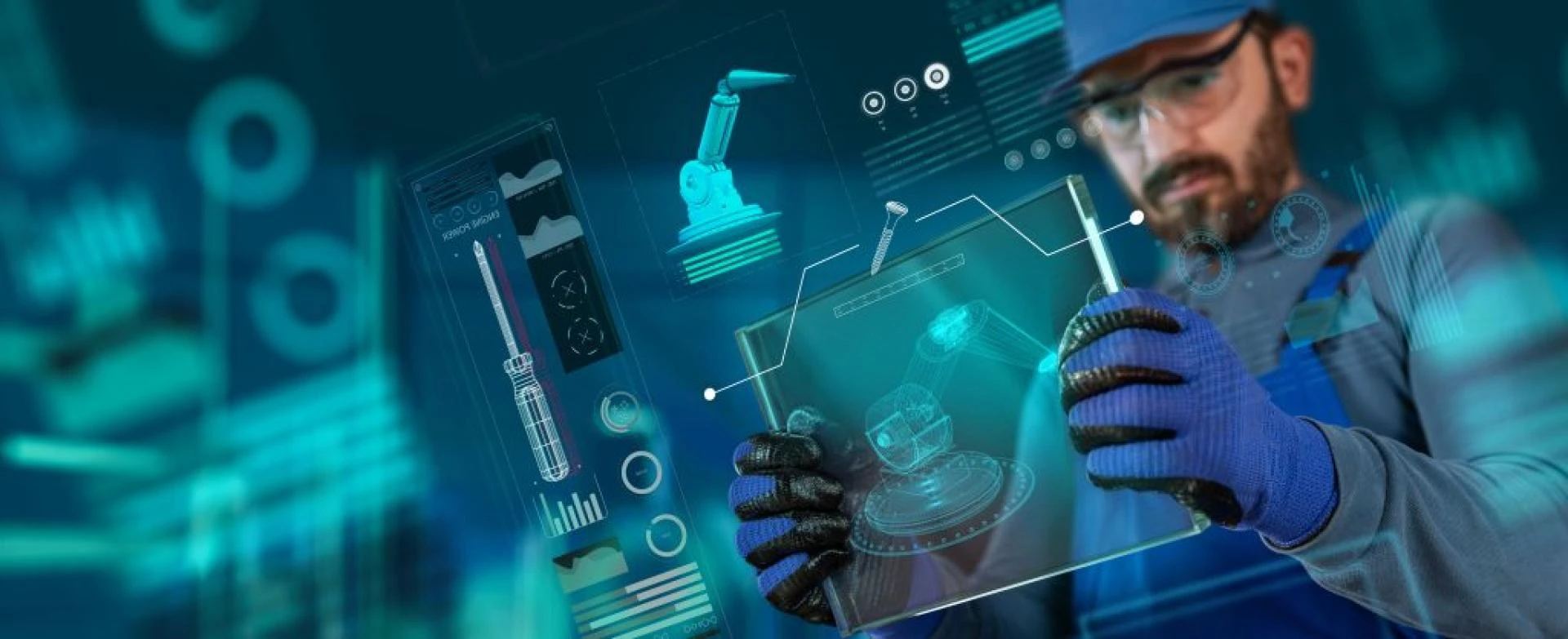


No Doubts! The industrial world is on the brink of a major transformation. Thus, this transformation allows businesses to change the following aspects:
- How does it operate its functions?
- How does business interact with customers?
- How it gets reshaped to attain the future of innovation?
Traditionally, companies were attracted towards advancements made by industry 4.0 or industry 5.0, where automation, data exchange, and AI revolutionized manufacturing. However, many of these companies are now turning their attention towards Industry 6.0. This new industrial revolution is surely redefining the relationship between humans and technology, helping businesses to create a smarter yet human-centric future.
Industry 6.0 promises to harmonize the convergence of AI (artificial intelligence), Robotics, and huma creativity with technologies for efficiency and human ingenuity. So, in this article, we’ll explore why industry 6.0 is poised as the future for smart or human-centric innovation.
What is Industry 6.0?
Undoubtedly! Industry 6.0 is highlighting the next step of the ongoing evolution of industrial capabilities. This industrial evolution levies its complete focus on achieving a seamless collaboration between human intelligence and advanced technologies. Some of these technologies include AI and robotics. This industrial revolution states creating smart systems with better operational efficiency. These systems are somehow helpful to businesses in enhancing human creativity, intuitions, and decision-making.
In this context, the role of technology shifts from being a mere enabler of processes to becoming an active participant in the creative and decision-making processes. Utilizing industry 6.0, humans and machines can work altogether helping businesses to design highly personalized and flexible solutions. This collaboration ensures machines excel in data processing and repetitive tasks while humans can help with invaluable creativity and strategic thinking.
What are Key Technologies Fueling Industry 6.0?
There are multiple technologies associated with industry 6.0 that help businesses to enable smarter or human-centric industrial ecosystems. So, let’s understand more about these technologies driving this shift:
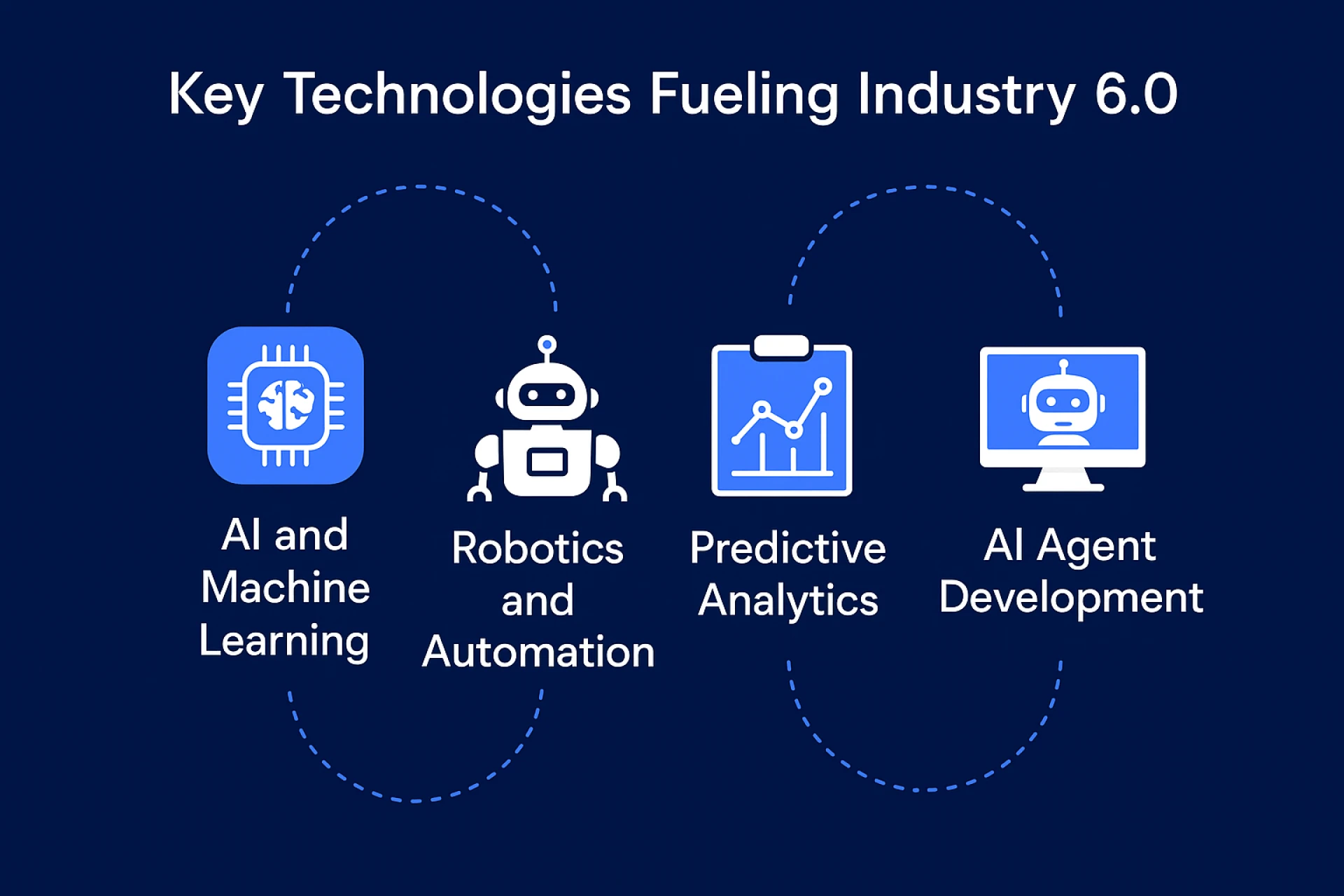
1. AI And Machine Learning:
AI is surely the cornerstone of Industry 6.0 that empowers businesses with predictive analytics to intelligent automation. Therefore, with deep learning services, machines can learn from vast datasets with betterment of performance over time. This allows businesses to make decisions that were tackled by humans solely. Hence, AI-based machines are useful to enhance efficiency of production with prediction of equipment failures before their occurrence. In short, these machines help businesses to optimize their operations in real-time.
When talking about smart factories, AI can stick with changing conditions or customizing production lines that helps manufacturers to create highly personalized products at scale.
2. Robotics and Automation:
Robotics in industry 6.0 goes beyond simple automation. Therefore, collaborative robots or cobots will work with humans that assist in every task with precision, dexterity, and creativity. Being powered by AI, Cobots have the tendency to learn from human actions and adapt to different environments. This makes these cobots ideal for dynamic or ever-changing production lines.
Such human-machine collaboration tends to complement human strengths, like creativity with unmatched capabilities of machines to execute complex calculations or repetitive tasks.
3. Predictive Analytics:
Predictive Analytics is surely the key to maintain the optimal operations. Therefore, by analyzing historical data and identifying patterns, these predictive analytics solutions can assist to forecast future trends. Hence, the report ensures businesses make informed decisions before time.
For instance: Predictive analytics helps manufacturing plants to identify potential bottlenecks before they disrupt operations. These can also help to optimize machine maintenance schedules with reduced downtime and prevent costly repairs.
4. AI Agent Development:
Absolutely! Industry 6.0 has blurred the line between humans and machine collaboration. Thus, the development of intelligent AI Agents has surely become essential. These AI agents will act as Virtual Assistants that guide workers with complex tasks and offer insights to enhance decision-making.
Within industries like healthcare or logistics, AI agents tend to manage vast amounts of real-time data while providing personalized recommendations to ensure more autonomous decisions (whenever required).
Therefore, AI Agents can learn from environments and interact with humans in natural with intuitive ways to redefine the human roles in different industries.
How to Overcome Challenges of Industry 6.0?
When we talk about Industry 6.0 then, this revolution has several potentials while there are certain challenges too. One of the major significant hurdles associated is data privacy in smart manufacturing. Generally, businesses collect or analyze large amounts of sensitive data to optimize operation while ensuring the security of this data is highly crucial. Therefore, companies must implement robust cybersecurity measures along with adherence to strict data protection regulation to eradicate the concern of data breaches.
Another challenge associated with this industrial revolution is the skill gap in the workforce. With evolution of industries, the demand for workers with advanced skills in AI, robotics, and data science is growing day-by-day. Hence, businesses must invest in training and reskilling programs to allow employees to be equipped with knowledge to navigate all possible complexities.
Since the boundaries between human and machine work is surely getting blurred, ethical considerations surrounding AI and Automation must be addressed. Fairness, transparency, and accountability in AI decision making is highly important to maintain trust in these systems.
How Industry 6.0 is the Future of Smart and Human-Centric Innovation?
Here comes the chance to look at or assume what surprises businesses can see with this industrial revolution. So, the future of industry 6.0 is all about creation of a more adaptive, intelligent, or human-centered industrial ecosystem, Hence, businesses can surely enhance product quality or services by leveraging the potential of AI, robotics, or predictive analytics. This integration empowers workers to emphasize tasks requiring human insight or creativity.
In future, AI Agent Development services, data engineering services, or image and video analytics services will reshape the smart manufacturing and industry. Therefore, the goal of Industry 6.0 is to design a harmonious collaboration between humans and machines. However, this doesn’t mean it will replace human workers but will enhance capabilities to ensure innovation.
Conclusion:
Undoubtedly! Assuming Industry 6.0 to be limited to technological advancements is surely an injustice. However, it is more than a human-centered future with innovation, efficiency, and creativity. By embracing the opportunities presented by AI, robotics, and smart technologies, businesses will be able to unlock new levels of productivity and creativity while fostering a more inclusive and adaptable workforce. As Industry 6.0 continues to unfold, it will pave the way for a smarter, more sustainable, and more human-centric industrial future.









Sign in to leave a comment.