
There are a handful of health checks that doctors bring up consistently for women over a certain age, and breast screening sits near the top of that list. Most women know they should be doing it. Far fewer actually follow through regularly. The gap between knowing and doing is where things go wrong, and understanding what causes that gap is the first step toward closing it.
The Fear Factor
One of the most common reasons women delay or avoid screening is fear. Not fear of the procedure itself, but fear of what it might find. The logic goes: if something is wrong, knowing about it makes it real. If it isn’t detected, maybe it isn’t there. This is understandable as a human response, but it’s also the kind of thinking that turns something treatable into something serious.
Breast cancer caught in its early stages is a very different situation from breast cancer caught late. Survival rates are significantly higher when it’s found early, treatment is less aggressive, and recovery is generally faster and less complicated. Avoiding the check doesn’t reduce the risk — it just reduces the chances of finding something while the window for effective treatment is still wide open.
What a Mammogram Actually Involves
A lot of the anxiety around breast imaging comes from not knowing what to expect. The reality is fairly straightforward. A mammogram uses low-dose X-ray technology to produce images of the breast tissue. The appointment is usually short — most women are in and out within 30 to 45 minutes. The imaging itself takes only a few minutes per side.
There is some compression of the breast tissue during the scan, which can feel uncomfortable. For most women it’s brief and manageable. For women with sensitive breast tissue or those going in around the time of their period, the sensitivity can be slightly higher. Scheduling the appointment for a week after your period ends, when breast tissue tends to be less tender, can make it more comfortable.
The results are read by a radiologist and any findings are communicated through the referring doctor or clinic. In many cases, a clear result is delivered relatively quickly and provides genuine reassurance that things look normal.
Who Should Be Getting Screened and When
General guidelines vary slightly depending on the source and the individual risk profile, but the broad consensus is that women should begin routine screening from around 40 years old, with some guidelines pushing for earlier screening for those with a family history of breast cancer or other known risk factors.
Women with a mother, sister, or daughter who has had breast cancer are considered higher risk and may be advised to start earlier or screen more frequently. Women who carry certain genetic markers, who have had previous breast biopsies, or who have dense breast tissue may also fall into a higher-risk category. A doctor can help determine the right schedule based on individual circumstances.
Waiting until symptoms appear is not the right approach. Mammograms are designed to find changes before they become symptomatic. A lump you can feel is already at a stage where it’s been growing for some time. The point of routine imaging is to catch things before they reach that point.
The Role of Self-Checks
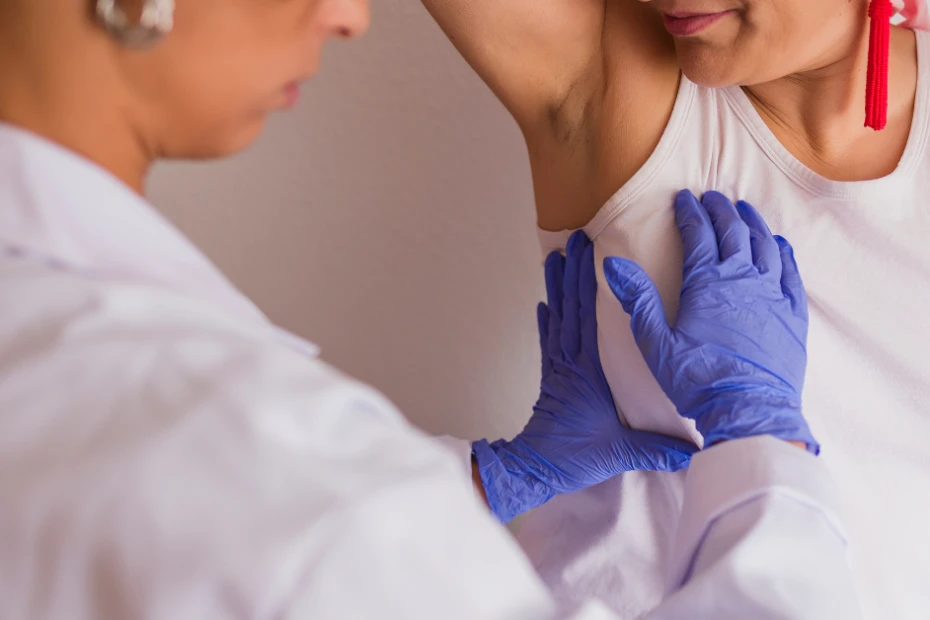
A breast examination done by a trained health professional is part of a routine check-up and can identify changes that might need further investigation. Alongside that, self-examination at home plays a role in breast awareness, not as a replacement for clinical screening but as a complement to it.
Getting familiar with how your own breast tissue feels normally makes it easier to notice when something changes. Changes to look and feel for include new lumps or thickened areas, changes in shape or size, skin changes such as dimpling, puckering or redness, nipple changes or discharge, and any persistent pain in one area. None of these things automatically indicate cancer, but any of them warrants a conversation with a doctor rather than a wait-and-see approach.
Finding a Place to Get Screened
Searching for a mammogram near me is usually how most women start when they’ve decided to book. Screening facilities operate across most major centres in South Africa, and many operate on a referral basis from a GP or gynaecologist. Some facilities accept direct bookings without a referral, which removes one step from the process.
Medical aid typically covers routine mammography for women above a certain age, though the specific terms vary by plan. Women without medical aid can access screening through public health facilities or private clinics that offer it at lower cost. Cost should not be the thing that stands between a woman and a scan that could pick up something serious before it becomes harder to treat.
Making It a Habit
One appointment is useful. A consistent schedule over time is what actually builds a meaningful picture of breast health. When a radiologist can compare current images against previous ones, small changes that might be easy to miss in isolation become clearer. A new density or a slight shift in tissue appearance that looks minor on its own takes on more significance when it wasn’t there the year before.
The practical step is simple: book the appointment, put it in the calendar, and treat it as something that gets done annually the same way a dental check or an eye test does. Women who approach breast screening as a routine part of looking after their health rather than as something to brace for tend to keep up with it more consistently.
The discomfort of a scan lasts a few minutes. The peace of mind that comes from a clear result, or the benefit of catching something early if it isn’t, lasts a lot longer.
Talking to the Women Around You
One of the most practical things anyone can do after getting screened is talk about it. Not in a dramatic way, but in the same casual way people mention going to the dentist or getting their eyes tested. When women share that they’ve booked their scan, remind a friend to do the same, or simply mention it in conversation, it normalises something that too many people treat as a private fear. A lot of women delay screening not just out of personal anxiety but because nobody in their circle talks about it openly. Changing that doesn’t take much. A text to a friend, a mention to a colleague, or a simple conversation with a daughter or younger sister can be the nudge that leads someone to book an appointment they’ve been putting off for months. Breast health affects women across every age group and background, and the more openly it gets discussed, the less power the fear around it













Sign in to leave a comment.