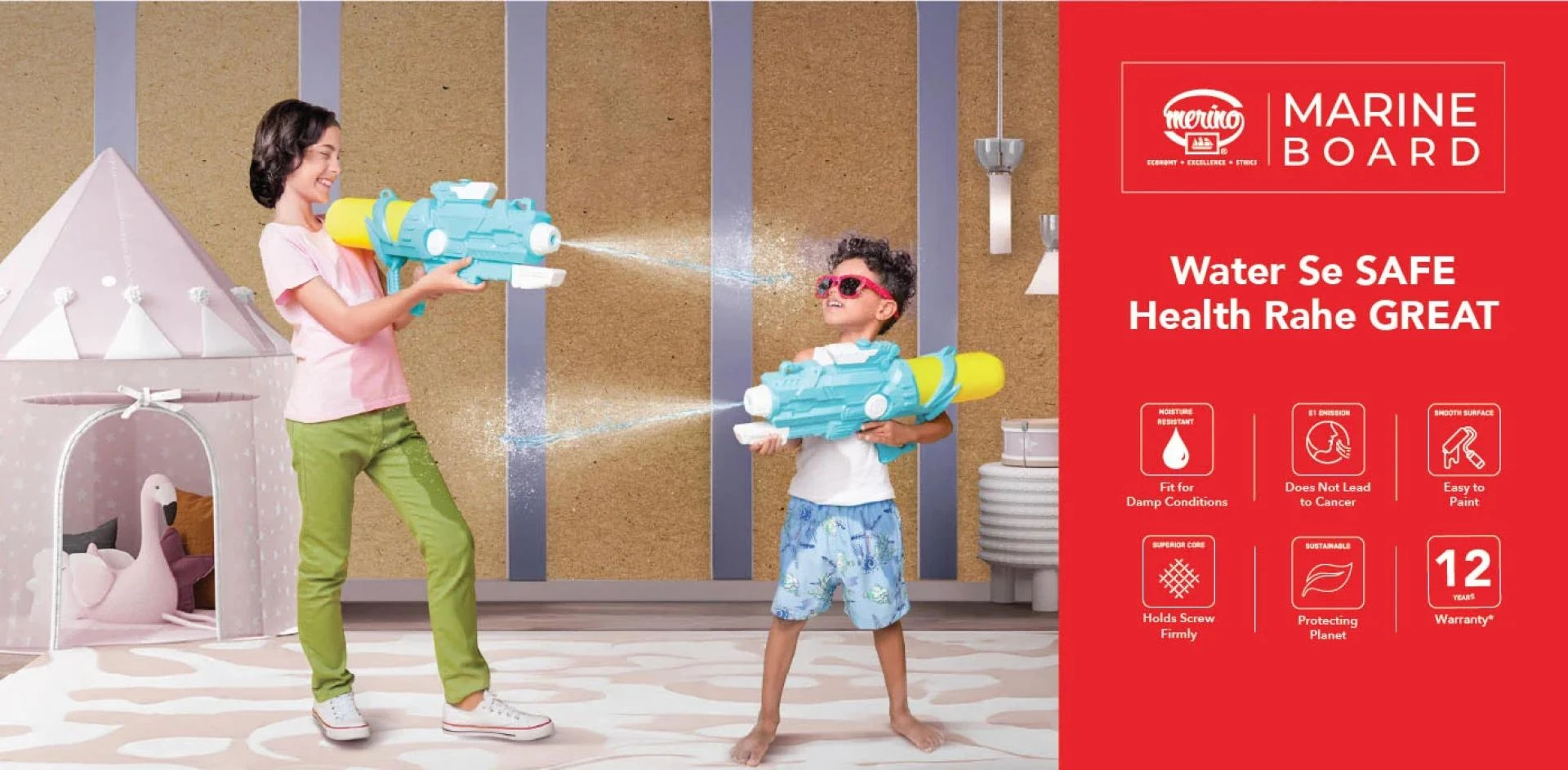

Interior design is increasingly driven by durability, performance, and the ability of materials to withstand everyday stress. Kitchens, wardrobes, bathroom cabinets, and utility areas are exposed to constant humidity, temperature changes, spills, and frequent cleaning. Under such conditions, traditional wood-based materials often struggle to maintain their structural integrity.
This shift in functional requirements is precisely why the water resistant board category is gaining attention among architects, designers, and homeowners. Engineered solutions such as Marine Board are emerging as a reliable alternative to plywood, offering improved stability, moisture resistance, and long-term performance in modern interiors.
The Problem with Conventional Wood Panels
For decades, plywood has been the default structural material used in furniture and interior applications. However, plywood is still fundamentally a layered wood veneer product, and like any wood-based material, it can absorb moisture over time. In high-humidity environments, this can lead to swelling, delamination, warping, or weakening of joints.
These issues are particularly visible in spaces like:
- Modular kitchens
- Bathroom vanities
- Utility cabinets
- Wardrobes near damp walls
- Coastal or humid climates
As modern homes adopt more modular furniture systems, designers increasingly require materials that retain dimensional stability even under fluctuating environmental conditions. This demand has accelerated the adoption of engineered boards that function as a dependable plywood substitute.
What Makes Water Resistant Boards Different
Unlike conventional plywood or MDF, modern moisture-resistant boards are engineered with specialised resin systems and uniform core structures that prevent water absorption and swelling.
Advanced boards such as Marine Board are manufactured using high-density wood particles bonded with moisture-resistant resins, resulting in a tightly compressed and stable core structure. This engineered composition significantly improves performance in humid environments.
For example, certain advanced boards demonstrate up to 40% higher moisture resistance compared to conventional green boards, helping maintain structural stability in kitchens and bathrooms.
Additionally, these boards are designed to withstand extreme moisture exposure, including boiling water tests, without losing structural integrity.
Such characteristics make them particularly suitable for interior furniture exposed to regular moisture and temperature variations.
Structural Stability and Long-Term Strength
Beyond moisture resistance, structural stability is another reason why designers are shifting toward engineered boards.
Many water resistant boards are manufactured with uniform density throughout the panel, eliminating internal gaps commonly found in traditional plywood layers. This results in improved screw-holding strength and better load-bearing capacity for cabinets, shelving systems, and wardrobes.
Advanced manufacturing technologies — such as chip bonding and continuous pressing — ensure that the panel maintains its shape and dimensional accuracy even after prolonged exposure to humidity.
This stability is crucial in modular furniture systems where hinges, screws, and hardware must remain secure for years without loosening.
Resistance to Termites, Borers, and Environmental Damage
Another advantage of engineered water resistant boards is their resistance to biological damage. Traditional wood panels are often susceptible to termite attacks or borer infestation, particularly in humid climates.
Many engineered boards incorporate protective treatments that improve resistance to termites and borers while also reducing internal voids where pests can thrive.
For homeowners and builders, this translates into reduced maintenance and longer furniture lifespan.
Health and Sustainability Considerations
Modern interior materials are also evaluated for indoor air quality and environmental impact. Advanced engineered boards are now produced using low-emission resins that comply with strict emission standards such as E1 certification, which limits formaldehyde emissions.
Additionally, many manufacturers source wood from agro-forestry plantations, supporting sustainable material cycles while reducing dependence on natural forests.
This balance between performance and environmental responsibility has made engineered boards an attractive option for contemporary construction and interior design.
A Practical Alternative to Plywood
Given these advantages, it is not surprising that boards designed specifically for moisture resistance are gradually becoming the preferred alternative to plywood in many interior applications.
Manufacturers such as Merino Laminates have introduced engineered panels like Marine Board, designed for environments where durability and moisture resistance are critical. Built using advanced chip-weave bonding technologies and high-density cores, these boards are engineered to remain stable in kitchens, wardrobes, bathrooms, and utility areas — spaces where conventional panels often fail prematurely.
Rather than positioning themselves as a direct replacement for every application, such boards offer a targeted solution for areas where moisture exposure is unavoidable.
The Future of Interior Materials
As homes become more modular and interior design increasingly prioritises longevity, material choices are evolving accordingly. Designers today look for surfaces and structural panels that combine aesthetics with measurable performance.
In this context, the rise of the water resistant board reflects a broader shift in interior architecture — one where engineered materials are designed not just to look good, but to withstand the realities of daily living.
For modern interiors that demand resilience, stability, and minimal maintenance, solutions such as Marine Board are steadily redefining what a reliable plywood substitute can offer.







Sign in to leave a comment.