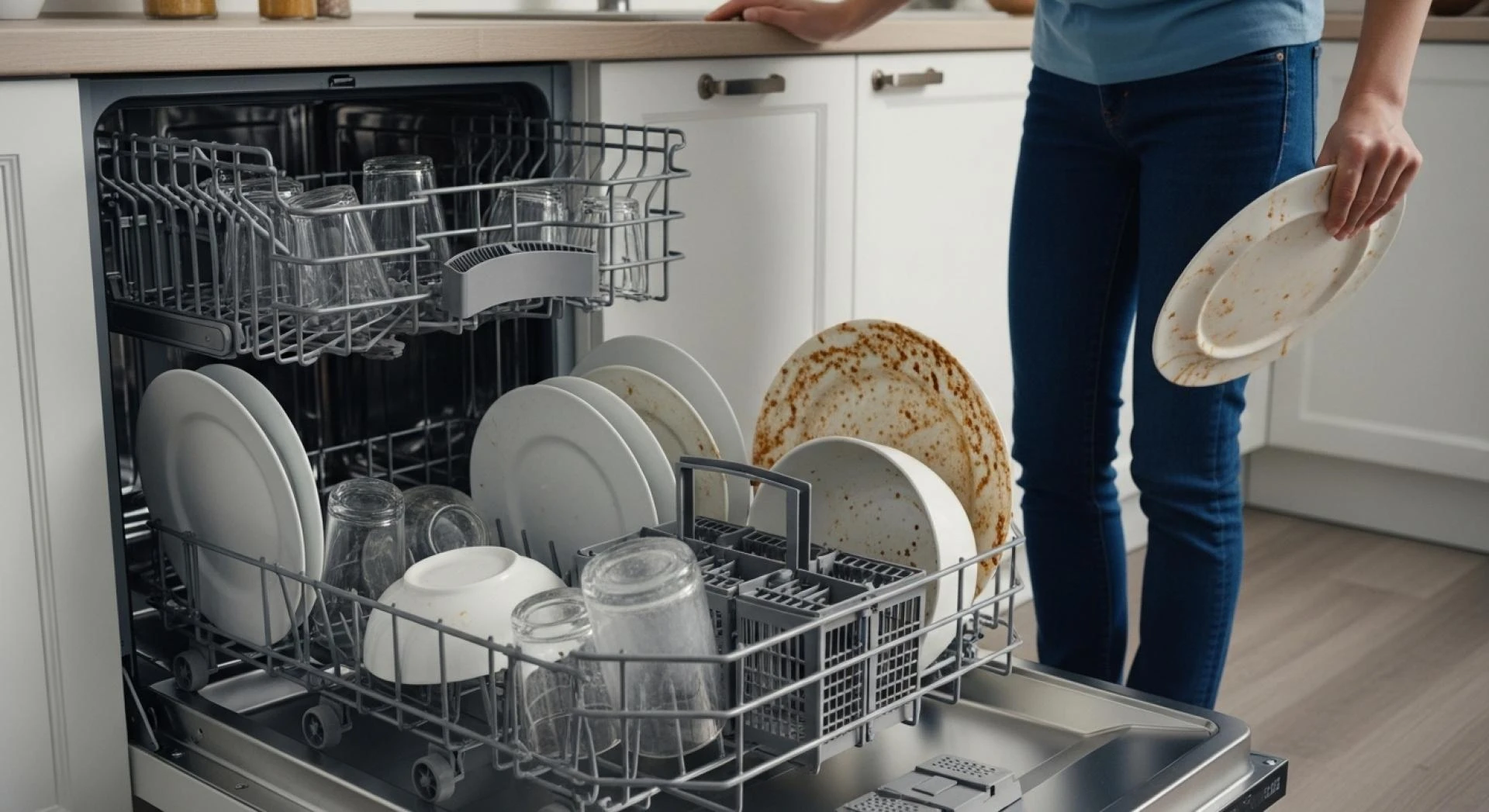

You load the dishwasher expecting clean sparkling dishes and instead you pull out plates stuck on food and cloudy glasses and in that moment frustration kicks in fast. I have been there and if this keeps happening in your home it is a clear sign something is not working the way it should.
The good news is that most dishwasher cleaning problems have common causes and many of them can be fixed once you know what to look for.
Common Reasons Your Dishwasher Is Not Cleaning Well
A dishwasher is a simple machine but several small issues can affect performance.
Over time food particles grease and minerals build up inside the system. When that happens water cannot spray freely and detergent cannot do its job properly. Even a reliable appliance will struggle if it is not maintained.
As appliance expert Fred’s Appliance once shared “Most dishwasher problems come down to blocked water flow or poor maintenance rather than major failures.”
Improper Loading Can Ruin Cleaning Results
How You Load Dishes Matters
I know it is tempting to fit in as many dishes as possible but overcrowding is one of the most common mistakes. When plates block spray arms, water cannot reach every surface.
Make sure items face inward and avoid stacking bowls tightly together. Glasses should not touch each other and large pans should never block the detergent dispenser.
Detergent Placement Plays a Role
If detergent cannot dissolve fully it leaves residue behind. Always keep the dispenser clean and dry before adding detergent.
Dirty Filters and Spray Arms Are Often the Culprit
Dishwashers rely on filters and spray arms to circulate clean water. When these get clogged performance drops quickly.
Here are two important things to check regularly
- The filter at the bottom should be rinsed and cleaned every few weeks
- Spray arm holes should be clear of food and mineral buildup
These simple steps can dramatically improve cleaning results.
Water Temperature and Quality Affect Performance
Dishwashers need hot water to break down grease. If your water is not hot enough, dishes will come out dirty.
The US Department of Energy recommends water temperatures around 120 degrees Fahrenheit for optimal appliance performance.
Hard water can also leave spots and film so using a rinse aid helps improve results.
When Detergent Choice Makes a Difference
Not all detergents work the same way. Cheap or outdated detergent may not dissolve properly or clean effectively.
Try switching brands or using pods designed for your water type. Using too much detergent can also backfire by leaving residue on dishes.
When Professional Help Is the Smart Move
Sometimes cleaning and adjustments are not enough. If you notice standing water, strange noises or dishes still coming out dirty after troubleshooting it may be time for expert help.
In the middle of dealing with ongoing issues, getting reliable dishwasher repair support can save you time, stress and potential water damage. A trained technician can identify worn parts or circulation problems before they become costly repairs.
Simple Habits That Improve Dishwasher Performance
Small habits can make a big difference in how well your dishwasher works over time.
- Scrape food off plates before loading
- Run hot water at the sink before starting the cycle
These steps help the machine start with hot clean water and reduce buildup inside.
Final Thoughts
A dishwasher that does not clean properly is more than an inconvenience but it is often fixable with the right approach. By paying attention to loading habits, maintenance and water quality you can restore performance and extend the life of your appliance.
If problems continue, do not ignore them. Early action prevents bigger repairs and keeps your kitchen running smoothly. Trust your instincts and take steps now so clean dishes become the norm again not the exception.












Sign in to leave a comment.