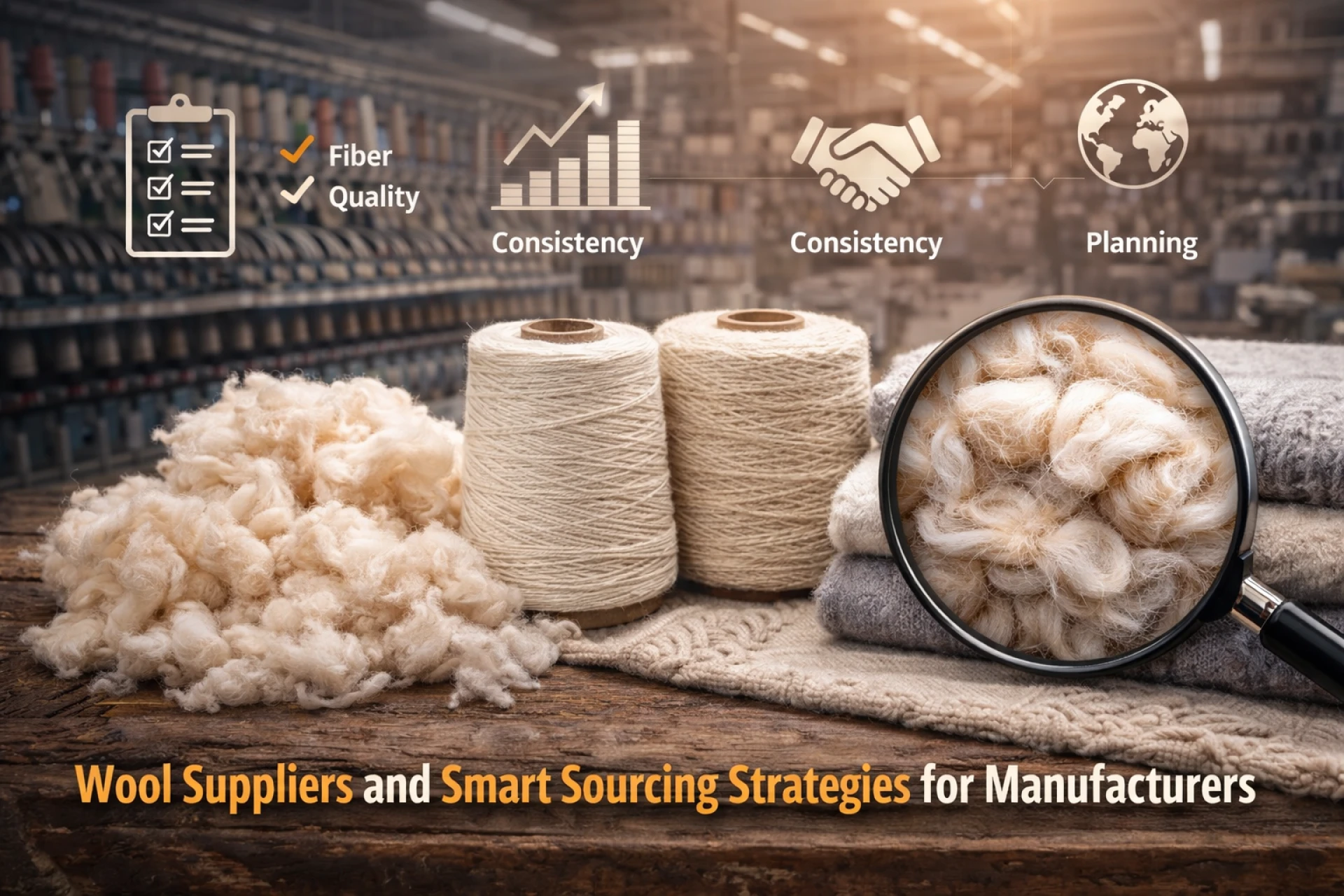
In textile production, sourcing decisions shape far more than procurement budgets; they influence product quality, production efficiency, and long-term brand credibility. For manufacturers working with natural fibers, selecting the right wool suppliers is one of the most important steps in building reliable fabric output. Wool remains a preferred material across global markets because of its warmth, durability, and versatility, but achieving consistent results depends heavily on how raw wool is sourced and processed.
As textile markets become more competitive and quality-driven, manufacturers are paying closer attention to structured sourcing strategies rather than one-time purchasing decisions.
Why Wool Sourcing Requires Strategic Planning?
Wool is not a uniform raw material. Fiber length, micron count, cleanliness, and origin all influence how the material behaves during spinning and weaving. Manufacturers that treat wool sourcing as a technical process rather than simply a cost-based decision often see better fabric consistency and fewer production disruptions.
Professional sourcing teams evaluate multiple factors before finalizing supply partners. These include fiber grading standards, processing methods, delivery timelines, and the supplier’s ability to maintain batch consistency.
This structured approach has become especially important for wool textile manufacturers working in export markets, where quality benchmarks are stricter, and customer expectations are higher.
Understanding Fiber Quality Before Procurement
One of the most effective sourcing strategies begins with understanding fiber characteristics. Wool quality is typically measured by fineness (micron level), staple length, and strength. Finer wool produces softer fabrics, while longer fibers improve yarn durability.
Manufacturers often request sample testing before bulk procurement. Lab testing helps verify tensile strength, moisture behavior, and contamination levels. These technical checks reduce production risks later in the process.
When sourcing is handled carefully at the fiber stage, manufacturers experience smoother spinning performance and better fabric finishing outcomes.
The Role of Supplier Consistency in Production Stability
Consistency is one of the most valuable traits in a supplier relationship. Even small variations in fiber structure can affect yarn uniformity, dye absorption, and fabric texture.
Reliable suppliers maintain grading systems and documentation that allow manufacturers to trace material quality across shipments. This level of transparency is becoming a standard expectation in global textile trade.
Many growing textile companies are now forming long-term partnerships instead of switching vendors frequently. Stable supplier relationships improve production planning and reduce operational uncertainties.
Organizations like Jindaltex support structured sourcing by aligning procurement with technical requirements and export-grade production standards. Such practices help manufacturers maintain consistent fabric quality across bulk orders.
Cost vs. Value: A Common Sourcing Mistake
One of the most common sourcing challenges occurs when procurement decisions focus primarily on price. While cost control is important, lower-priced raw wool often leads to higher production losses due to breakage, uneven yarn, or finishing defects.
Smart manufacturers balance pricing with measurable quality indicators. These include fiber grading reports, supplier certifications, and historical performance data.
Over time, value-based sourcing reduces reprocessing costs and improves final product reliability.
Building Strong Supplier Relationships
Effective sourcing is rarely transactional; it is collaborative. Manufacturers that share technical specifications and production expectations with suppliers often receive more consistent results.
Communication plays a major role here. Regular discussions about fiber requirements, shipment schedules, and quality standards help suppliers align their processes accordingly.
Long-term partnerships also encourage suppliers to invest in better processing methods, which benefits both sides of the supply chain.
This approach is widely adopted by professional wool textile manufacturers seeking stable production outcomes across multiple product categories.
Sustainability Is Changing Wool Procurement
Environmental awareness is influencing sourcing decisions across the textile industry. Many manufacturers now prefer suppliers that follow responsible farming and processing practices.
Certifications related to animal welfare, eco-friendly processing, and traceability are becoming more common in wool procurement contracts. These standards not only support sustainability goals but also strengthen brand positioning in international markets.
Responsible sourcing also reduces compliance risks for exporters working in regions with strict environmental regulations.
Logistics and Delivery Reliability Matter
Even when fiber quality is strong, unreliable delivery schedules can disrupt production planning. Manufacturers must evaluate suppliers based on their ability to maintain consistent lead times.
Shipping delays can cause machine downtime and missed delivery commitments for finished products. For this reason, logistics reliability is now considered part of supplier evaluation.
Some manufacturers diversify sourcing across multiple regions to minimize supply risks while maintaining quality benchmarks.
Jindaltex follows structured planning in procurement cycles to ensure raw material availability aligns with production schedules, particularly for export-oriented textile manufacturing.
Technology Is Improving Sourcing Decisions
Modern sourcing strategies are increasingly supported by digital tools. Fiber testing data, supplier performance tracking, and inventory analytics help manufacturers make more informed decisions.
Digital documentation also improves transparency across supply chains. Manufacturers can review batch records, testing reports, and shipment timelines in real time.
These improvements are helping textile companies move from reactive procurement to predictive sourcing models.
Aligning Raw Material with End Product Goals
Not all wool fibers perform the same across different textile applications. Fabrics used in apparel require different characteristics compared to those used in blankets or upholstery.
Manufacturers that align fiber selection with final product requirements achieve better results in both performance and customer satisfaction.
This alignment process often includes trial production runs before large-scale procurement begins.
Experienced wool suppliers typically support such trials by providing controlled sample batches for technical evaluation.
Risk Management in Wool Sourcing
Supply chain disruptions, price fluctuations, and quality variations are common challenges in raw material procurement. Smart sourcing strategies include risk management measures such as supplier diversification and quality contracts.
Manufacturers often maintain secondary suppliers who meet the same technical standards. This backup structure ensures production continuity if primary supply chains face delays.
Quality contracts that define fiber specifications also help reduce disputes and maintain consistency.
The Business Advantage of Smart Sourcing
Smart sourcing is no longer just a procurement function; it is a competitive advantage. Manufacturers that invest time in evaluating suppliers, testing materials, and building long-term partnerships often deliver more reliable products.
In global textile markets, consistency builds trust. Buyers prefer manufacturers who can maintain stable fabric quality across repeated orders.
This trust directly translates into stronger brand positioning and long-term business growth.
Looking Ahead: Sourcing Will Continue to Shape Textile Success
As textile technology evolves and sustainability standards expand, sourcing strategies will become even more important. Manufacturers are expected to work more closely with suppliers, focusing on quality, traceability, and innovation.
The companies that treat sourcing as a strategic process, not just a purchasing task, will be better prepared to meet changing global market demands.
Conclusion
Wool sourcing plays a critical role in shaping fabric performance and manufacturing efficiency. From fiber grading to supplier consistency and logistics planning, every step influences final product quality.
Manufacturers that adopt structured sourcing strategies gain better production stability, stronger supplier relationships, and improved customer satisfaction. As the textile industry continues to grow and diversify, smart sourcing will remain a key driver of long-term success.













Sign in to leave a comment.