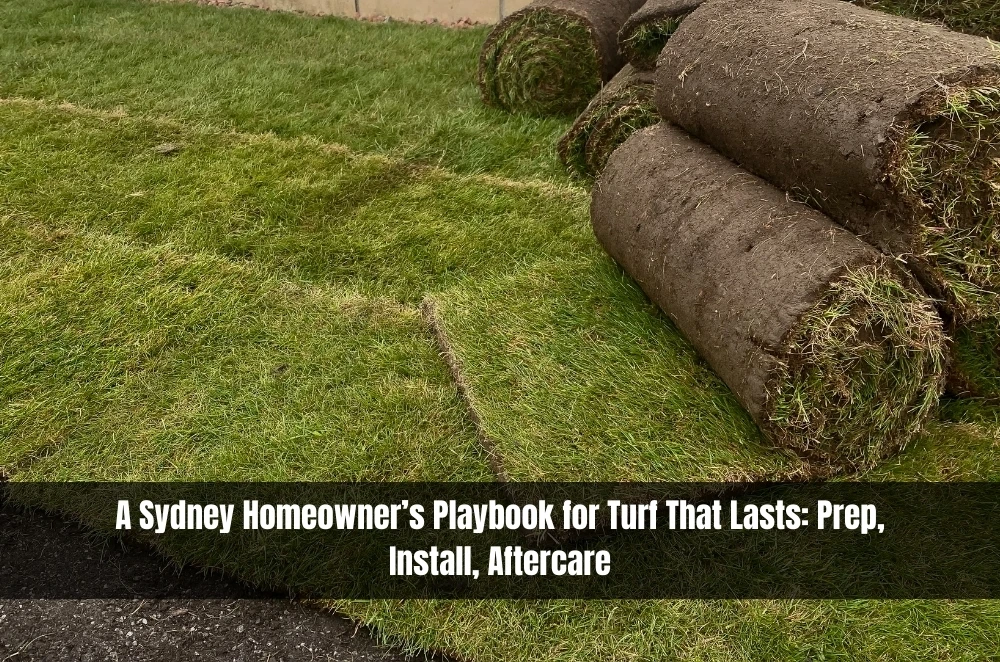

A1 Gardening and Landscaping Sydney NSW can look perfect on day one and still go patchy a fortnight later if the base and early care aren’t right. Plan for shade, pooling, compaction, and watering.
Start with a site reality check
Before you choose a turf type or book a date, spend 20 minutes reading what the yard tells you. Walk it morning, afternoon, and after rain, and note what’s true.
Focus on four basics:
- Sun hours across the day, and year-round shade from trees or nearby buildings
- Where water sits, and where it can run (or gets trapped)
- Soil 5–10 cm down: hard compaction, heavy clay, or fill or rubble
- How the lawn will be used: kids, dogs, entertaining, or mostly visual
If you can’t water reliably for 14–21 days, delay the project rather than gambling.
Prep that prevents the usual headaches
Turf is the finish coat, not the fix; it can’t correct fall, drainage, or a compacted base. Aim for water to move away from the house, a root zone that holds moisture without staying soggy, and levels that mow cleanly.
The base is where lawns are won.
A practical prep sequence:
- Strip and clear old grass, weeds, stones, and builder leftovers
- Set levels and a gentle fall (flat lawns puddle; steep patches dry out)
- Break compaction so air and water can move through the top layer
- Improve the top layer with quality underlay/topsoil where needed
- Final rake and roll so the surface is consistently smooth
Before you lock in dates, it can help to skim the A1 Gardening & Landscaping Sydney lawn prep checklist so you can sanity-check what belongs in the scope.
Edges near paving and garden beds dry first, so firm support and clean edging are practical, not just cosmetic.
Choose turf for your light and routine
There’s no single “best” turf—there’s the best match for your light, wear, and maintenance habits. Full-sun yards can handle tougher, higher-wear options; partial shade lawns need varieties that hold density with fewer sun hours, and deep shade always comes with trade-offs.
If the lawn will take heavy use, prioritise recovery over “perfect” appearance and plan for wear paths. For pet households, build in a rinse routine and avoid mowing too short while the lawn is establishing.
Be honest about routine: if weekly mowing in peak growth won’t happen, don’t choose a lawn “ideal” that depends on it.
Installation day: keep it boring and precise
Turf wants speed and contact with the soil underneath.
Lay soon after it arrives, stagger joins, butt seams tight, roll/tamp for contact, then water so moisture reaches the soil below. If access is tight, plan the path for materials first—barrow trips can undo your smoothing in minutes.
The first 21 days: establish roots before you “use” the lawn
Early on, the goal is steady moisture while roots anchor, not constant surface dampness. A simple rhythm is: week one consistently moist, week two deeper watering less often, and week three moving toward normal with light traffic.
Week two is where lawns drift.
Edges and corners dry first, so treat perimeter watering as a deliberate task. Hold off mowing until the turf resists lifting, then take off only a small amount on the first cut with a sharp blade.
Common mistakes that create patchy lawns
- Laying over low spots and hoping it “settles out”
- Skipping compaction removal and wondering why roots never knit in
- Watering the middle well but letting edges and corners dry out
- Letting rolls sit too long before laying
- Letting dogs and foot traffic in too early and shearing seams
- Scalping the first mow because the lawn looks “too long”
If you see a soggy corner or a dry seam early, treat it early; young turf can’t compensate without root depth.
Decision factors: DIY or bring in a pro?
DIY can work when the area is small, access is easy, and you can prep properly and lay turf the same day. It gets risky when drainage is unclear, rubbish removal is messy, or timing slips.
A quick decision checklist:
- Base complexity (unknown fill, heavy clay, recurring pooling)
- Logistics (stairs, narrow side paths, steep blocks)
- Time certainty (turf drops in quality the longer it stays rolled up)
- Risk tolerance (if bumps and bare strips will annoy you weekly, don’t wing it)
Simple first-actions plan for the next 7–14 days
- Days 1–2: map sun/shade; mark pooling after rain
- Days 3–4: pick priorities (durability, softness, shade tolerance)
- Days 5–6: confirm logistics (access, disposal, soil placement)
- Days 7–9: finalise base work (fall, edging, drainage, soil)
- Days 10–12: schedule delivery so laying happens the same day
- Days 13–14: set up watering and a clear no-traffic boundary
Operator Experience Moment
When a lawn looks perfect for a week and then goes backwards, the base is usually telling the truth. The first signs are subtle: a corner that stays wet, a seam that dries quicker than the rest, or a strip along paving that crisps first. The fix is rarely exotic: better fall, better contact, and steadier moisture early.
Local SMB Mini-Walkthrough (Sydney, NSW)
- Inner West courtyards: tight access, so deliveries and soil movement need a plan
- Northern Beaches: sun and wind can dry edges quickly, so perimeter watering matters
- Hills District: heavier soils hold water longer, so fall and drainage are non-negotiable
- Lower North Shore: shade can thin turf unless light is accounted for
- Western Sydney: heat punishes inconsistent watering in week one
Practical Opinions
Prep is the project; turf is the finish.
Fix drainage and levels before you worry about variety.
Protect week one like it’s part of the install.
Key Takeaways
- Treat turf like a small build: site check, solid base, then protection through establishment.
- Prioritise fall, compaction relief, and a workable top layer before choosing a variety.
- Lay promptly and water so moisture reaches the soil underneath.
- Keep traffic light and mowing conservative until roots have properly anchored.
Common questions we hear from businesses in Sydney, NSW, Australia
How long should a “no traffic” period be after turf is laid?
Usually… allow 2–3 weeks with minimal foot and pet traffic while roots anchor. Next step: rope off the lawn; in Sydney summers, hot paving edges stress first, so protect those zones longest.
When can the first mow happen?
It depends… on rooting and growth, but it’s commonly once the turf resists lifting and the surface isn’t soggy. Next step: use a sharp blade and take off only a small amount; in Sydney’s warmer months, mowing too early can shift seams.
What if water keeps pooling after rain?
In most cases… you’ll need to correct fall, relieve compaction, or improve drainage rather than top-dress and hope. Next step: mark the low spot and trace the flow; on many Sydney blocks with mixed fill, fixing the underlying level is the lasting solution.












Sign in to leave a comment.