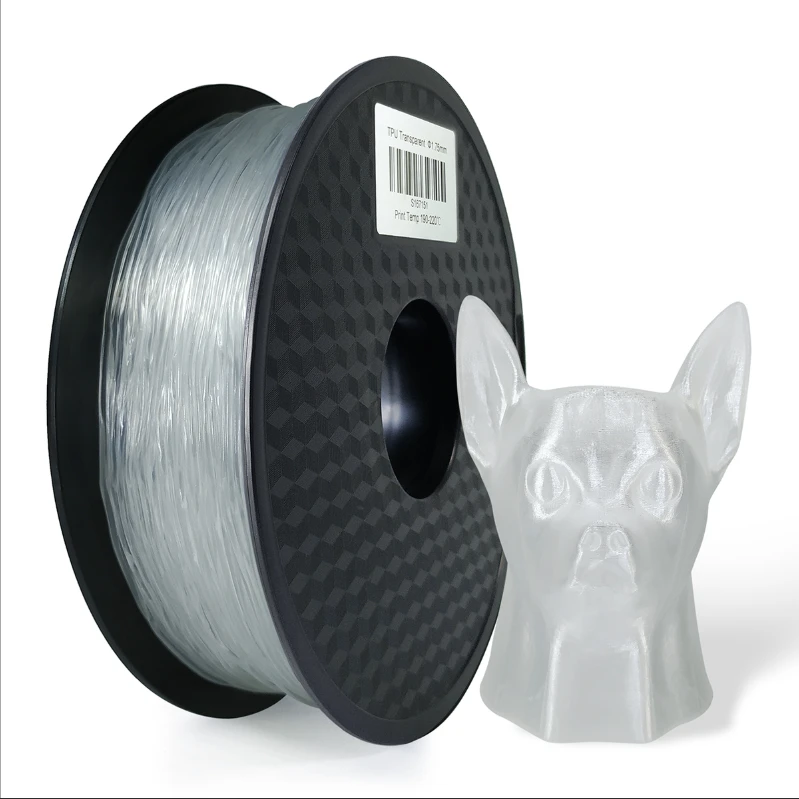

In recent years, the deep integration of artificial intelligence (AI) and 3D printing technology has been revolutionizing traditional manufacturing processes. Through machine learning (ML), deep learning (DL), and real-time data analysis, AI not only optimizes design and enhances production efficiency but also achieves breakthrough advancements in real-time process monitoring, defect prediction, and quality control.
1. Real-Time Process Monitoring and Defect Detection
The layer-by-layer nature of 3D printing makes real-time monitoring critical for ensuring quality. Traditional methods rely on manual or offline inspection, which struggle to meet the demands of high-speed, high-complexity production. Oak Ridge National Laboratory (ORNL) has developed the Peregrine software, which employs dynamic segmented convolutional neural networks (DSCNN) to analyze each layer of powder bed metal 3D printing at the pixel level. It detects defects such as spatter and uneven powder distribution in real-time with sub-millimeter accuracy.
2. Quality Prediction and Process Optimization
AI leverages Physics-Informed Machine Learning (PIML) and digital twin technology to accelerate simulation speeds to real-time levels, significantly reducing trial-and-error costs. By analyzing historical printing data — such as temperature, speed, and filament properties — AI constructs predictive models to optimize parameter combinations. GE Aviation has utilized AI to design fuel nozzles, reducing manufacturing time by 30% and weight by 25%. Additionally, real-time adjustments to laser power and scanning paths help minimize microcracks caused by thermal stress.
3. Generative Design and Filament Innovation
AI not only optimizes manufacturing processes but also reshapes design paradigms. Deep learning-based generative algorithms, such as the NVIDIA Modulus framework, can automatically create lightweight, high-strength topologies. For example, Adidas uses AI to design personalized midsoles, combining 3D printing with filament to enable rapid customization while reducing material waste by 40%.
In the future, with the further integration of edge computing, quantum computing, and AI, 3D printing will achieve full-process automation — from design generation and real-time error correction to post-processing optimization — propelling manufacturing toward an intelligent paradigm of “zero defects, zero inventory, and zero delays.”











Sign in to leave a comment.