
In a world increasingly filled with synthetic chemicals, it’s hard to know what’s truly safe. One common question is: Is BPA the same as PFAS? Or as it’s often asked in Dutch: is BPA hetzelfde als PFAS?
Although these two acronyms often appear on the same product warning labels and headlines, they refer to two very different types of chemical threats. Both are linked to serious health and environmental risks, but understanding how they work, where they’re found, and how to avoid them is crucial.
This article explores 9 critical differences between BPA and PFAS, explains their roles in packaging and household products, and offers science-backed, plant-based solutions like bagasse and cornstarch foodware.
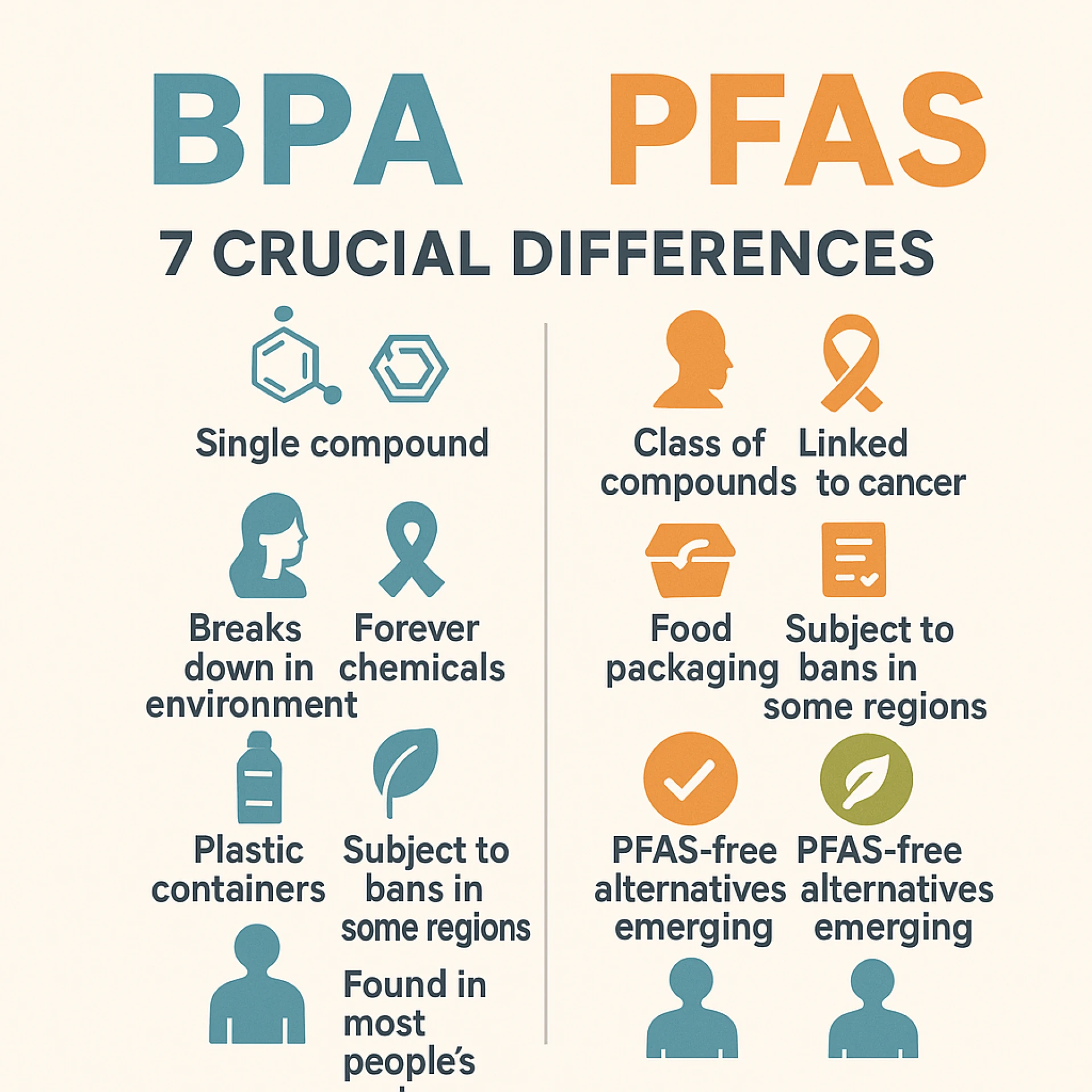
1. BPA is a molecule. PFAS is a massive chemical class.
- BPA (Bisphenol A) is a single compound used to harden plastics.
- PFAS (Per- and polyfluoroalkyl substances) includes 9,000+ chemicals with water- and oil-repellent properties.
That’s like comparing one fish to an entire ocean.
2. BPA mimics hormones. PFAS can damage organs.
BPA disrupts the endocrine system, mimicking estrogen and interfering with hormonal development.
PFAS, meanwhile, are linked to:
- Kidney and liver damage
- Immune system suppression
- Cancer
- Developmental delays
3. BPA breaks down. PFAS don’t.
- BPA can degrade in the environment within months.
- PFAS are extremely persistent, often lasting for decades.
That’s why PFAS are dubbed “forever chemicals.”
4. Where they’re found—and how to avoid them
Product BPA Risk PFAS Risk Safer Options
Plastic baby bottlesHigh (unless BPA-free)LowGlass, stainless steel
Fast food packagingLowHigh (coatings)PFAS-free bagasse containers
Canned food liningsHighNoneBPA-free cans or fresh produce
Compostable plates (coated)NoneModerateCornstarch or uncoated fiberware
5. Legal regulation is catching up—slowly
- The EU banned BPA in baby bottles in 2011.
- PFAS bans are now spreading in California, Denmark, and beyond—but enforcement varies.
Industry trends are moving faster than the law, with plant-based, PFAS-free packaging now leading in eco-conscious sectors.
6. BPA-Free ≠ Safe
Many “BPA-free” products contain BPS or BPF—chemical cousins that may be just as harmful.
Similarly, “PFAS-free” sometimes refers only to specific types, not the whole class.
This is why packaging made from natural plant materials—like sugarcane bagasse or PLA-free cornstarch—is the safest bet.
7. Everyone is exposed—but not everyone is informed
Research shows:
- 93% of people have BPA in their urine
- 98% have PFAS in their blood
Even newborns and infants show early exposure. Choosing safe containers, cups, and wrappers is now a public health act, not just a personal preference.
8. Health impact depends on exposure—and heat matters
Heating plastic or coated containers can amplify BPA and PFAS leaching into food or drinks.
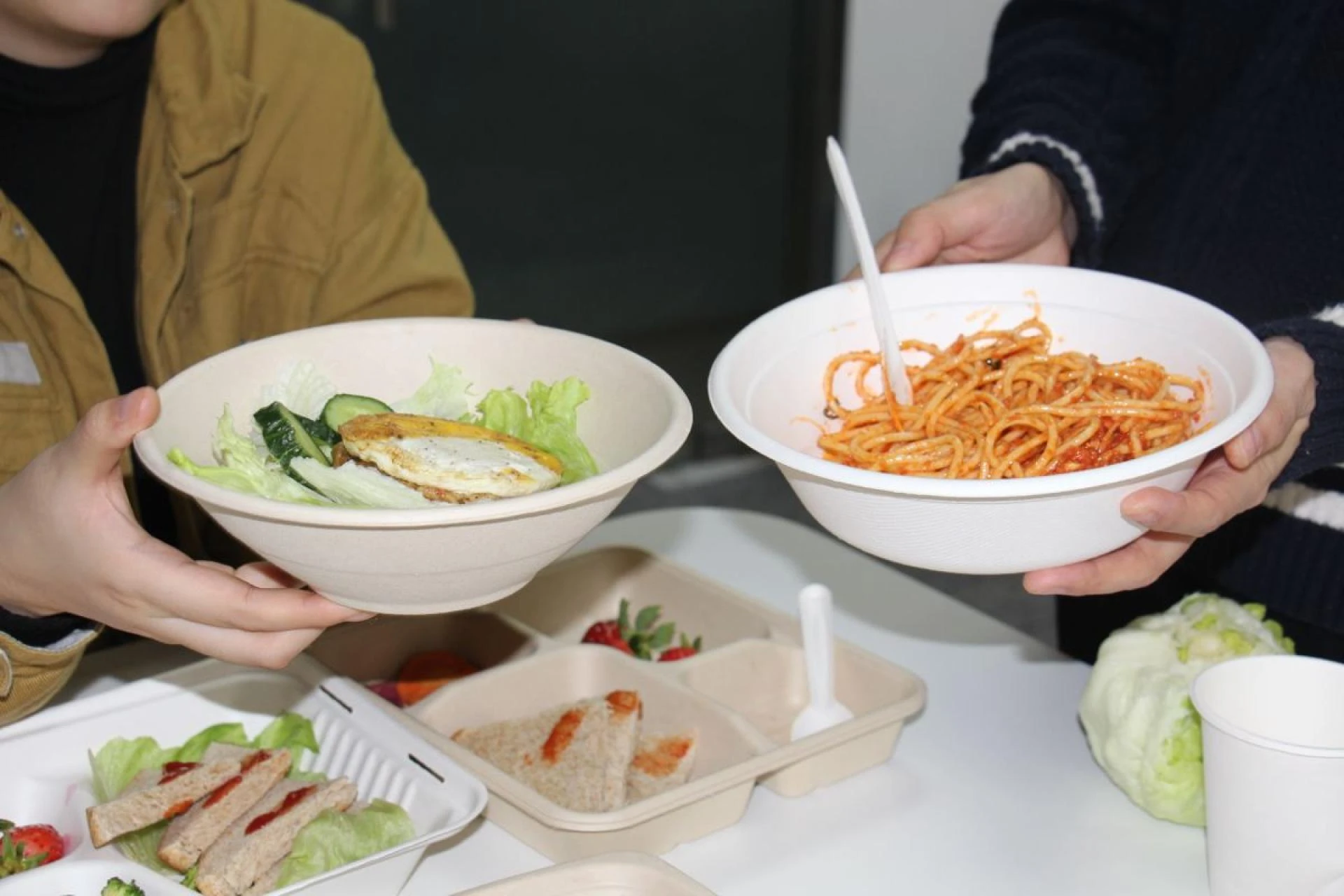
That’s why microwave-safe, uncoated fiber packaging—like bagasse bowls and trays—are gaining popularity.
They’re durable, compostable, and chemically inert.
9. Safe alternatives are available—and better than ever
You don’t need to accept plastic-lined paper or risky “bioplastics.” Here’s what to look for:
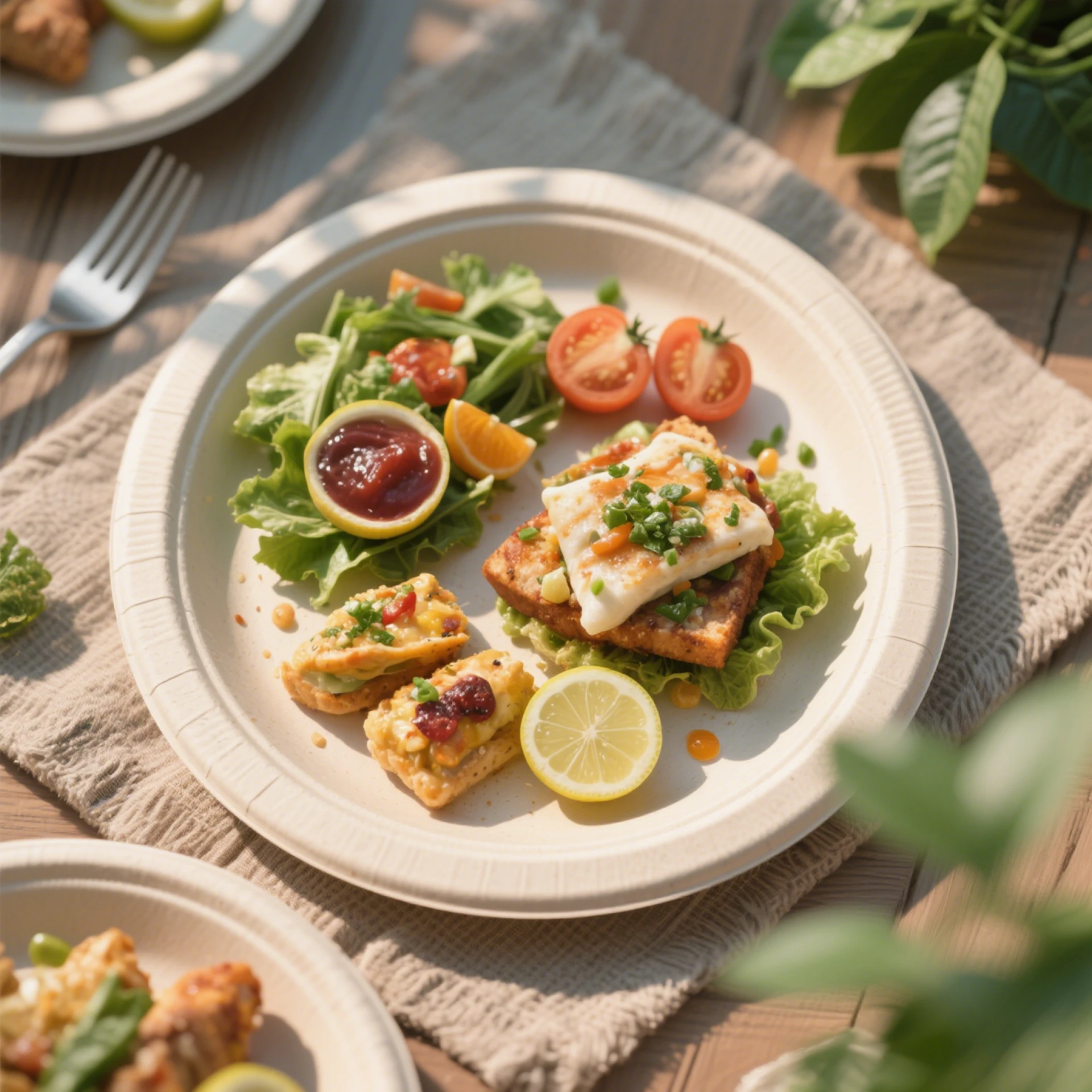
✅ Bagasse containers – made from sugarcane fiber, fully compostable
✅ Cornstarch cutlery – sturdy, safe, and heat-resistant
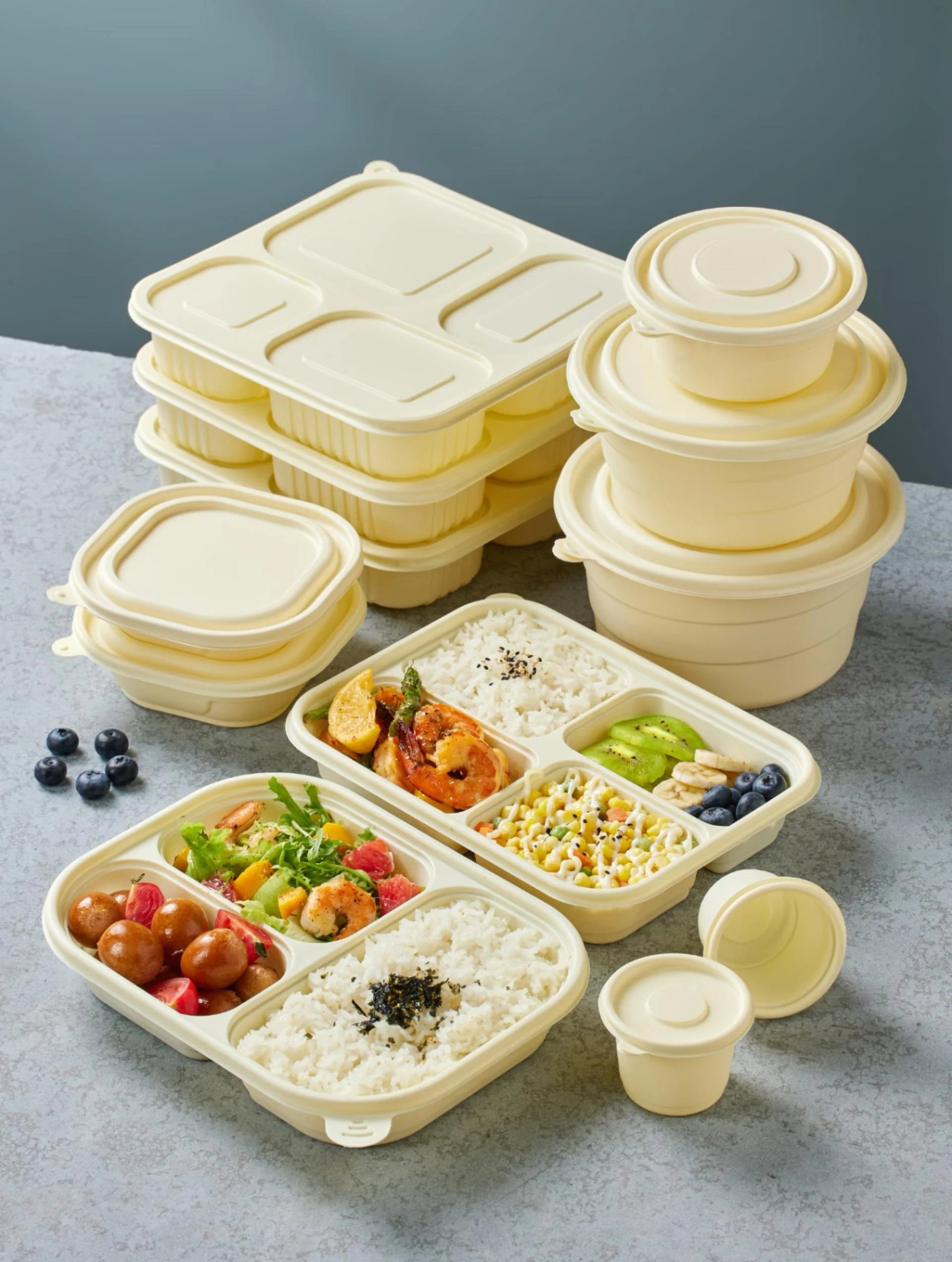
✅ PLA-free compostable trays – free from all petroleum derivatives
✅ Zero-fluorine certified packaging – third-party tested for PFAS absence
Final Thoughts: BPA and PFAS Are Different—but Both Dangerous
To answer the question: Is BPA hetzelfde als PFAS?
No. They are not the same. But both can negatively impact your health—and both can be replaced by non-toxic, plant-based tableware.
It’s time to go beyond the label and demand genuinely safe food contact materials. Say no to endocrine disruptors and forever chemicals. Say yes to bagasse bowls, cornstarch utensils, and PFAS-free packaging.
Because your body—and the planet—deserve better.










Sign in to leave a comment.