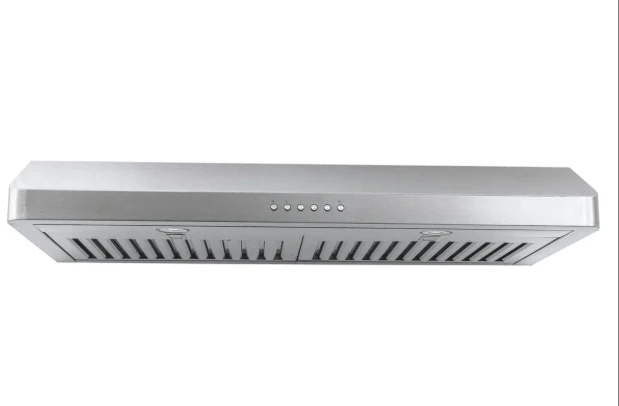

High-heat cooking techniques such as searing, stir-frying, and grilling generate intense smoke, grease particles, and heat that quickly accumulate indoors. Homeowners often question whether a kitchen hood vent 30-inch is sufficient to manage these demanding conditions without compromising air quality. Proper ventilation plays a critical role in maintaining comfort, protecting cabinetry, and reducing airborne contaminants. Selecting the right airflow capacity and installation method determines overall performance. Understanding how a 30-inch model functions under high-output conditions helps homeowners make informed decisions about kitchen ventilation and long-term efficiency.
Understanding High-Heat Cooking Demands
Cooking at high temperatures significantly increases the release of smoke and combustion byproducts, especially when using gas ranges. A properly sized kitchen hood vent 30-inch must be capable of capturing rising heat and grease before they disperse into surrounding areas. The effectiveness of this capture depends on airflow strength and hood design.
When burners operate at high BTU levels, they produce more particulate matter and moisture. Without adequate ventilation, these contaminants linger and settle on surfaces. Ventilation performance becomes even more critical in smaller kitchens, where limited space can cause smoke concentration to rise quickly. Evaluating cooking habits is essential to determine whether a standard 30-inch model can meet ventilation needs.
CFM Ratings and Airflow Capacity
Airflow is measured in cubic feet per minute, commonly referred to as CFM. The performance of a kitchen hood vent 30-inch depends largely on selecting a unit with sufficient CFM to match the total BTU output of the cooktop. Industry recommendations often suggest 100 CFM for every 10,000 BTUs of cooking power.
For example, a 60,000 BTU gas range may require approximately 600 CFM for optimal ventilation. Lower CFM ratings may be adequate for moderate cooking but can struggle during prolonged high-heat use. Choosing a model with variable speed controls allows users to increase airflow during intense cooking sessions while conserving energy during lighter tasks. Proper airflow capacity is central to effective smoke and grease removal.
Hood Design and Capture Efficiency
Beyond airflow strength, design features influence how well smoke and heat are contained. A well-engineered kitchen hood vent 30-inch includes a deep canopy and strategically positioned filters to improve capture efficiency. The deeper the hood, the more effectively it contains rising plumes of smoke before they spread.
Installation height also affects performance. Mounting the hood at the manufacturer’s recommended distance above the cooktop ensures optimal suction. Ducted configurations typically provide superior results because they expel contaminated air outdoors rather than recirculating it. Minimizing duct bends and keeping duct runs short further enhances efficiency, particularly when dealing with high-heat cooking.
Limitations and When to Consider Upgrading
While many 30-inch models can handle standard residential cooking, extremely high-output professional ranges may exceed their capacity. In situations where the cooktop produces exceptionally high BTUs, a 30-inch kitchen hood vent may require a higher CFM rating to perform effectively. Evaluating both cooktop width and power output ensures compatibility.
Open-concept kitchens also present additional challenges, as smoke can travel more freely into adjacent living spaces. In these cases, selecting a more powerful motor or considering a larger hood size may improve results. Proper assessment of cooking frequency, fuel type, and kitchen layout determines whether a 30-inch model is sufficient for long-term needs.
Conclusion
High-heat cooking places significant demands on residential ventilation systems, requiring adequate airflow, proper coverage, and effective capture design. When matched correctly to cooktop BTU output and installed with optimized ductwork, a 30-inch hood can perform efficiently in many residential kitchens. However, selecting appropriate CFM ratings and maintaining filters are essential for consistent results. For homeowners seeking durable construction and enhanced design compatibility, options such as a stainless under-cabinet range hood provide an additional solution that combines strength, longevity, and reliable airflow management. Careful evaluation of cooking frequency and kitchen layout further ensures long-term ventilation efficiency and indoor air quality protection.















Sign in to leave a comment.