
Yes, you can absolutely install artificial turf in a yard with deep shade. In fact, these challenging, light-deprived areas are one of the most common and practical applications for artificial turf. Natural grass requires significant sunlight for photosynthesis to survive and thrive. In deep shade, it grows thin, patchy, and weak, eventually giving way to moss and bare dirt. Artificial turf, being a synthetic product, is completely unaffected by the lack of sunlight, providing a consistently green and usable lawn surface where a natural one is impossible to maintain.
The key to a successful installation in a shady spot, however, is not the turf itself but the professional preparation of the ground beneath it. A proper installation in a shaded environment must place a heavy emphasis on creating a robust drainage system and preventing any potential for organic growth underneath the turf. This guide, based on extensive field experience, will detail the process and considerations for using artificial turf to solve deep shade problems permanently.
Why Shade Is a Problem for Grass but Not for Turf
The fundamental difference comes down to biology versus engineering. Natural grass is a living plant that generates its food through photosynthesis, a process that is entirely dependent on sunlight. Without at least four to six hours of direct sun, most turfgrass varieties simply cannot survive. They become stressed, thin out, and are highly susceptible to diseases. Shade-tolerant grass varieties exist, but even they will struggle and fail in deep, consistent shade, such as that found under a dense tree canopy or on the north side of a house.
Artificial turf, on the other hand, is an engineered product made from synthetic fibers like polyethylene or polypropylene. It has no biological needs. It doesn't grow, it doesn't photosynthesize, and it doesn't care if it sees the sun for ten hours a day or zero. Its color and density are locked in during manufacturing, making it a perfect, evergreen solution for areas where the sun doesn't shine.
Special Installation Needs for Shady Areas
While turf itself is immune to shade, the environment in a shady spot creates specific challenges that a professional installation must overcome. Shady areas are often damp and are prime locations for moss, mildew, and weed growth.
An Aggressive Drainage Base is Critical
Shaded ground doesn't have the sun's heat to help it evaporate moisture, so these areas tend to stay damp longer. A professional artificial turf installation addresses this head-on by excavating the existing soil and building a multi-layer, highly permeable base. This base typically consists of several inches of compacted crushed rock or aggregate. This creates a stable foundation that allows water to drain through it freely and quickly, preventing the area from becoming a soggy, saturated mess.
Preventing Unwanted Organic Growth
The dark, damp conditions under a layer of artificial turf are an ideal environment for moss, algae, and mildew to grow if proper precautions aren't taken. To prevent this, a high-quality, permeable weed barrier fabric is installed on top of the compacted base, directly beneath the turf. This layer allows water to pass through but blocks weeds and other organic matter from growing up from the soil below.
Managing Debris from Above
Deep shade is usually caused by large, mature trees, which means falling leaves, twigs, and acorns are a constant factor. This organic debris cannot be allowed to sit and decompose on the surface of the turf. If it does, it can break down into a thin layer of soil, providing a place for airborne weed seeds to germinate on top of the turf. Regular cleanup with a leaf blower or a stiff broom is essential.
Bonus Tip: For easy cleaning, professionals recommend using a leaf blower on a low setting. For any stuck-on debris, a stiff, non-metallic brush and a quick rinse with a garden hose are usually all that's needed.
Comparing Solutions for a Deeply Shaded Yard
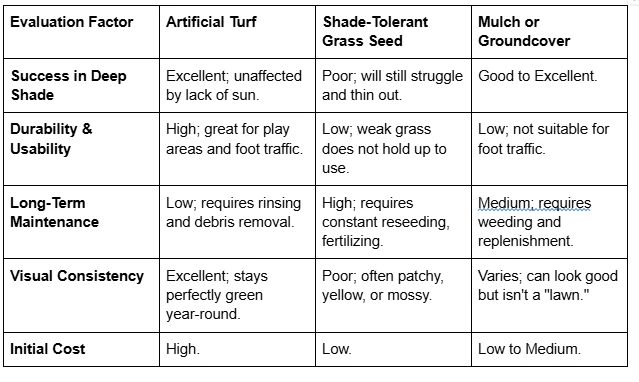
Homeowners have several options when dealing with a shady area where grass won't grow. The table below compares the most common choices.
Things to Consider Before Making a Decision
Before you opt for artificial turf in a shady spot, it's important to evaluate the specific conditions of your yard.
- The Source of the Shade: Is the shade from a building or from a dense canopy of trees? Shade from trees comes with the added challenge of falling leaves and potential root systems that need to be worked around during installation.
- Existing Drainage Issues: Does the shady area already tend to be soggy or collect water after a rain? If so, this needs to be communicated to the installation company. They may need to build an even more robust base or install additional drainage features, like a French drain, as part of the project.
- The Health of Your Trees: If the shade is from a beloved, mature tree, it's important that the installation is done carefully. A professional crew will be skilled at excavating the base without damaging the tree's critical structural roots. A properly installed permeable base will still allow water and oxygen to reach the tree's root system.
- Your Intended Use: How do you plan to use the area? If it's for a pet, you may want to select a turf product with enhanced drainage capabilities and an antimicrobial infill. If it's a play area, a turf with a padded underlayer for extra safety might be a good choice. Discussing this with a company like All Seasons Lawn Care & Landscaping will ensure you get the right system.
Your Top Questions About Turf in the Shade
Does artificial turf get hot if it's in the shade?
No. The heat associated with artificial turf is caused by it absorbing direct, intense sunlight. In a deeply shaded area that receives little to no direct sun, the turf will remain at or near the ambient air temperature.
Will mold or mildew grow on the turf?
This is a common concern for damp, shady areas. The turf itself, being made of plastic, is resistant to mold. The risk comes from organic debris being left to rot on the surface. As long as the area is kept clean through regular rinsing and removal of leaves, mold and mildew are not typically an issue.
Can I install artificial turf myself in a shady spot?
While DIY kits are available, it's not recommended, especially for a challenging shady area. The success of the project is almost entirely dependent on the professional excavation and preparation of the multi-layered drainage base. An improper base is the number one cause of turf system failure.
More Answers to Your Questions
What kind of maintenance is required for turf in the shade?
The primary task is to keep it clean. This means regularly using a leaf blower or broom to remove fallen leaves, seeds, and other organic matter. An occasional rinse with a hose will help wash away dust and pollen.
Will the turf harm the roots of my shade trees?
When installed by an experienced crew, no. They are careful to avoid cutting major roots during the excavation process. The permeable aggregate base that is installed actually allows for better air and water exchange with the soil than the compacted dirt it replaces, which can be beneficial for the tree.
How long does artificial turf last?
The lifespan of high-quality artificial turf is typically 15 to 20 years. In a deeply shaded area, the lack of constant, intense UV radiation from the sun can actually help to prolong the life of the turf fibers.
Is there a specific type of artificial turf that is best for shady areas?
Because sunlight is not a factor in the health of the turf, the choice is not based on shade tolerance. Instead, the selection of the right turf product is based on aesthetics (how you want it to look), function (how you plan to use it), and budget.
A Permanent Solution for Problem Shade
Artificial turf offers a practical and permanent solution for those deeply shaded parts of a yard where homeowners have given up the frustrating battle of trying to grow grass. It provides a clean, green, and usable surface 365 days a year, regardless of sunlight. The key to a long-lasting, successful result, however, lies in a professional installation that specifically addresses the drainage and organic growth challenges inherent in a shady environment.
Get a Professional Assessment for Your Shady Yard
If you are considering artificial turf as a solution for a problematic shady area, the best first step is a professional site consultation. An experienced installer can assess your property's specific conditions, discuss your goals, and provide a clear plan and estimate. For homeowners looking for expert advice and installation, the team at All Seasons Landscaping & Lawn Care can provide a detailed evaluation. You can contact them at (225) 276-8658 or via email at [email protected] to schedule an appointment.
Reviewer: Sophie Williams looked over this post and brought 7 years of field experience to her suggestions, helping ensure the content stays relevant to business owners and practical for everyday use.
Sign in to leave a comment.