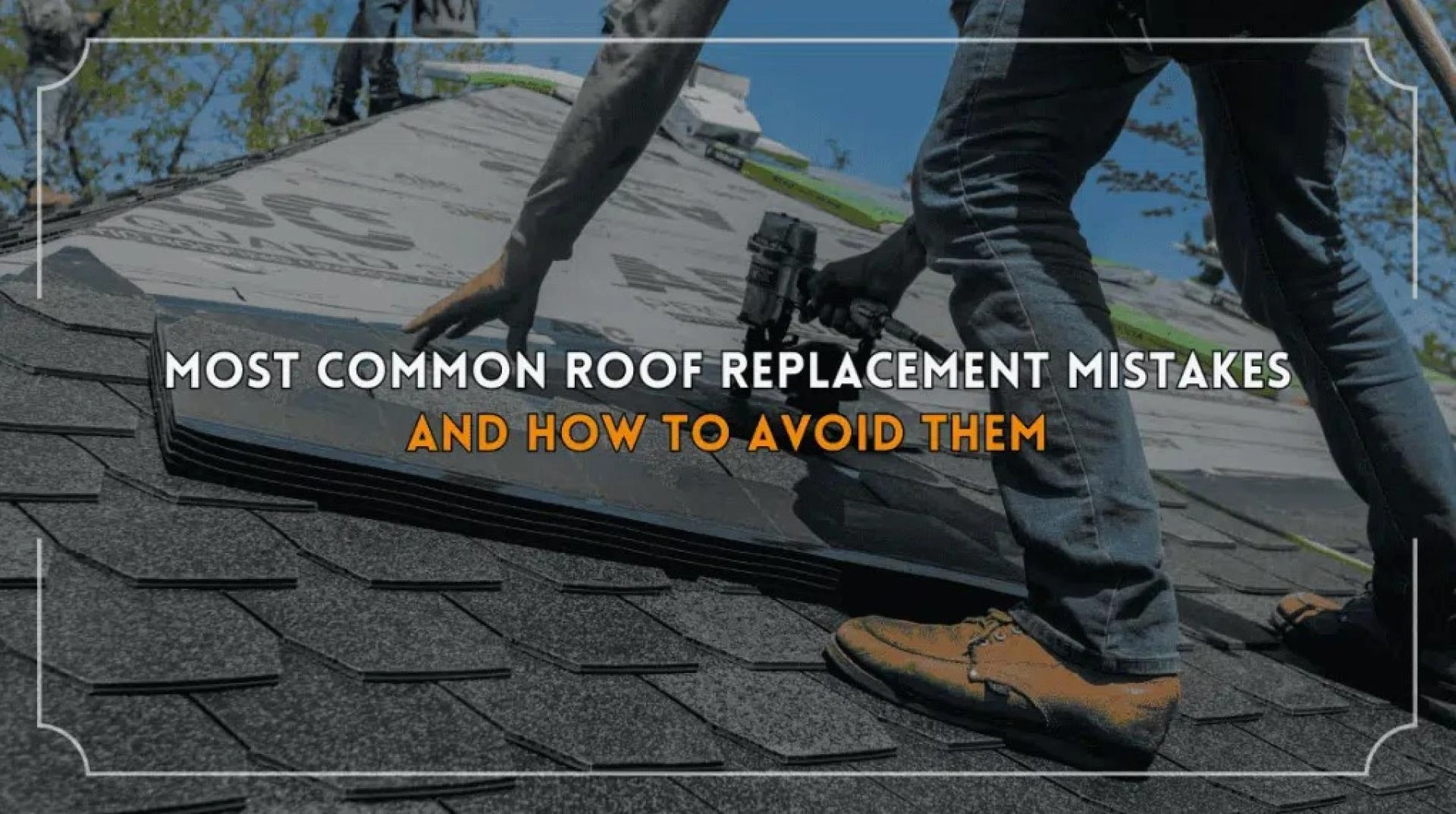

Replacing your roof is one of the most important investments you’ll make as a homeowner. In Maryland, where coastal weather, heavy rain, and seasonal storms can take a toll on homes, a properly installed roof protects everything underneath it. Unfortunately, many homeowners make costly mistakes during roof replacement that could have been avoided with better planning and professional guidance.
If you’re considering a new roof, understanding the most common mistakes to avoid when replacing your roof can save you time and money in the long-term.
Common Roof Replacement Mistakes and How to Avoid Them
Choosing the Cheapest Contractor Instead of the Right One
Homeowners who make their contractor selection based on price expect to save money, yet they create the biggest mistake for their home roof replacement project. The extremely low estimate that people want to pay for their work will result in substandard work, since contractors will reduce expenses by decreasing material quality, labor standards, and warranty protection.
Instead of focusing only on price, look for licensed, insured, and experienced roofing contractors with strong local reviews. You should request information about their certifications, references, and warranty details. The contractor who has a good reputation will deliver an extensive written cost assessment, which will outline all the work that needs to be performed.
Read: Everything You Need to Know About Roof Replacement Warranties
Ignoring Proper Inspection Before Replacement
Many homeowners assume that if shingles look worn, the entire roof must be replaced. The opposite approach involves patching visible damage while workers do not assess the underlying structure. Both are common roof replacement mistakes.
A professional inspection should evaluate decking, flashing, ventilation, and insulation before installation begins. The process of replacing shingles will not succeed unless workers first resolve the problems of rotting wood and ventilation.
Using Low-Quality Materials
Homeowners who need to replace their roofs should avoid making their material selections based solely on budget constraints or visual appeal. The performance of various roofing materials differs because their properties do not match one another. Cheap shingles may fade, crack, or deteriorate faster, especially in climates that experience humidity and storms.
Although high-quality materials require more money at first, they provide superior durability and extended product protection and better energy savings. The evaluation process needs to consider three factors, which include product lifespan, weather resistance, and manufacturer warranty, instead of focusing only on product costs. Advantage Home Exteriors guides homeowners through material selection, explains warranty coverage, and ensures the roofing system is installed according to manufacturer specifications.
Poor Ventilation Planning
The process of replacing roofs requires contractors to pay attention to ventilation needs, which most installers frequently neglect. The lack of proper ventilation results in moisture accumulation, mold development, deck materials warping, and increased energy costs. The most common errors during residential roof replacement work begin with contractors making mistakes with ventilation systems.
The installation of a new roof requires correct ventilation, which prevents early roof failure, protects warranty coverage, and maintains optimal roof efficiency. Your contractor needs to assess both intake and exhaust ventilation systems because these components create balanced airflow throughout the attic space. Proper ventilation extends your roof’s life and improves indoor comfort.
Read: New Construction Roofing vs. Roof Replacement: Which Is Better For Your Home?
Reusing Old Flashing
Flashing protects vulnerable areas such as chimneys, skylights, and roof valleys. Some contractors reuse old flashing to cut costs or speed up the job, but this is a major roof replacement mistake.
Old flashing may already be weakened or improperly sealed. Your home will experience water damage through your roof because the new shingles will not prevent roof failure. The small expense of replacing flashing during roof installation protects against future water damage.
Skipping Permits and Local Building Codes
People who want to build should first obtain all necessary permits because their work permits will require them to proceed through various government approval processes. The building codes require all roof replacements to follow specific wind resistance and structural safety standards.
Your roof replacement project will face its most critical error when you choose not to follow the required regulations. The local contractor who has expertise in the area will handle all permit requirements while making sure installation work follows building code standards.
Not Understanding Warranty Coverage
Homeowners believe their new roof warranty provides complete protection but later find out their coverage has specific restrictions. Some warranties cover materials but not labor. Others may become void if installation guidelines aren’t followed precisely.
Before signing a contract, ask detailed questions about manufacturer warranties and workmanship guarantees. Your investment gets protection through proper documentation, preventing any unexpected issues.
Final Thoughts
Avoiding common residential roof replacement mistakes starts with preparation and choosing the right professionals. From proper inspections, quality materials, to ventilation and flashing upgrades, every detail matters. A roof protects your home, your family, and everything inside. By understanding the key mistakes to avoid when replacing your roof, you can make informed decisions that ensure durability, safety, and long-term value.
Looking for expert roof replacement in Bel Air, MD? Contact us today to get professional roof replacement services to avoid costly damage.
Originally Posted at: Most Common Roof Replacement Mistakes











Sign in to leave a comment.