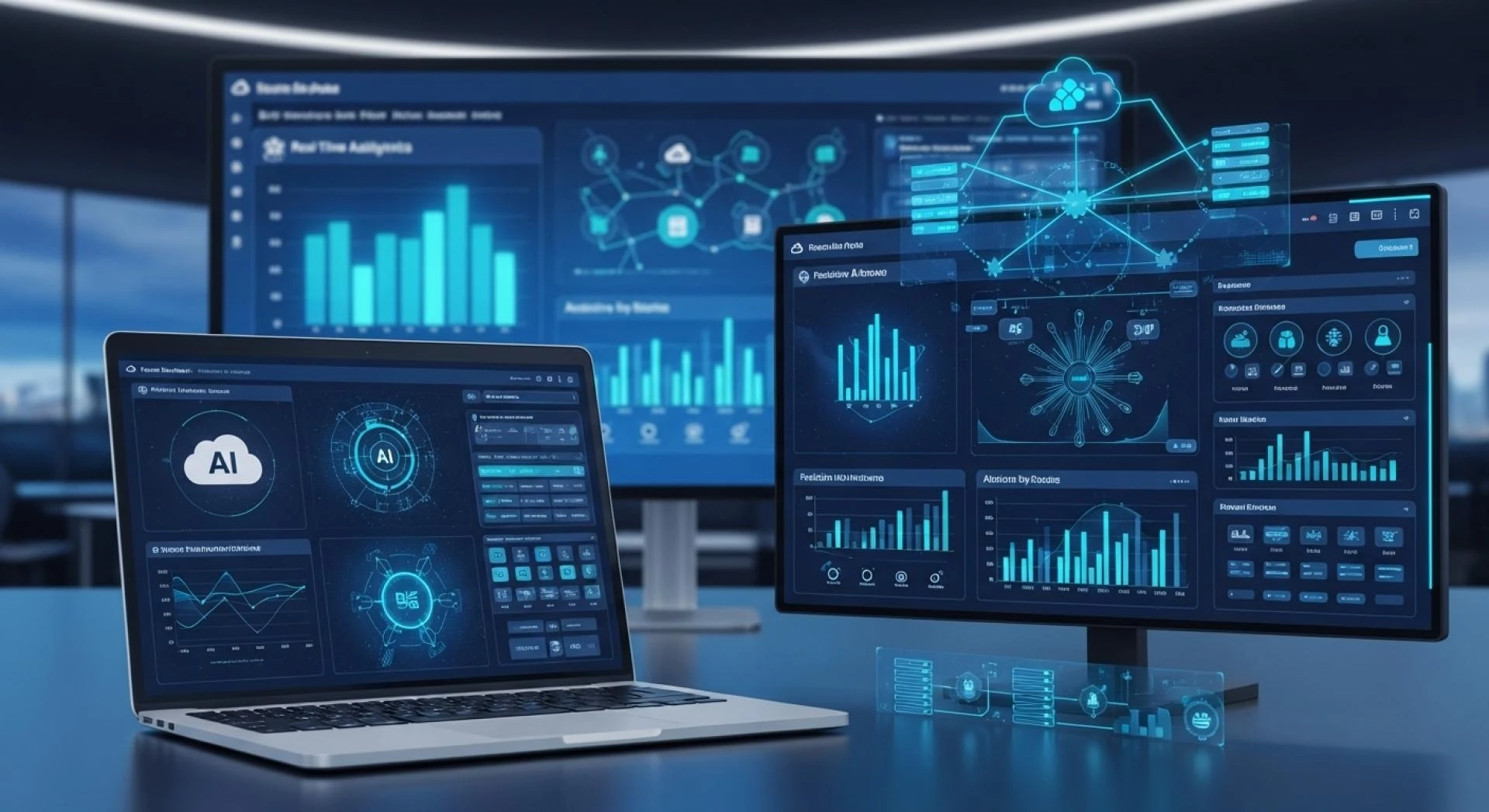

In 2025, enterprise IT operations are transforming faster than ever. With the rapid shift toward hybrid cloud environments, increasing data volumes, and complex multi-layered infrastructures, traditional IT management approaches are becoming inadequate. The rise of Artificial Intelligence for IT Operations, or AIOps, is reshaping how enterprises manage, monitor, and optimize their digital ecosystems. Through advanced automation, predictive analytics, and machine learning capabilities, AIOps platform development solutions are enabling enterprises to move beyond reactive problem-solving and toward predictive and self-healing infrastructure.
This comprehensive blog explores how enterprises are adopting AIOps platforms to drive this transformation, the technologies powering predictive and self-healing systems, and the tangible business benefits these innovations deliver in modern IT ecosystems.
The Evolution of IT Operations Toward Predictive and Self-Healing Systems
Traditional IT operations have always been reactive in nature. Teams typically respond to alerts after an issue occurs, manually troubleshoot the root cause, and implement corrective measures. However, with distributed systems, hybrid clouds, and containerized applications generating massive data streams, this reactive model no longer sustains operational efficiency.
Enterprises today need systems that can anticipate failures, automatically detect anomalies, and initiate corrective actions without human intervention. This marks the shift from reactive to predictive and self-healing infrastructure.
Predictive systems use AI-driven analytics to forecast potential incidents based on patterns observed in system logs, performance metrics, and event data. Self-healing systems, on the other hand, combine automation and intelligence to correct detected issues autonomously, reducing downtime and improving service reliability.
AIOps platforms make this possible by integrating machine learning, natural language processing, and intelligent automation across all layers of IT operations.
What Is an AIOps Platform Development Solution?
An AIOps platform development solution is a customized framework that combines artificial intelligence, big data analytics, and automation to enhance IT operations management. It aggregates data from multiple sources—applications, networks, servers, and security systems—to provide a unified operational view.
The solution typically consists of the following components:
- Data Ingestion and Integration: Collecting structured and unstructured data from monitoring tools, logs, and infrastructure sources.
- Machine Learning and Analytics Engine: Using AI models to identify anomalies, predict outages, and optimize system performance.
- Automation and Orchestration Layer: Triggering automated responses to incidents, such as restarting services, reallocating resources, or deploying patches.
- Visualization and Insights: Providing dashboards and visual analytics to assist IT teams in making data-driven decisions.
By developing custom AIOps platforms, enterprises can tailor solutions to fit their operational needs, integrate with existing IT service management tools, and scale intelligently across cloud and on-premises environments.
Key Capabilities Enabling Predictive and Self-Healing Infrastructure
AIOps platforms achieve predictive and self-healing functionality through several interdependent capabilities:
1. Proactive Incident Detection
Machine learning algorithms continuously analyze system behavior to detect deviations from normal patterns. Instead of relying on static thresholds, AIOps uses dynamic baselining to adjust alerting in real time, reducing false positives and identifying genuine issues before they impact end users.
2. Root Cause Analysis (RCA)
Through correlation engines, AIOps systems link related alerts, logs, and metrics to identify the most probable cause of a problem. This drastically shortens mean time to resolution (MTTR) and allows automated systems to address the root cause directly rather than just the symptoms.
3. Predictive Analytics
Predictive modeling enables systems to forecast resource exhaustion, hardware failures, and performance degradation based on historical trends. Enterprises can proactively allocate resources, schedule maintenance, or prevent service disruptions altogether.
4. Self-Healing Automation
When AIOps identifies anomalies or predicted issues, it triggers predefined remediation workflows. These workflows might involve restarting applications, scaling resources, or patching systems automatically. Over time, machine learning models learn from outcomes and refine the remediation process.
5. Intelligent Event Correlation
By analyzing millions of log events and alerts from disparate tools, AIOps platforms correlate events across systems to identify significant incidents. This minimizes alert fatigue and improves situational awareness for IT teams.
6. Continuous Learning and Adaptation
The AIOps platform continuously learns from past incidents, user interventions, and system outcomes. This allows it to become smarter and more accurate in predicting failures and applying self-healing actions over time.
How Enterprises Are Implementing AIOps for Predictive and Self-Healing Infrastructure
Enterprises across industries are adopting AIOps to revolutionize their operational models. The adoption process typically involves four critical stages:
1. Integration of Data Sources
Enterprises begin by consolidating data from monitoring systems, logs, application performance management tools, and ITSM platforms. This unified data foundation ensures that AI algorithms have complete visibility across the IT landscape.
2. Building Machine Learning Pipelines
Machine learning models are trained on historical datasets to recognize patterns of failures and performance anomalies. These models continuously evolve, enhancing accuracy with real-time feedback.
3. Automation Orchestration
Automation scripts are developed to execute repetitive tasks like restarting services, clearing caches, or scaling cloud instances. These scripts are triggered automatically when the system detects a specific pattern or issue.
4. Policy-Based Governance
To maintain control, enterprises implement governance frameworks that define what types of incidents can be self-healed automatically and which require human approval. This ensures compliance and safety within regulated environments.
Real-World Examples of AIOps Driving Predictive and Self-Healing Infrastructure
Case Study 1: A Global Financial Institution
A large banking enterprise used an AIOps platform to monitor its hybrid infrastructure, which included thousands of servers and cloud-based applications. Before AIOps, IT teams faced frequent unplanned outages and spent hours identifying root causes.
After deploying a custom AIOps solution:
- Predictive analytics forecasted server failures 72 hours in advance, reducing downtime by over 60 percent.
- Automated healing scripts restarted services and cleared caches without human intervention.
- Incident response time improved from hours to minutes.
This transformation not only reduced operational costs but also enhanced customer satisfaction and compliance.
Case Study 2: A Global E-commerce Giant
An e-commerce company managing massive online traffic adopted an AIOps platform to enhance uptime during peak shopping seasons.
Through anomaly detection and predictive scaling, the platform automatically increased cloud capacity when demand spiked, ensuring seamless user experiences. Self-healing automation also fixed database connectivity issues instantly, reducing cart abandonment rates.
The result was a 40 percent improvement in system reliability and a 30 percent increase in operational efficiency.
Business Benefits of Predictive and Self-Healing AIOps Systems
The integration of predictive and self-healing capabilities brings measurable business value to enterprises:
- Reduced Downtime Predictive monitoring detects potential issues early, while automated remediation ensures they are resolved before impacting operations.
- Improved Operational Efficiency Automated processes eliminate repetitive manual tasks, allowing IT teams to focus on strategic initiatives rather than firefighting incidents.
- Enhanced User Experience Continuous uptime ensures consistent digital experiences for customers and employees, directly improving satisfaction and retention rates.
- Cost Savings By reducing manual intervention, downtime, and resource wastage, enterprises achieve significant cost reductions in IT management.
- Scalability and Agility Self-healing infrastructure dynamically adjusts to workload fluctuations, enabling businesses to scale up or down effortlessly.
- Data-Driven Decision Making The insights provided by AIOps analytics enable better capacity planning, resource allocation, and performance optimization decisions.
Technologies Powering Predictive and Self-Healing AIOps Platforms
To deliver intelligent automation and predictive insights, AIOps solutions combine multiple technologies:
- Machine Learning (ML): Models trained on historical data predict anomalies, resource exhaustion, and hardware degradation with high accuracy.
- Natural Language Processing (NLP): NLP helps in understanding logs, tickets, and unstructured data from different sources, enabling contextual analysis and smarter responses.
- Big Data Analytics: Aggregates data from vast and diverse sources, ensuring comprehensive visibility and accurate pattern detection.
- Automation and Orchestration Tools: Integrates with systems like Ansible, Kubernetes, or Terraform to enable automated workflows and self-healing processes.
- Predictive Modeling Frameworks: Forecasts potential system failures and resource utilization patterns using regression and time-series models.
- Cloud-Native Architecture: Ensures scalability and flexibility for managing hybrid and multi-cloud infrastructures.
Challenges Enterprises Face While Implementing AIOps Platforms
Despite the clear benefits, implementing an AIOps platform is not without challenges. Enterprises often encounter the following obstacles:
- Data Silos Fragmented data across tools and departments can prevent effective correlation and analysis.
- Integration Complexity Connecting legacy systems and modern tools requires extensive customization and development effort.
- Skill Gaps AI and automation technologies demand specialized expertise in data science, DevOps, and infrastructure management.
- Change Management Shifting from manual to autonomous operations can face resistance from teams accustomed to traditional IT processes.
- Governance and Compliance Risks Automating self-healing actions requires strict governance to prevent unintended disruptions or policy violations.
Strategies for Successful AIOps Adoption
To maximize value from an AIOps platform development solution, enterprises should adopt a structured and strategic approach:
- Start with a Clear ObjectiveDefine specific goals, such as reducing downtime or automating incident management, to measure success effectively.
- Build a Centralized Data Lake Integrate all IT operations data into a unified repository to ensure comprehensive visibility.
- Prioritize Use Cases Start small with high-impact areas, such as predictive monitoring or anomaly detection, and gradually expand to full-scale automation.
- Foster Collaboration Encourage cross-functional collaboration between IT, DevOps, and AI teams to ensure smooth integration and knowledge sharing.
- Implement Governance Controls Create policies that define which incidents can be automatically resolved and which need human review.
- Continuously Train AI Models Use feedback loops to refine AI models and improve accuracy over time.
- Monitor Performance and Outcomes Track metrics like MTTR, system availability, and incident frequency to evaluate the platform’s effectiveness.
The Future of Predictive and Self-Healing IT Infrastructure
By 2025 and beyond, AIOps platforms will evolve from supporting tools to becoming the backbone of enterprise IT operations. With advancements in generative AI and autonomous computing, future systems will not only self-heal but also self-optimize, dynamically tuning performance based on user demand and business priorities.
Hybrid and multi-cloud infrastructures will increasingly rely on AI-driven observability and automated orchestration. Predictive capabilities will extend beyond IT performance to include cybersecurity threat anticipation, compliance management, and resource forecasting.
The convergence of AIOps with technologies such as digital twins, generative AI, and edge computing will further amplify operational intelligence and resilience. Enterprises adopting these systems early will gain a competitive edge through higher reliability, faster innovation, and reduced operational costs.
Conclusion
The journey from reactive IT management to predictive and self-healing infrastructure represents a significant evolution in enterprise operations. By leveraging an AIOps platform development solution, organizations can harness the power of AI, automation, and analytics to transform their IT ecosystems into intelligent, adaptive, and resilient systems.
Predictive and self-healing capabilities not only minimize downtime but also enable enterprises to achieve continuous innovation and operational excellence. As technology continues to advance, the line between human and machine-led IT management will blur further, leading to an era of truly autonomous digital operations.
Enterprises that embrace AIOps today are building the foundation for a future where IT infrastructure operates intelligently, repairs itself automatically, and continuously optimizes performance to meet ever-changing business demands.












Sign in to leave a comment.