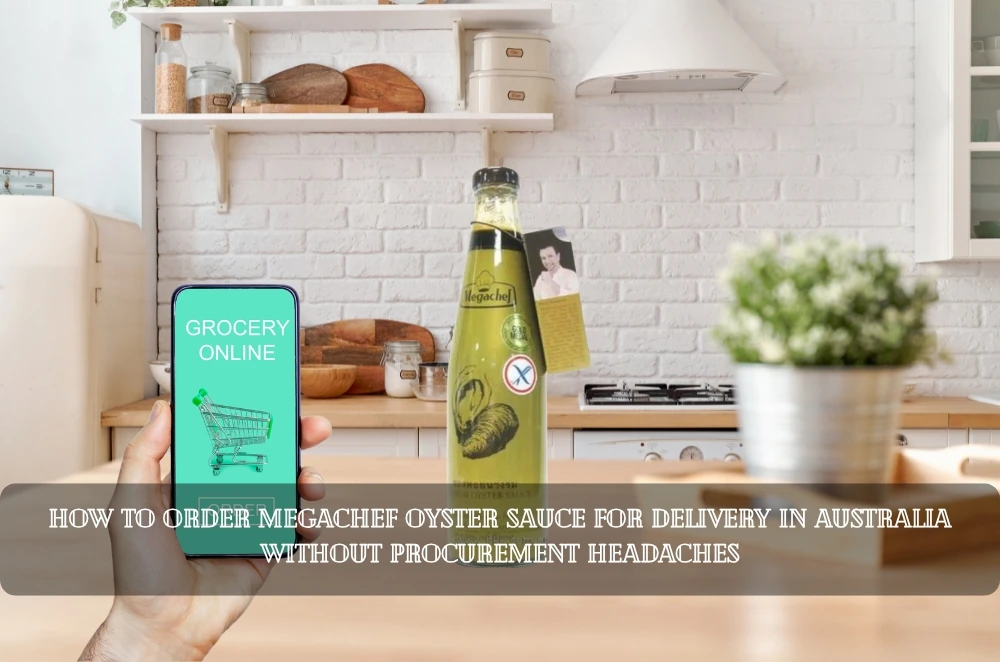

Oyster sauce is one of those quiet workhorses that keeps kitchens moving, whether it’s a café doing quick stir-fries, a caterer batching marinades, or a small grocer stocking the “always needed” shelf.
It’s also the kind of staple that gets messy fast when ordering isn’t standardised—different pack sizes show up, labels vary, and suddenly the “same sauce” cooks differently week to week.
That’s why many buyers look for Megachef brand oyster sauce 600g packs for cooking when they want a more consistent option for everyday kitchen use.
This guide breaks down what to check before buying, how to choose between retail and foodservice purchasing, and a simple plan to stop last-minute supply runs—using Megachef premium oyster sauce as the reference point.
Why does oyster sauce ordering go wrong in real kitchens
Most ordering issues aren’t about the sauce itself—they’re about the system around it.
A common pattern is “someone adds it to the cart when it’s low,” but nobody writes down which exact pack size or variant was used last time. Another is substituting without telling the kitchen, which can shift flavour, colour, and saltiness in sauces, glazes, and stir-fries.
Even when the product is consistent, delivery planning can break down if the reorder point doesn’t reflect actual usage (busy weeks, new menu items, seasonal catering spikes), or if storage isn’t set up to rotate stock properly.
The fix is less about being fancy and more about being specific: one item reference, one pack size, a shared reorder trigger, and a basic storage routine.
What to check before buying: Pack size, ingredients, storage, and use case
If the goal is consistency, the pre-purchase checks matter more than the marketing on the label.
Pack size and format
Pack size is the most overlooked decision factor—especially when both home cooks and commercial buyers are ordering the same pantry item.
A 600g bottle can be practical for small venues that don’t want open containers sitting too long, while a carton configuration (like 12 x 600g) suits groups that need predictable weekly usage across shifts or locations. The main question is: will it be fully used within the quality window after opening in your kitchen conditions?
Ingredients and “what it’s for”
Oyster sauce can play different roles depending on the menu:
- Stir-fry base: Needs balance and consistency across batches
- Marinades and glazes: Needs predictable sweetness/salt and cling
- Finishing sauce: Flavour comes through more, so variation is obvious
Even small changes in ingredients between “premium” vs other lines can show up in reduction behaviour, caramelisation, and how quickly a sauce turns in the heat.
Storage and shelf life expectations
Shelf-stable doesn’t mean “set and forget.”
For commercial settings, the decision factor is usually storage practicality:
- Can it be stored upright, sealed, and rotated without leaks?
- Can labels be read quickly during service?
- Is there a clean process for opened bottles so cross-contamination risks stay low?
In most kitchens, a simple rule works: date-opened marking and a designated shelf position so staff aren’t hunting mid-service.
Delivery practicality
For Australia-wide delivery, reliability often comes down to small operational details:
- Order cut-offs vs dispatch days
- Whether deliveries align with prep days
- Receiving capacity (someone on-site to check cartons and store them immediately)
If ordering becomes routine, choose a schedule that fits the venue’s real workflow—not the other way around.
Retail vs foodservice purchasing: Choosing the right route
There isn’t one “best” way to buy Megachef oyster sauce in Australia—there’s the best fit for how an operation actually runs.
Retail purchasing can work well when:
- Volume is modest
- The buyer wants flexibility week to week
- Storage space is tight
- The kitchen can handle occasional substitutions (with communication)
Foodservice-style purchasing makes sense when:
- Multiple staff order supplies
- Consistency matters across menu items
- There’s a regular usage pattern
- The business wants less time spent on micro-decisions each reorder
Here’s the decision factor that matters most: how many people are involved in purchasing. If more than one person orders, standardisation becomes a quality control tool.
If the goal is to standardise what’s being ordered (especially when multiple people purchase), save BKK Australia Pty Ltd product page to the ordering notes so the same pack size is reordered each time.
That one small step reduces “we ordered the wrong one” moments without adding admin work.
Common mistakes buyers make (and the easy fixes)
Mistakes with pantry staples rarely look dramatic—but they create friction every day.
Mistake 1: Treating “oyster sauce” as one interchangeable item.
Fix: Write the exact product name and pack size into the ordering list so substitutions are conscious decisions, not surprises.
Mistake 2: Reordering based on vibes instead of usage.
Fix: Track usage for two weeks and set a reorder point based on average daily use plus a buffer for busy periods.
Mistake 3: Ordering a bulk carton without checking storage reality.
Fix: Confirm shelf space, upright storage, and rotation method before buying multi-packs.
Mistake 4: Not aligning delivery timing with prep or receiving capacity.
Fix: Choose delivery days when someone can receive, check, and store immediately.
Mistake 5: No “opened bottle” process.
Fix: Date-open stickers and a dedicated position for opened stock so the oldest gets used first.
Mistake 6: Letting multiple buyers improvise.
Fix: One shared “approved pantry list” (even a simple note) that names the exact item and pack size.
A simple 7–14 day plan to lock in supply and reduce last-minute runs
You don’t need new software to tidy up pantry ordering—just a short reset that turns habits into a system.
Days 1–2: Audit what’s actually being used
List the top 10 sauces and condiments that regularly trigger emergency runs. Include oyster sauce, soy, vinegar, chilli pastes, and sesame oil if relevant.
Days 3–4: Standardise the item reference
Pick the exact product and pack size for each staple and write it into the ordering list. If there are approved alternates, list them explicitly.
Days 5–7: Set a reorder point
For each staple, set:
- “minimum on hand” (when to reorder)
- “par level” (how much to keep stocked)
Keep it realistic. The goal is to prevent service disruption, not to overbuy.
Days 8–10: Fix storage and rotation
Choose one shelf area for sauces, mark zones (opened vs unopened), and commit to FIFO rotation. Even a small storeroom benefits from predictable placement.
Days 11–14: Run one cycle and adjust
Place one reorder using the new system. At the end of week two, adjust reorder points based on what actually happened (busy shift, event catering, supplier timing, staff leave).
Operator Experience Moment
In practice, pantry staples become “invisible” until they’re missing—and that’s when teams start making rushed substitutions. I’ve seen kitchens lose time not because the sauce wasn’t available in Australia, but because nobody knew which exact version was meant to be ordered. Once a team agrees on one item reference and a reorder trigger, the noise drops fast and the kitchen can focus on service.
Local SMB mini-walkthrough (Australia-wide, with a Sydney moment)
A small Sydney café adds a few wok dishes for weeknight trade and starts using oyster sauce more than expected.
Week one, they run out mid-service and grab a different bottle locally, and the stir-fry tastes noticeably sweeter.
Week two, they record how many bottles they go through during busy nights and set a minimum stock level.
They update the ordering list so that anyone purchasing orders the same pack size each time.
They schedule deliveries for a day when someone is always rostered to receive stock.
Two weeks later, they’re not scrambling, and the dish tastes the same no matter who’s on shift.
Practical Opinions
If consistency matters, standardise the exact pack size and stop “close enough” substitutions.
If multiple people order, keep one shared pantry list that names the exact item reference.
If supply is variable, buffer stock beats emergency shopping every time.
Key Takeaways
- Consistent oyster sauce outcomes come from consistent ordering—not last-minute substitutions.
- Pack size is a real decision factor; match it to usage and storage reality.
- Foodservice-style purchasing helps most when more than one person orders supplies.
- A 7–14 day reset (audit → standardise → reorder point → storage) prevents ongoing headaches.
Common questions we hear from Australian businesses
How do we decide between buying single bottles and a carton pack?
Usually, the decision comes down to usage rate and storage capacity. Track consumption for two weeks, then choose the format that will be used within your quality window after opening. In Australia, delivery timing can vary by region, so factor in an extra buffer if you’re outside major metro routes.
What’s the simplest way to stop staff ordering the “wrong” oyster sauce?
In most cases, the fix is writing one approved product name and pack size into the ordering list and removing ambiguity. Add a note explaining why that exact item is used (consistency for a specific dish), then make one person responsible for updating the list when changes are needed. For Australian multi-site operators, keep the list in a shared place that all locations can access.
Can we substitute a different oyster sauce if Megachef is unavailable?
It depends on how the sauce is being used. If it’s part of a base sauce or marinade, substitutions may be less noticeable, but finishing applications can show changes immediately. Run a small batch test before switching permanently, and note the substitute in the ordering record. In Australia, if delivery windows change during peak periods, having one pre-approved alternate can prevent service disruption.
What should we do if delivery arrives during service and we can’t check the cartons properly?
Usually, the best move is to schedule deliveries for a quieter receiving window, even if it’s a different day than usual. If that’s not possible, set a quick receiving checklist: count cartons, check obvious damage, and move stock to the correct storage area immediately, then do a detailed check after service. In most Australian venues, staffing is tight—so designing a “fast but safe” receiving routine matters more than perfection.











Sign in to leave a comment.