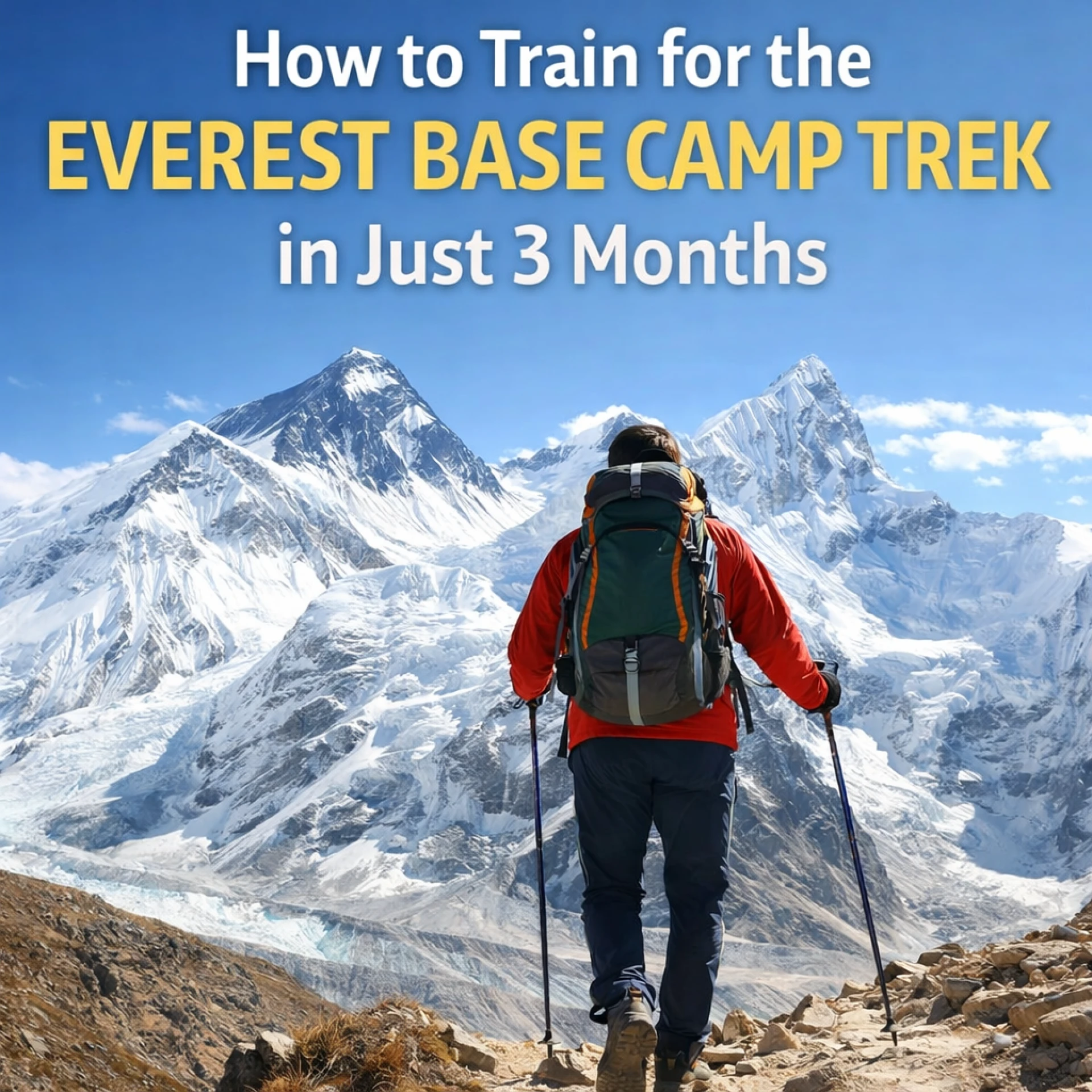

⤷ Trekking to Everest Base Camp (EBC) is a dream for many adventure seekers, but it requires preparation, especially if you want to do it safely and enjoyably.
While some trekkers spend months or even a year training, it is possible to get ready in three months if you follow a structured plan.
This guide will help you prepare physically, mentally, and logistically so you can make the trek with confidence. We will cover everything from building endurance and strength to acclimatization and gear preparation.
Everest Base Camp Trek Overview
Everest Base Camp is located at 17,600 feet (5,364 meters) in the Khumbu region of Nepal. The trek usually takes 12-16 days, depending on your route and pace.
Unlike climbing Everest itself, trekking to the base camp does not require mountaineering skills, but it is still physically demanding. Trekkers face long hiking days, uneven terrain, and altitude challenges.
Before you begin training, it’s essential to know what your body will go through. The trek involves walking 5-8 hours a day, climbing steep trails, and dealing with colder temperatures as you ascend.
This means your training should focus on building stamina, leg strength, cardiovascular fitness, and mental endurance.
Why a 3-Month Training Plan Works
A three-month plan works well if you commit to consistent, structured training. The goal is not to become an athlete but to condition your body for long hikes at higher altitudes. The training focuses on:
- Cardiovascular endurance - so you can walk for hours without getting tired
- Leg and core strength - to handle uphill climbs and uneven paths
- Balance and stability - to reduce the risk of injury on rocky paths
- Acclimatization strategies - to reduce the risk of altitude sickness
With dedication and the right plan, you can significantly increase your chances of completing the trek comfortably.
Month 1 - Building a Base Level of Fitness
Cardiovascular Training
Start with moderate cardio exercises 4-5 days a week. This includes activities like:
- Brisk walking or light jogging for 30-45 minutes
- Cycling or swimming
- Using a stair-stepper or treadmill to mimic uphill walking
Aim to gradually increase the duration and intensity. Your goal in the first month is to make your heart and lungs stronger without overexerting yourself.
Strength Training
Focus on building leg and core strength. Key exercises include:
- Squats - 3 sets of 12-15 reps
- Lunges - 3 sets of 10 reps per leg
- Step-ups using a chair or bench - 3 sets of 12 reps
- Planks - hold for 30-60 seconds
Strength training twice a week is enough in this phase. The idea is to prepare your muscles for long hours of trekking.
Flexibility and Balance
Stretching and yoga can improve flexibility, which reduces the risk of injuries. Try simple stretches for hamstrings, calves, and lower back. Balance exercises like single-leg stands or yoga poses help you handle rocky and uneven terrain.
Month 2 - Increasing Endurance and Trek Simulation
Longer Hikes
Start taking longer walks on trails, hills, or staircases to simulate trekking conditions. Aim for 1-2 hikes per week lasting 2-4 hours. Try to carry a small backpack weighing 10-15 pounds ≈ 4.5-6.8 kg to get used to trekking with gear.
Interval Training
Introduce interval workouts 2-3 times a week. For example:
- Walk or jog at a moderate pace for 5 minutes
- Walk or jog faster for 2 minutes
- Repeat for 30-40 minutes
Interval training improves your cardiovascular endurance and helps your body adapt to changes in effort levels, similar to uphill and downhill trekking.
Strength Maintenance
Continue leg and core exercises, but increase intensity slightly. Add weighted squats or lunges to mimic carrying a heavier backpack.
Nutrition Focus
Start paying attention to your nutrition. Eat a balanced diet with enough protein, complex carbohydrates, and healthy fats. Staying hydrated is crucial, especially for long hikes.
Month 3 - Trek-Specific Preparation and Mental Readiness
High-Intensity Hikes
Aim for hikes that last 4-6 hours, preferably on hilly or mountainous terrain. This is the closest simulation to the actual trek. Wear your trekking boots and carry a fully loaded backpack to condition your body.
Stair Climbing and Elevation Training
If you live in a city, stair climbing can simulate altitude conditions. Try doing stair workouts 2-3 times a week, gradually increasing duration and intensity.
Altitude Acclimatization Techniques
Even if you don’t live at a high altitude, you can prepare by:
- Taking deep breathing exercises daily
- Spending a night at a higher altitude, if possible, before the trek
- Gradually ascending during the trek itself (follow the rule of “climb high, sleep low”)
Final Strength and Flexibility
By the third month, your focus should be on maintaining strength and flexibility, not adding new exercises. Keep stretching daily and do light strength workouts 2-3 times a week.
Mental Preparation
Everest Base Camp trekking can be mentally challenging due to long walking hours, changing weather, and altitude. Practice mindfulness, meditation, or visualization techniques. Visualize completing the trek step by step. Mental endurance is as important as physical fitness.
Gear Preparation for Everest Base Camp Trek
Having the right gear reduces fatigue and helps you stay safe. Essential items include:
- Trekking boots with ankle support
- Layered clothing for cold temperatures
- Backpack (35-50 liters)
- Trekking poles to reduce strain on knees
- Hydration system and water purification
- Sunglasses and sunscreen
Test your gear during training hikes to ensure comfort and functionality.
Check Complete Everest Base Camp Trek Packing List
Common Challenges and How to Handle Them
Altitude Sickness
Even well-trained trekkers can face altitude sickness. Symptoms include headache, nausea, dizziness, and fatigue. To reduce risks:
- Ascend gradually
- Stay hydrated
- Avoid alcohol
- Listen to your body and rest if needed
Fatigue and Muscle Soreness
Long hikes can cause sore muscles. Foam rolling, stretching, and light walking on rest days help recovery.
Weather and Trail Conditions
The weather in the Himalayas can change rapidly. Check forecasts regularly and carry waterproof clothing. Trekking poles and proper boots help manage slippery or uneven trails.
Nutrition During the Trek
During the trek, your body burns significantly more calories than usual. Prioritize:
- High-energy snacks: nuts, granola bars, dried fruits
- Balanced meals: rice, lentils, eggs, and vegetables
- Hydration: Maintain hydration by consuming 3-4 liters of water each day
Small, frequent meals help maintain energy and reduce the risk of nausea at higher altitudes.
Questions People Ask About Preparing for Everest Base Camp
1. What kind of fitness do I need to complete the Everest Base Camp trek?
You need moderate fitness. Training for 3 months with endurance hikes, strength workouts, and cardio exercises is enough for most healthy individuals.
2. Can I do the Everest Base Camp trek in 3 months?
Yes, with consistent training, proper nutrition, and mental preparation, a 3-month plan is sufficient.
3. What exercises prepare you for Everest Base Camp?
Hiking, stair climbing, squats, lunges, step-ups, and core exercises are essential. Cardio workouts like jogging and cycling also help.
4. Do I need altitude training for Everest Base Camp?
Altitude training helps, but gradual ascent during the trek is the most effective way to acclimatize. Breathing exercises and high-intensity hikes also prepare your lungs.
Key Takeaways
- Consistent training is crucial - aim for 4-5 days a week with a mix of cardio, strength, and hiking.
- Simulate trekking conditions during training by hiking on hills, using stairs, and carrying a weighted backpack.
- Focus on nutrition and hydration to fuel your body for long hikes.
- Mental preparation is essential - practice visualization, mindfulness, and positive thinking.
- Gear testing is as important as physical training - make sure boots, backpack, and clothing are comfortable.
- Listen to your body during the trek - rest when needed and prioritize acclimatization.
Conclusion
Training for Everest Base Camp in 3 months is achievable if you commit to a structured plan that combines endurance, strength, flexibility, and mental preparation.
The trek is a challenge, but with proper preparation, it becomes a life-changing experience rather than a struggle.
Start your training early, follow the plan, test your gear, and maintain a positive mindset. By the time you reach the Khumbu region, your body and mind will be ready to enjoy every step of this iconic journey.
The next step is to create your personal training schedule, gradually increase intensity, and begin your journey toward the base of the world’s highest peak.
Your adventure awaits, and proper preparation ensures you make it safely and with confidence.










Sign in to leave a comment.